1
Reduce your exposure
Get away from the trigger when possible and reduce contact with pollen, dust mites, mold or pet dander.
Clear, practical allergy education with planning, symptom matching, and safety-first care paths.
Clear, practical answers on how to relieve allergy symptoms — from fast at-home steps and over-the-counter medicine to seasonal, indoor and children's relief, plus the warning signs that need medical care.
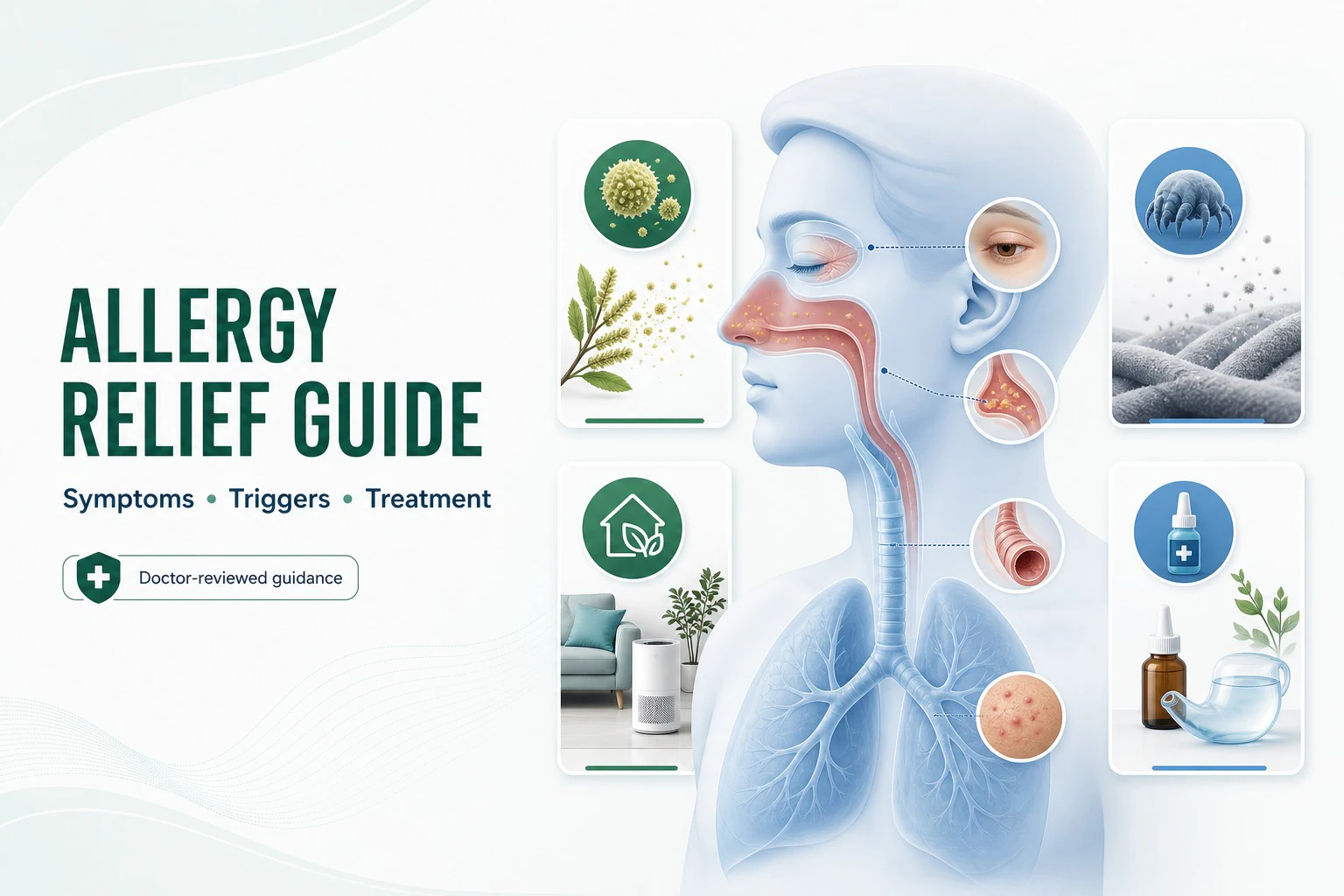
Get away from the trigger when possible and reduce contact with pollen, dust mites, mold or pet dander.
Use a saline nasal rinse, a cool compress for itchy eyes or a HEPA air purifier for practical relief.
Try a non-drowsy antihistamine for sneezing and itching, or a steroid nasal spray for a stuffy, inflamed nose.
Most allergy relief plans combine the same four building blocks. Start at the top and add layers only as you need them.
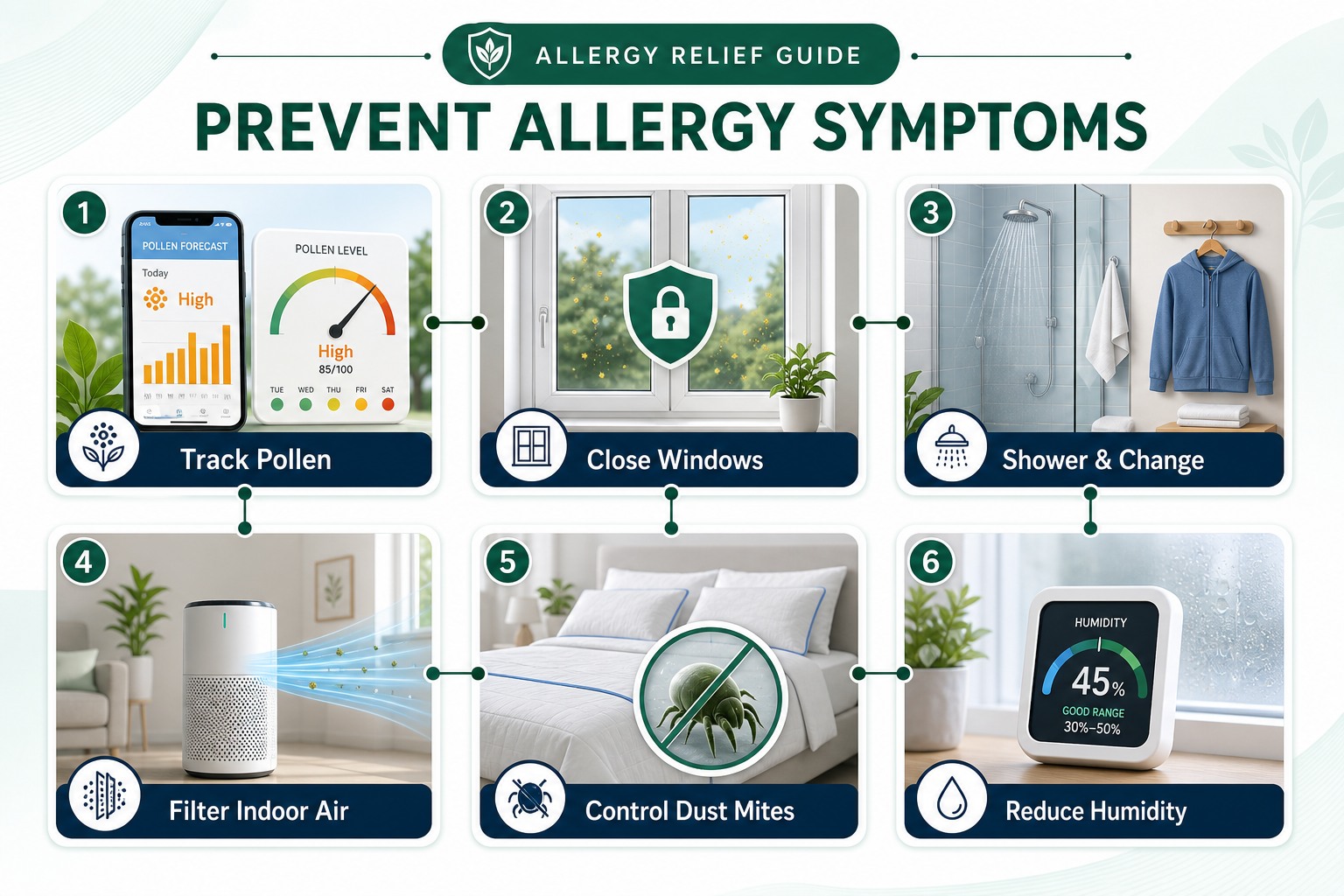
Reducing contact with pollen, dust mites, mold or pet dander is the most effective step. Keep windows closed on high-pollen days, use air conditioning, and shower after being outdoors.
A saline nasal rinse clears out pollen and mucus, a cool compress or eye drops calm itchy eyes, and staying hydrated helps thin mucus. Simple, drug-free, and safe for most people.
Non-drowsy oral antihistamines relieve sneezing and itching; steroid nasal sprays are best for congestion. A pharmacist can help you match a medicine to your main symptom.
If symptoms persist, an allergist can run skin or blood tests to pinpoint triggers and discuss long-term treatments such as allergy shots or under-the-tongue immunotherapy.
Allergies happen when your immune system overreacts to a normally harmless substance — an allergen — such as pollen, dust mites, mold, pet dander, certain foods or insect stings. That overreaction is what causes sneezing, a runny or blocked nose, itchy watery eyes, coughing or skin rashes.
Allergy relief is the combination of steps that calm those symptoms and lower your chance of a reaction. It isn't usually a one-time cure. For most people it means avoiding triggers where possible, treating symptoms when they flare, and — if allergies are ongoing — working with a doctor on a longer-term plan. This guide walks through each of those layers, then points you to detailed guides for your specific situation.
The most common allergy symptoms are sneezing, an itchy or runny nose, nasal congestion, and itchy, watery eyes. Unlike a cold, allergies rarely cause a fever, and symptoms keep returning for as long as you're exposed to the trigger.
Allergy symptoms depend on how you meet the allergen — breathing it in, touching it or eating it. The most common ones include:
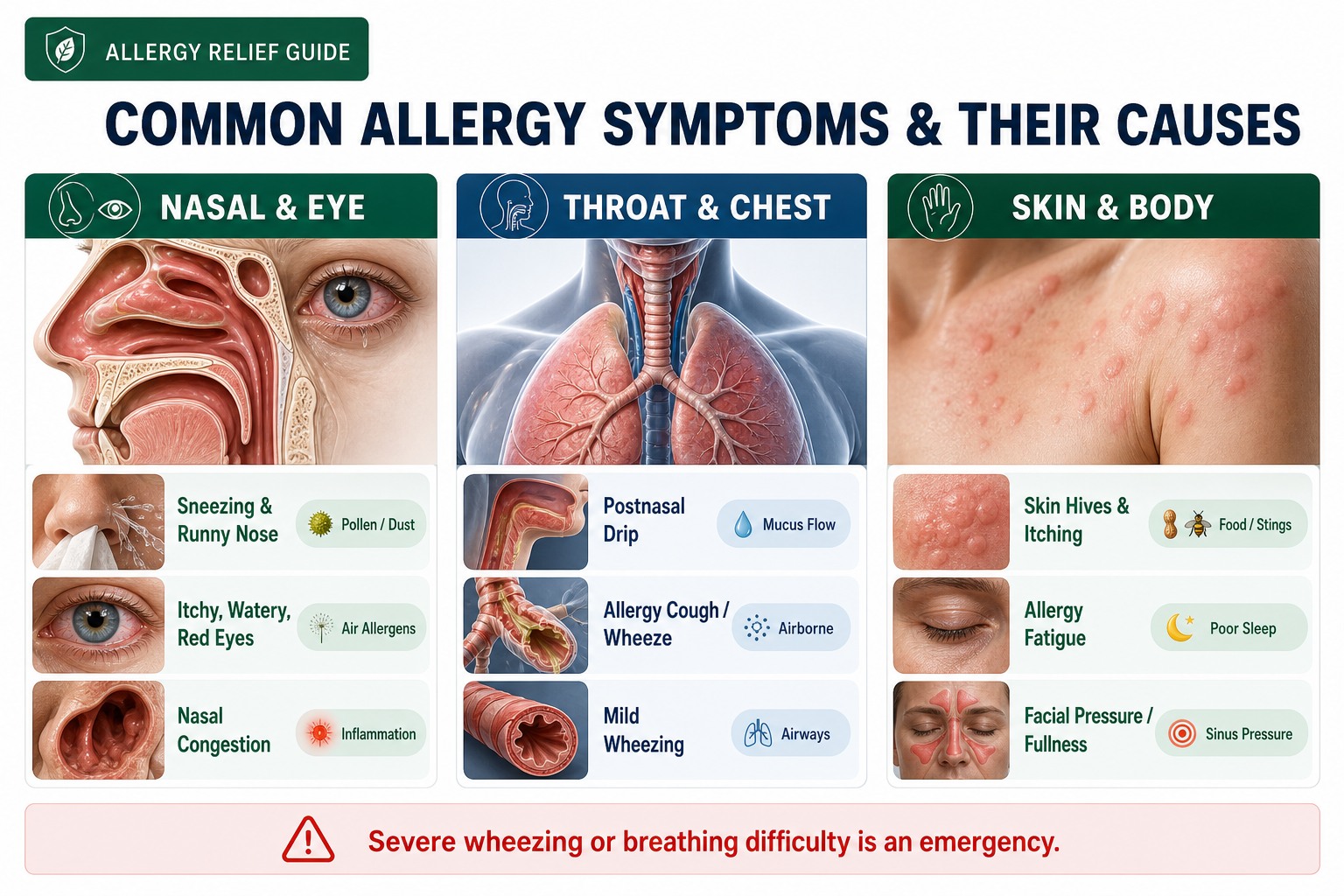
Not sure whether it's an allergy or something else? Our guides on allergy symptoms and allergies vs. a cold can help you tell them apart. Symptoms that keep returning every spring, or around pets and dust, usually point to an allergic trigger.
The most common allergy triggers are pollen (from trees, grass and weeds), dust mites, mold, pet dander, certain foods, and insect stings. Outdoor triggers like pollen peak seasonally, while indoor triggers like dust mites can affect you year-round.
Knowing your trigger is the single most useful thing you can do, because avoiding it prevents symptoms before they start. The usual culprits fall into a few groups:
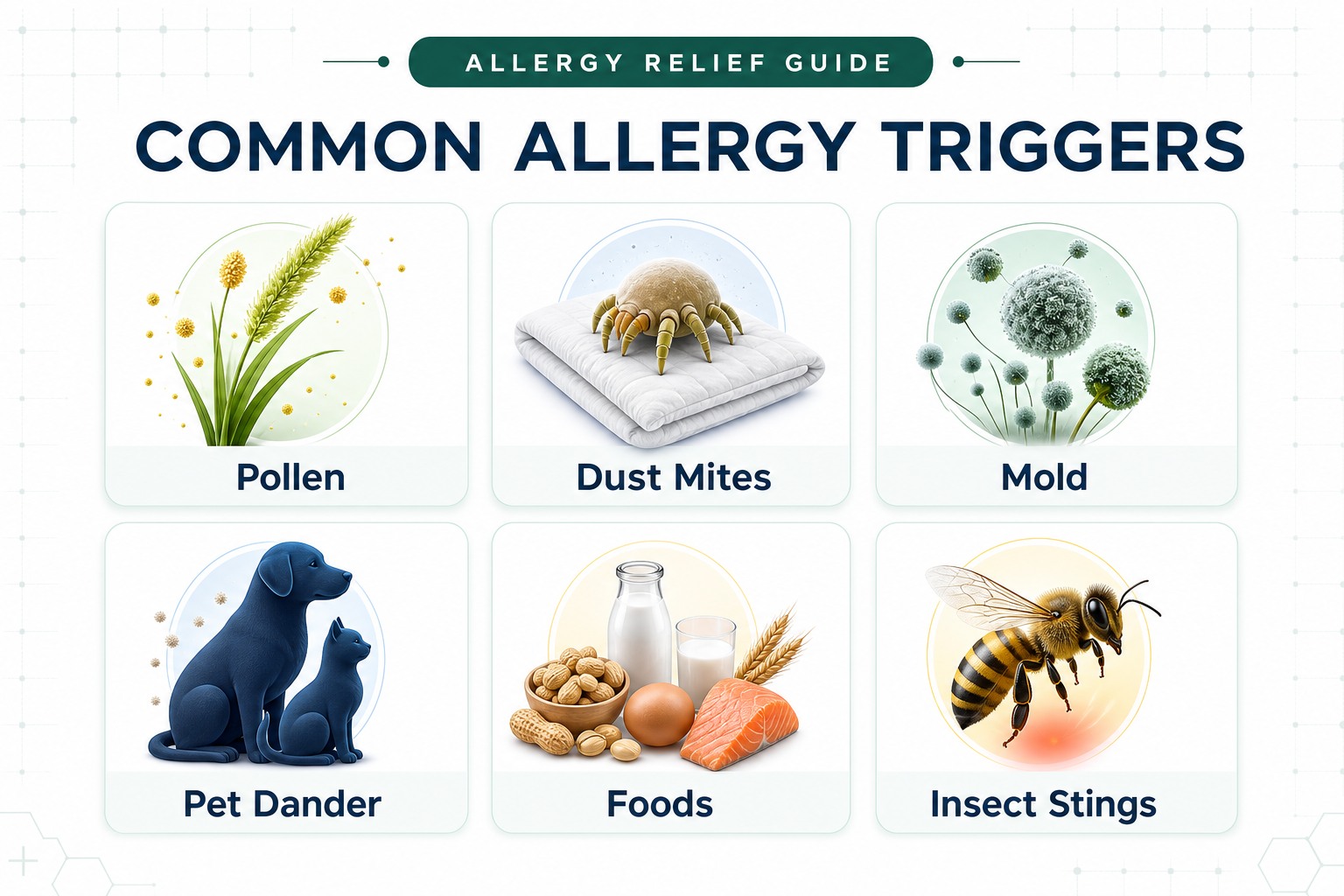
Outdoor triggers like pollen peak in certain seasons, while indoor triggers like dust mites and pet dander can bother you year-round. Explore types of allergies and indoor & environmental allergies to identify what may be affecting you.
For fast at-home relief, rinse your nose with a saline solution to clear pollen and mucus within minutes, then pair it with a non-drowsy antihistamine — cetirizine (Zyrtec), fexofenadine (Allegra) or loratadine (Claritin) — which typically eases sneezing and itching within about an hour.
When symptoms flare, these simple, drug-free steps can bring quick relief and are safe for most people:
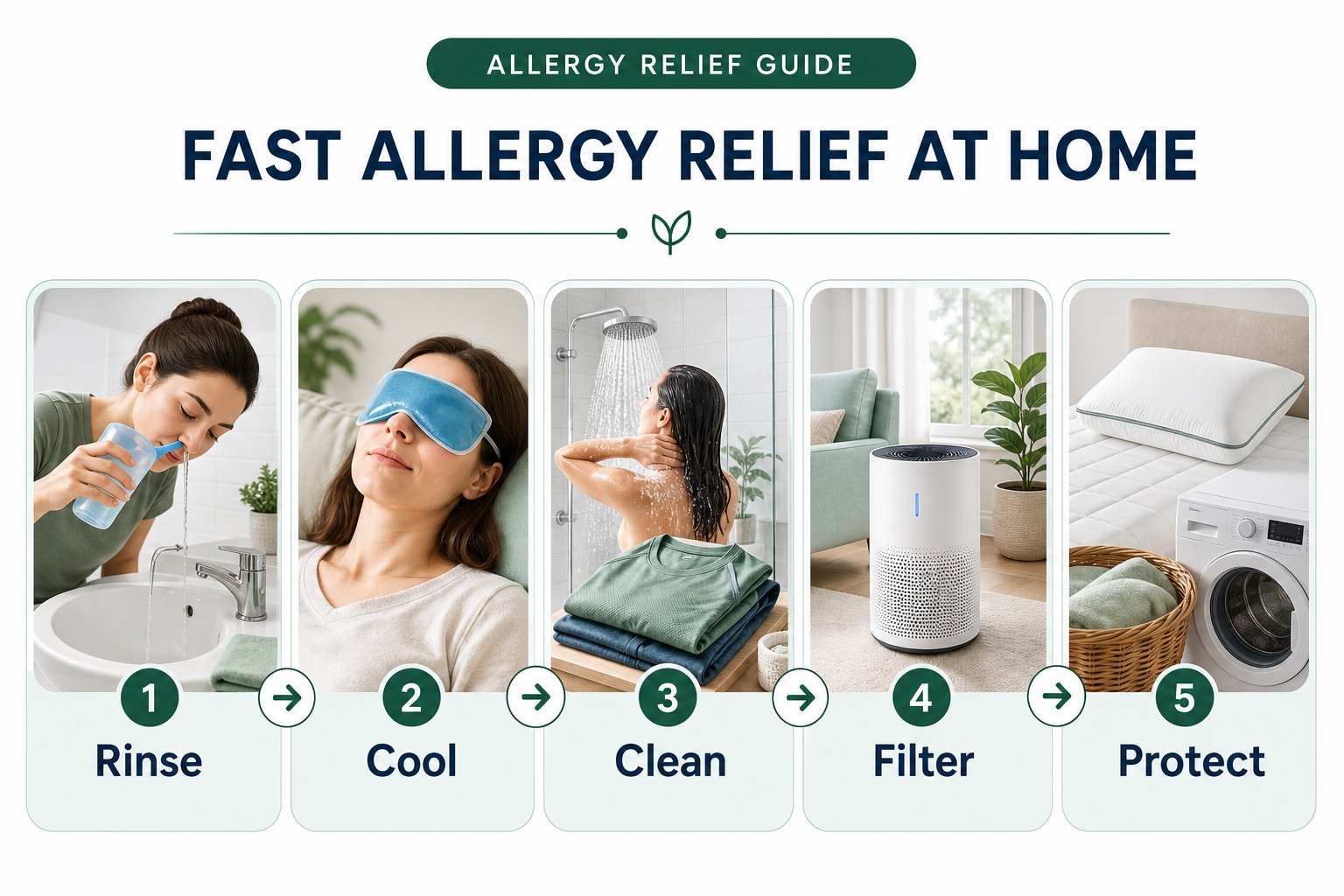
Never use untreated tap water in a neti pot or saline nasal rinse. Use only distilled or sterile water, or tap water that has been boiled for at least 1 minute (3 minutes at high elevations) and then cooled. Tap water is safe to drink but not safe to send through your nasal passages, because it can contain microorganisms — including the rare but often-fatal amoeba Naegleria fowleri, sometimes called the "brain-eating amoeba" — that can cause serious or deadly infections when they reach the nose.
To rinse safely: use water labeled distilled or sterile, or boil and cool tap water first; rinse the device with safe water after every use; and let it fully air-dry. This guidance follows U.S. FDA and CDC recommendations for safe nasal irrigation.
For a deeper look, see our guides to natural allergy remedies and relief for itchy, watery eyes.
For sneezing, itching and a runny nose, a non-drowsy oral antihistamine — cetirizine (Zyrtec), fexofenadine (Allegra) or loratadine (Claritin) — is the usual first choice. For a blocked, inflamed nose, a steroid nasal spray such as fluticasone (Flonase) or budesonide (Rhinocort) is most effective. Many people use both.
If avoidance and home care aren't enough, several types of over-the-counter (OTC) medicine can help. Each targets different symptoms — this overview shows what each type does. It isn't a dosing guide; always follow the label and ask a pharmacist or doctor, especially for children, during pregnancy, or if you take other medicines.
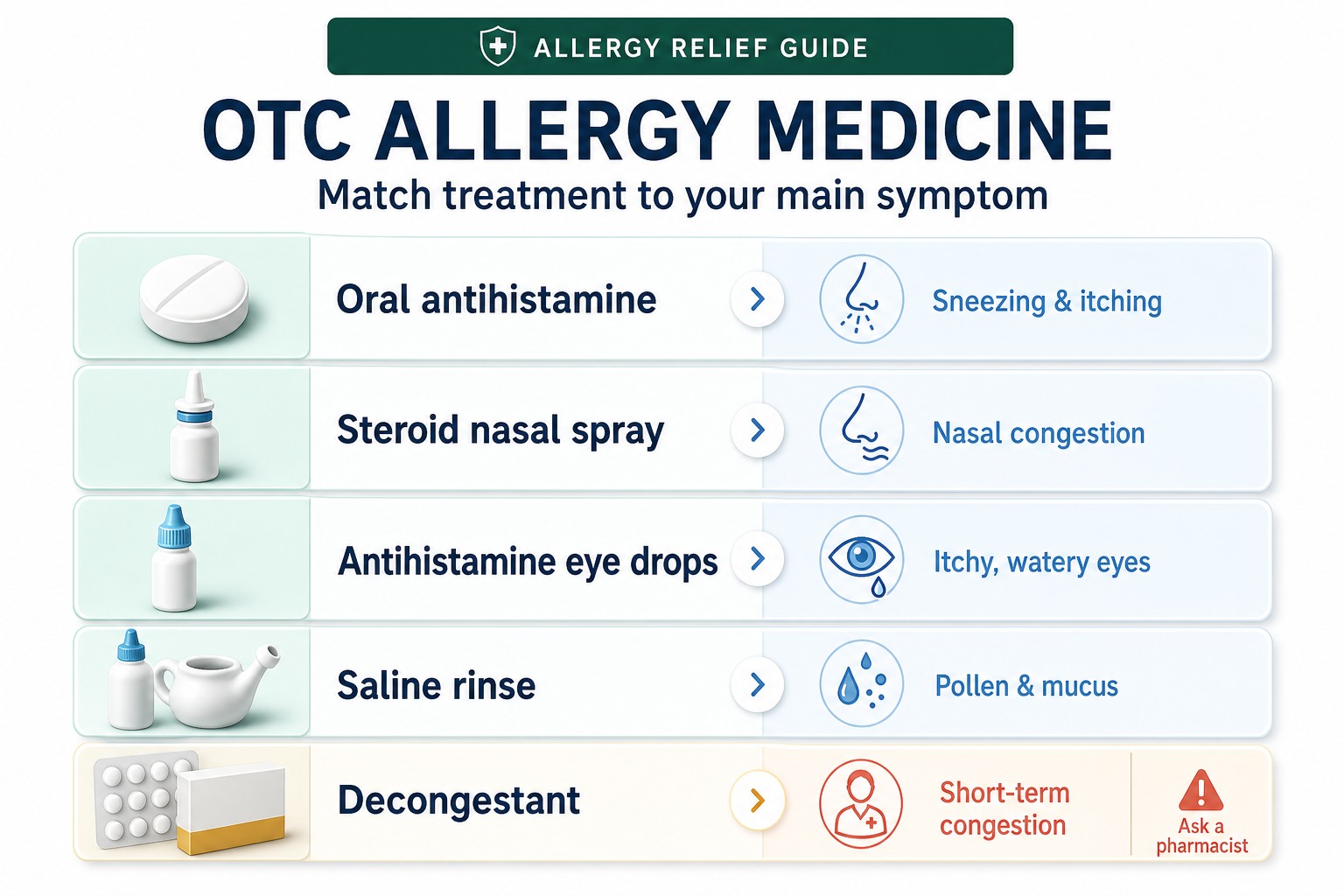
| Medicine type | Common options (generic → brand) | Best for | Good to know |
|---|---|---|---|
| Oral antihistamines | Cetirizine (Zyrtec), fexofenadine (Allegra), loratadine (Claritin), levocetirizine (Xyzal) | Sneezing, itching, runny nose, itchy eyes | Choose a newer, non-drowsy option. Compare them in Claritin vs. Zyrtec and best antihistamine. |
| Steroid nasal sprays | Fluticasone (Flonase), budesonide (Rhinocort), triamcinolone (Nasacort) | Nasal congestion and inflammation | Most effective for a blocked nose, but works best used daily; full effect can take several days. See nasal sprays for allergies. |
| Antihistamine eye drops | Ketotifen (Zaditor), olopatadine (Pataday) | Itchy, red, watery eyes | Target eye symptoms directly when oral medicine isn't enough. |
| Decongestants | Pseudoephedrine (Sudafed), oxymetazoline nasal (Afrin) | Short-term stuffiness relief | Use only briefly. Nasal decongestant sprays can cause rebound congestion if used more than a few days; oral forms may not suit high blood pressure — check with a pharmacist. |
| Mast cell stabilizer | Cromolyn sodium nasal spray (NasalCrom) | Preventing nasal symptoms | Very safe, but needs to be used several times a day and started before allergen exposure. |
Prescription options and immune-system treatments are covered in our full allergy treatment & relief guide and antihistamines guide.
Where and when your symptoms strike changes the best approach. Jump to the guide that fits you:
Track pollen forecasts, start medicine before peak season, and time outdoor activity for lower-pollen hours.
Seasonal allergy relief →Control dust mites, mold and pet dander with HEPA filtration, allergen-proof bedding and lower humidity.
Indoor allergy relief →Children's symptoms and safe options differ from adults'. Get age-aware guidance before using any medicine.
Allergies in children →You can't always avoid developing allergies, but you can lower how often symptoms hit. A few habits make the biggest difference:
Myth vs. fact: Local honey is often said to "cure" pollen allergies. There's no solid evidence it works, so treat it as a pleasant extra — not a replacement for proven relief. The same caution applies to most herbal supplements: talk to your doctor first, especially for children or during pregnancy.
More on the evidence behind popular remedies in does local honey help allergies?, quercetin for allergies and natural allergy remedies.
Allergy is a broad label. Start from whatever is actually bothering you.
| If this is you | Start here |
|---|---|
| Blocked, runny, sneezy nose most of the year | Allergic rhinitis (hay fever) |
| Not sure which medicine to buy | Allergy medicine and nasal sprays |
| Worst in spring, summer, fall or winter | Spring, summer, fall and winter allergies |
| You want to read the pollen forecast properly | Pollen counts |
| Eyes are the worst part | Eye allergies and eye drops |
| Raw fruit makes your mouth itch | Oral allergy syndrome |
| Symptoms reach your chest | Allergic asthma |
| Recurring itchy welts | Hives (urticaria) |
| Pets or damp rooms set you off | Pet allergies and mold allergy |
| Could it be COVID rather than allergy? | Allergies vs. COVID-19 |
| A baby or toddler with symptoms | Allergies in babies |
| You want testing | Skin prick test, blood test and finding an allergist |
| You want to treat the cause, not each season | Allergy shots and under-the-tongue tablets |
| You need to be ready for a severe reaction | Allergy emergency and epinephrine auto-injectors |
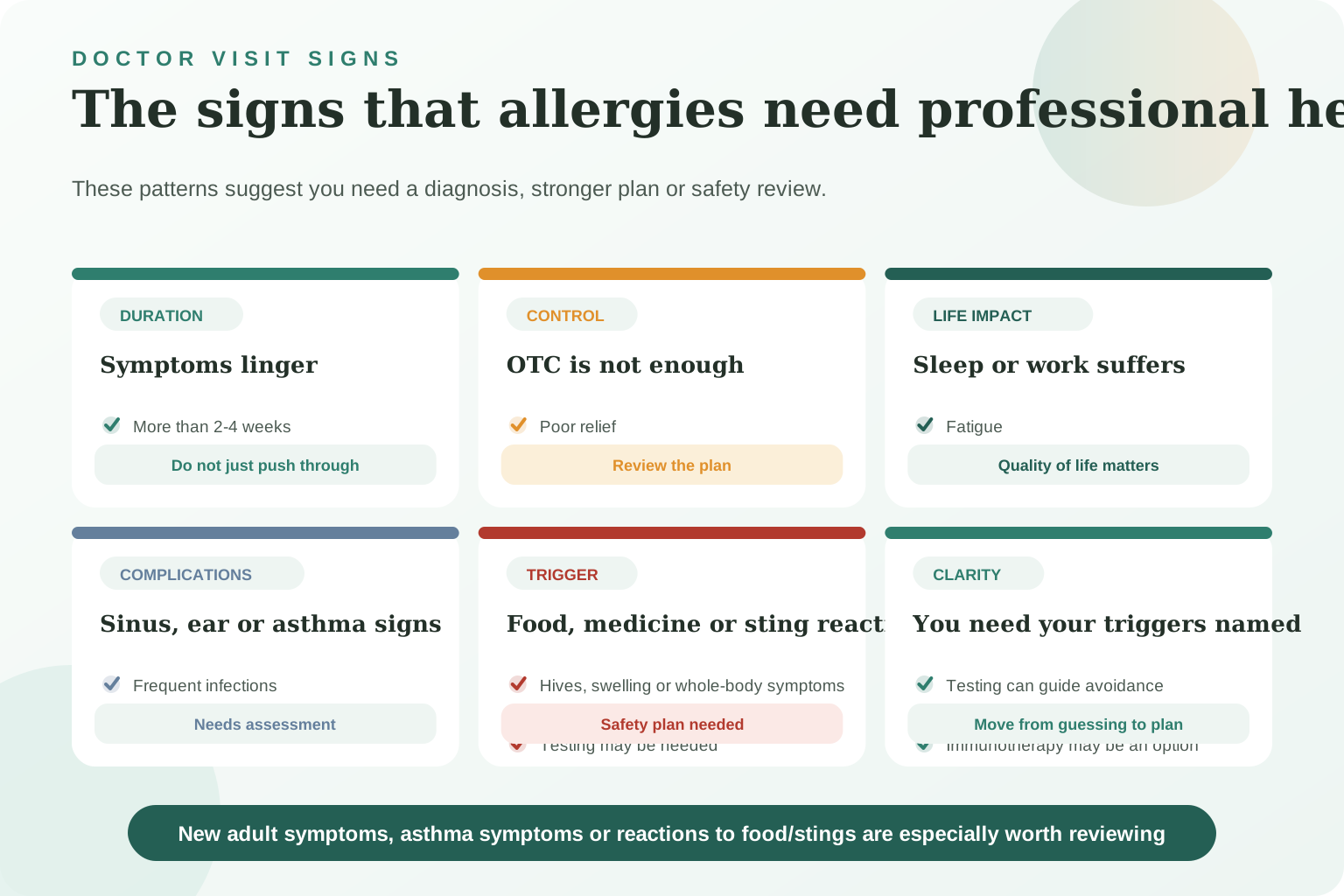
See a doctor if over-the-counter medicine isn't controlling your symptoms, if they disrupt your sleep or daily life, or if they last for many weeks. Seek emergency care immediately for any severe reaction — trouble breathing, or swelling of the face, lips, tongue or throat.
Consider booking an appointment — with a primary care provider or an allergist — if:
A doctor can confirm your triggers with allergy testing and discuss stronger or longer-term options, including prescription medicine and immunotherapy. Read more in our when to see a doctor guide.
A severe, whole-body allergic reaction (anaphylaxis) is a medical emergency. Call 911 (or your local emergency number) right away if you notice trouble breathing; swelling of the face, lips, tongue or throat; widespread hives; chest tightness; dizziness or fainting; or a sudden sense of dread.
If epinephrine (an auto-injector such as EpiPen or Auvi-Q) has been prescribed, use it immediately — it's the first-line treatment. Do not rely on antihistamines in place of epinephrine, and still call emergency services. See our allergy safety guide.
Dig deeper into any topic. Each guide covers a specific topic in more depth.
Pollen, hay fever and season-by-season relief.
Identify and understand what you're feeling.
From home care to prescription options.
How they work and how to compare brands.
Skin and blood tests, and what results mean.
Pollen, dust, mold, pets, insects and more.
Common triggers, labels and safe eating.
Dust mites, mold and cleaner indoor air.
Kids, pregnancy and age-aware guidance.
The nasal condition behind most symptoms.
Which type to take for which symptom.
The signs that need professional care.
Our content is written for a general audience and medically reviewed by Dr. Hannah H. Walford, MD, a board-certified allergist and immunologist who also holds board certification in internal medicine and pediatrics. Her professional profile and our review process are set out on our about page and medical review policy. We draw on patient-education material from authoritative sources rather than blogs or forums, and we name the specific source behind each figure we quote.
Medical disclaimer: This guide is for general education and isn't a substitute for personalized medical advice. Always talk to a qualified healthcare professional about your symptoms and before starting or changing any treatment.
 MD
MDMedically reviewed
Allergist and Immunologist
Dr. Hannah H. Walford is a board-certified allergist and immunologist experienced in caring for adults and children with allergic conditions. Her areas of expertise include food allergy, eczema, allergic rhinitis, sinusitis and asthma. She provides medical leadership and review oversight for the educational health content published by Allergy Relief Guide.
Medical content is provided for education and is not a substitute for diagnosis or individualized medical care.
Find your trigger and avoid it, treat symptoms with home care and the right OTC medicine, and see an allergist if relief doesn't last — and never wait on a severe reaction.
Start with the treatment & relief guide