Allergy Blood Test (Specific IgE)
An allergy blood test, often called a specific IgE test (or by lab-specific names like ImmunoCAP), measures the level of allergen-specific antibodies in your blood to help identify what you might be allergic to. It's generally considered comparable to skin prick testing in accuracy for many allergens, and it's often used instead of skin testing when a patient has widespread skin conditions, is on medications that would interfere with skin testing, or has a history of a severe reaction that makes skin testing riskier. Results need to be interpreted alongside your symptoms and history by a clinician, not read on their own.
Quick answer
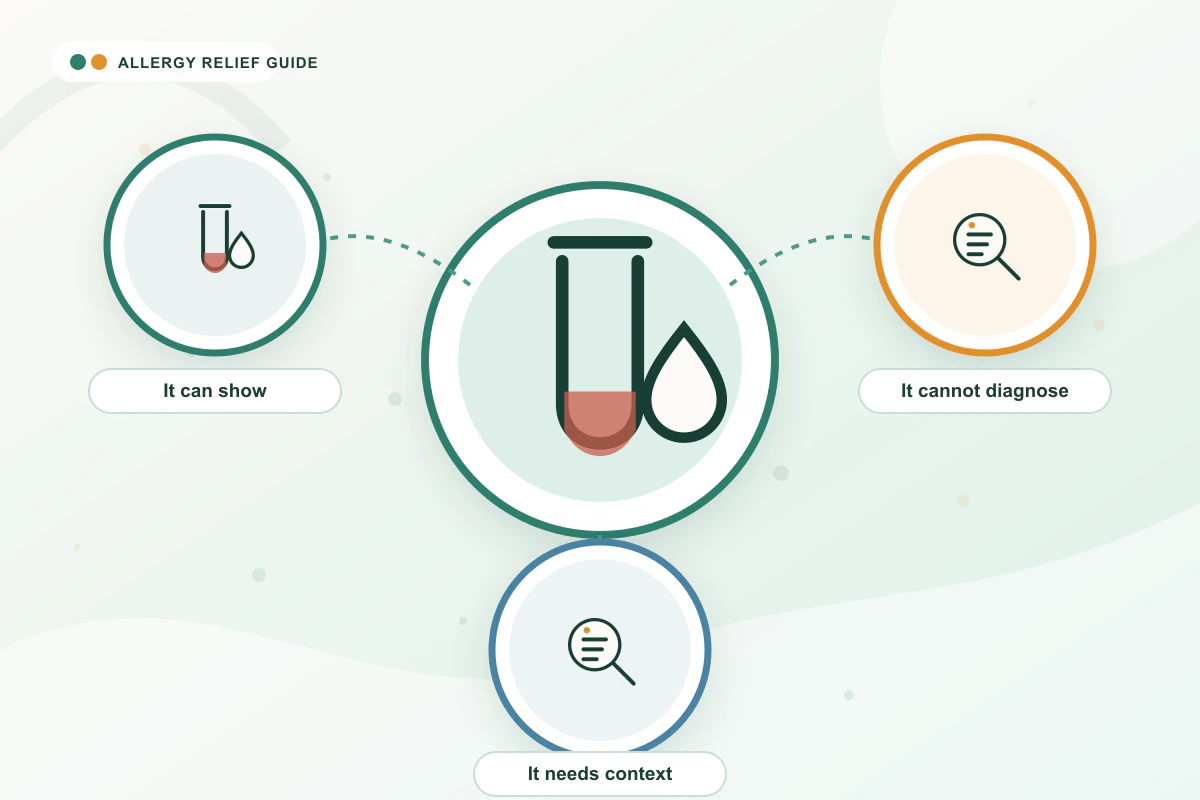
An allergy blood test, or specific IgE test, measures allergen-specific antibody levels in your blood. It's generally comparable in accuracy to skin prick testing for many allergens, and is often used instead of skin testing for patients with widespread skin conditions, certain medications, or a history of severe reactions. Results need to be interpreted alongside your symptoms and history by a clinician.
What you need to know
- A specific IgE (allergy) blood test measures allergen-specific antibodies in a blood sample, rather than exposing your skin to allergen extracts directly.
- Skin prick testing remains the typical first-line approach for most patients, but blood testing may be preferred for widespread skin disease, certain medications that suppress skin test results, uncooperative patients, or a history suggesting extra risk from skin testing.
- Studies generally find blood and skin testing comparable in sensitivity and specificity for many inhaled allergens, though results aren't always identical.
- A positive result means your body has made antibodies to that allergen — it does not automatically mean you'll have symptoms when exposed, which is why results are interpreted alongside your history.
- Cost varies widely depending on how many allergens are tested and whether the lab is in your insurance network; most insurance plans cover testing ordered by an allergist, though out-of-pocket costs still vary.
- There's no special preparation required for a blood draw itself, but certain medications can affect skin testing, so tell your clinician about everything you're taking either way.
How the Test Works
A specific IgE blood test looks for antibodies your immune system has made against particular allergens — things like pollen, pet dander, dust mites, or specific foods. A blood sample is sent to a lab, where it's tested against a panel of allergens your clinician selects based on your symptoms and history. Results are typically reported as a level for each allergen tested, which your clinician interprets alongside your reported symptoms, not as a stand-alone yes-or-no answer.
Blood Test vs. Skin Prick Test
| Feature | Specific IgE blood test | Skin prick test |
|---|---|---|
| How it's done | Single blood draw, sent to a lab | Small amounts of allergen extract placed on the skin, usually the forearm or back |
| Results | Often take a few days to return from the lab | Typically visible within about 15–20 minutes |
| Effect of antihistamines | Not affected by antihistamines | Antihistamines can suppress results and are usually paused beforehand |
| Skin conditions | Not affected by eczema or other skin conditions | Widespread skin disease can make results hard to read |
| Typical use | Preferred for certain medications, skin conditions, or higher-risk reaction history | Usually the first-line approach in most other situations |
Research generally finds the two approaches comparable in accuracy for many common inhaled allergens, though they don't always agree exactly for every allergen or every patient, which is one reason an allergist may sometimes use both.
What Results Mean
A positive specific IgE result means your immune system has produced antibodies against that particular allergen. On its own, that doesn't necessarily mean you have clinically significant allergy symptoms from it — sensitization and symptomatic allergy aren't always the same thing. This is why allergy blood test results are meant to be interpreted together with your reported symptoms and exposure history by a clinician, rather than read in isolation.
What to Expect and What It Typically Costs
The test itself is a standard blood draw and doesn't require special preparation, though it's worth telling your clinician about all medications and supplements you're taking. Cost varies considerably depending on how many allergens are included in the panel and whether your insurance and the testing lab are in-network; broader panels and out-of-network labs generally cost more. Most insurance plans cover allergy testing ordered by a board-certified allergist, though your specific copay or deductible will affect your out-of-pocket cost. Ask your insurance provider and the testing facility for an estimate specific to your plan before testing if cost is a concern.
When to seek care
Routine
You and your clinician have identified specific allergens worth testing for as part of routine allergy evaluation.
Prompt (within days)
Ongoing allergy symptoms without a clear cause, where testing could help guide treatment.
Urgent (same day)
Considering skin prick testing but you have a history of a severe reaction — ask whether blood testing is a safer option for you.
Emergency (call 911)
Symptoms of a severe allergic reaction (difficulty breathing, swelling of the lips, tongue, or throat, widespread hives) are not something a blood test addresses in the moment — call 911.
Practical next steps
Safe general steps
- Discuss your symptoms and history with your clinician to decide which allergens are worth testing
- Tell your clinician about all medications and supplements before either type of test
- Ask your insurance provider what's covered before testing if cost is a concern
- Bring your results to a follow-up visit to discuss what they mean for your specific symptoms
Actions that need medical guidance
- Deciding between blood testing and skin prick testing for your situation
- Interpreting what a positive or negative result means for you
- Building a treatment plan based on your results
Don't attempt without professional advice
- Don't interpret a positive result as a confirmed allergy without discussing it with a clinician
- Don't assume a negative result completely rules out a reaction to a food or substance if your history strongly suggests otherwise — tell your clinician
- Don't skip telling your clinician about current medications before testing
Frequently asked questions
What is a specific IgE allergy blood test?
Is a blood test as accurate as a skin prick test?
When is a blood test preferred over a skin prick test?
Does a positive allergy blood test mean I'm definitely allergic?
How much does an allergy blood test cost?
Do I need to stop taking antihistamines before an allergy blood test?
Sources
- PMC (NIH) — Immunocap vs. skin prick testing for inhalant allergens
- PMC (NIH) — Allergen-specific IgE: comparison between skin prick test and serum assay in real life
- World Allergy Organization Journal — IgE allergy diagnostics and other relevant tests in allergy: a position paper
Medical disclaimer: This guide is for general education and isn't a substitute for personalized medical advice. It doesn't provide dosing. Always talk to a qualified healthcare professional about your symptoms and treatment.
 MD
MDMedically reviewed
Dr. Hannah H. Walford, MD
Allergist and Immunologist
- Website role
- Owner, Medical Director and Medical Reviewer of Allergy Relief Guide
- Professional affiliation
- Stanford Health Care / Menlo Medical Clinic, Menlo Park, California
- Areas of expertise
- Food allergy, eczema, allergic rhinitis, sinusitis and asthma
Dr. Hannah H. Walford is a board-certified allergist and immunologist experienced in caring for adults and children with allergic conditions. Her areas of expertise include food allergy, eczema, allergic rhinitis, sinusitis and asthma. She provides medical leadership and review oversight for the educational health content published by Allergy Relief Guide.
Medical content is provided for education and is not a substitute for diagnosis or individualized medical care.
Continue building your allergy plan
Explore related guides to understand the full picture, from triggers to treatment to safety.
See the full allergy testing guide