
Summer Allergies: Triggers, Symptoms and Relief
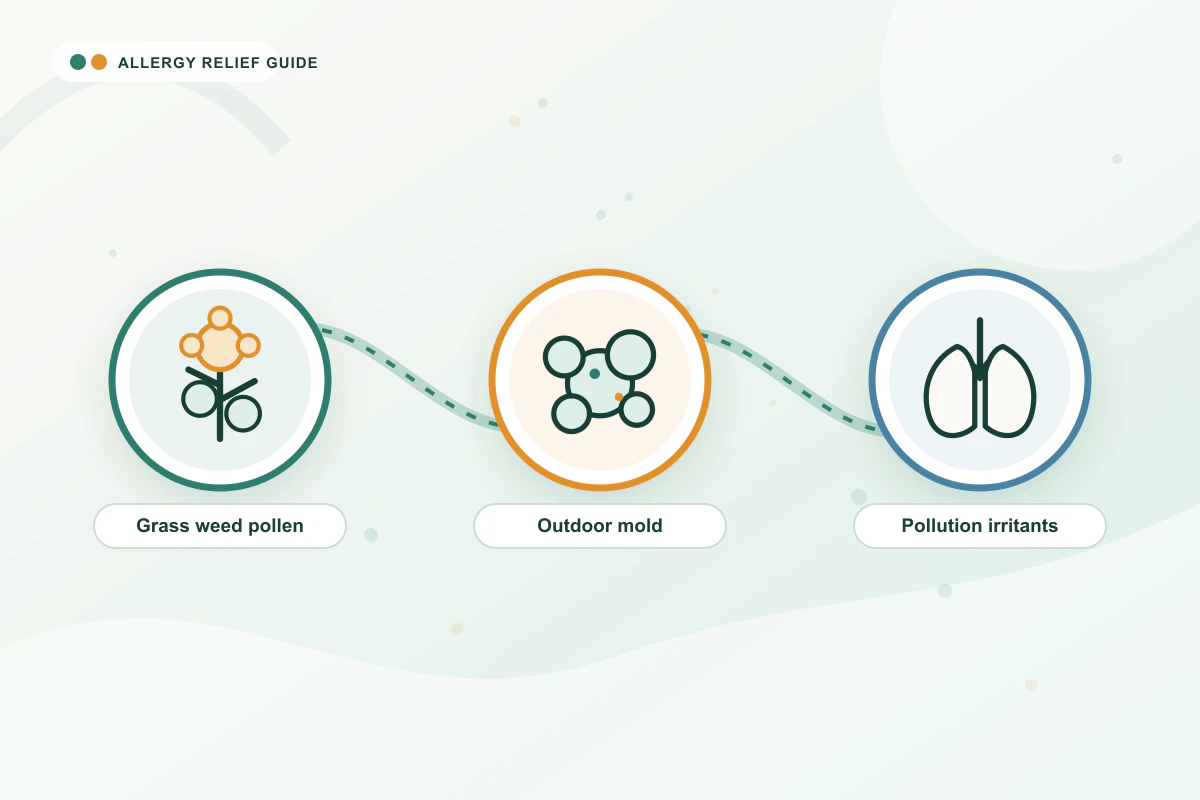
Summer allergies are driven mainly by grass pollen, which peaks in late spring and summer after tree pollen fades — making grass the season's biggest trigger. Outdoor mold, released from soil, compost, and cut grass, adds to the load, especially in warm, humid weather. Summer also brings more stinging insects (bees and wasps) and hazy, high-ozone days that can worsen breathing for people with allergies and asthma. Symptoms are the usual sneezing, congestion, and itchy eyes. The most effective approach is tracking pollen, reducing exposure, and treating symptoms through the season.
Quick answer
Summer allergies are driven mainly by grass pollen, which peaks in late spring and summer after tree pollen fades. Outdoor mold (from soil, compost, and cut grass) adds to it, especially in warm, humid weather, and summer also brings more stinging insects and high-ozone days that can worsen breathing. Symptoms are the usual sneezing, congestion, and itchy eyes. The best approach is tracking pollen, reducing exposure, and treating symptoms through the season.
What you need to know
- Grass pollen is the main summer allergy trigger, peaking in late spring and summer after tree pollen fades.
- Outdoor mold, from soil, compost, and cut grass, adds to summer symptoms, especially in warm, humid weather.
- Summer brings more stinging insects (bees and wasps), which is a separate concern for people with insect-sting allergy.
- Heat and poor air quality (higher ozone/smog on hot, sunny days) can worsen breathing for people with allergies and asthma.
- Symptoms are the familiar ones: sneezing, congestion, runny nose, and itchy, watery eyes.
- The best approach is tracking pollen and air quality, reducing exposure, and treating symptoms through the season.
What Drives Summer Allergies
Summer's main allergy trigger is grass pollen. In the pollen calendar, trees pollinate in early spring, grasses take over in late spring and summer, and weeds like ragweed arrive in late summer and fall — so if your allergies peak in the warmer months, grass is the likely cause. On top of grass pollen, outdoor mold contributes: molds grow on soil, compost, cut grass, and damp vegetation and release spores that can flare symptoms, especially in warm, humid conditions. For each, see our grass pollen allergy and mold allergy guides.
Summer-Specific Extras: Insects and Air Quality
| Summer factor | Why it matters |
|---|---|
| Stinging insects | Bees, wasps, hornets, and yellow jackets are most active in summer; for people with insect-sting allergy, that's a serious concern |
| Heat and ozone | Hot, sunny days raise ground-level ozone and smog, which can irritate airways and worsen allergy and asthma symptoms |
| Grass and yard work | Mowing and gardening stir up grass pollen and mold, intensifying exposure |
If you have an insect-sting allergy, summer deserves extra care — see our insect sting allergy guide. And on poor-air-quality days, our air quality and allergies guide explains how to plan.
Symptoms
- Sneezing and a runny or congested nose
- Itchy, red, or watery eyes
- An itchy nose, throat, or ears
- Postnasal drip and cough
- For some, worse asthma symptoms on high-pollen or high-ozone days
Some people with grass pollen allergy also get an itchy mouth from certain raw fruits and vegetables in summer — see our oral allergy syndrome guide.
Getting Relief Through the Season
Managing summer allergies uses the same toolkit as other seasonal allergies. Track your local pollen and air-quality forecasts, keep windows closed and use filtered air conditioning on high days, schedule outdoor activity for lower-pollen times, and shower and change clothes after being outside. For symptoms, antihistamines, nasal corticosteroid sprays, and allergy eye drops are the mainstays, and starting before your peak works better than catching up. For persistent grass or mold allergy, an allergist can discuss immunotherapy. See our pollen count, allergy treatment, and allergy shots guides.
Summer storms and the grass-pollen trap
A thunderstorm looks like relief. The air cools, rain clears the haze, and it feels like the pollen has been washed out of the sky. During grass season the opposite can happen, and the effect has a name: thunderstorm asthma.
A review of thunderstorm allergy and asthma describes storm moisture rupturing pollen grains by osmotic shock, with each grain releasing around 700 starch granules of roughly 0.5 to 2.5 microns. An intact grass pollen grain is large, around 30 microns, and tends to lodge in the nose and upper airway. Fragments that small reach the lower airways instead, carrying the same allergen somewhere it does not normally go.
Timing is what makes it dangerous rather than merely interesting. The review notes symptoms typically appear during the first 20 to 30 minutes of a storm, so the warning window is short, and it states that individuals with allergic rhinitis only, and no previous asthma, can experience bronchoconstriction that is sometimes severe. A hay fever diagnosis with no asthma history is not protection.
This lands in summer precisely because it needs both ingredients at once: peak grass pollen and storm weather. The practical response is unglamorous — stay indoors with doors and windows shut until the front has passed, rather than going out to watch it arrive.
- Do not treat an approaching summer storm as pollen relief
- Stay indoors with windows and doors closed until the front passes
- The first 20 to 30 minutes is the risk window
- Keep a reliever inhaler to hand if you have allergic asthma
- Sudden breathlessness or wheeze during a storm is urgent — see allergy safety
Humidity is doing more than making you uncomfortable
Summer humidity gets treated as a comfort problem. For an allergy sufferer it is also the control that decides whether two of the biggest indoor triggers can thrive, which makes a dehumidifier a more targeted purchase than it first appears.
The US Environmental Protection Agency advises keeping indoor humidity “below 60 percent (ideally between 30 and 50 percent) relative humidity”. Mold needs moisture to grow at all, and dust mites absorb water from the air rather than drinking it, so a single setting works against both at once.
Summer is also when water damage turns into a mold problem fastest. EPA advises that “if wet or damp materials or areas are dried 24-48 hours after a leak or spill happens, in most cases mold will not grow” — which turns a leaking air-conditioning unit or a storm-soaked carpet into a deadline rather than a background worry.
Air conditioning helps on both counts, since it lowers humidity and lets you keep windows shut during grass pollen peaks. The trade-off is that units and their filters need cleaning, or they become the damp surface the mold grows on. See our mold allergy and indoor allergies guides.
- Target 30 to 50 percent indoor humidity; below 60 percent at minimum
- Dry any leak or spill within 24 to 48 hours
- Use a dehumidifier in persistently damp rooms rather than airing them out on high-pollen days
- Clean air-conditioning filters and check units for standing water
- Run bathroom and kitchen extractor fans, and let them run on
When to seek care
Routine
Seasonal summer symptoms you want to manage with exposure reduction and over-the-counter treatment.
Prompt (within days)
Symptoms not controlled by a standard routine, or that you'd like confirmed with allergy testing.
Urgent (same day)
Summer-allergy symptoms with wheezing, chest tightness, or shortness of breath, especially with asthma or on high-ozone days.
Emergency (call 911)
Severe breathing difficulty or an asthma attack not responding to a reliever inhaler — call 911. And a severe reaction to an insect sting (trouble breathing, throat swelling) needs epinephrine and 911.
Practical next steps
Safe general steps
- Track local pollen and air-quality forecasts through the summer
- Keep windows closed and use filtered air conditioning on high days
- Shower and change clothes after being outdoors, and take precautions for yard work
- Start allergy treatment before your summer peak
Actions that need medical guidance
- Symptoms not controlled by an over-the-counter routine
- Whether testing or immunotherapy fits your grass or mold allergy
- Insect-sting allergy precautions and an epinephrine plan
Don't attempt without professional advice
- Don't do yard work at peak grass-pollen times without precautions if you're sensitive
- Don't ignore worse breathing on hot, high-ozone days — especially with asthma
- Don't overlook insect-sting allergy in summer — carry epinephrine if prescribed
Frequently asked questions
What causes summer allergies?
Why are my allergies worse in summer?
What are the symptoms of summer allergies?
Are stinging insects a summer allergy concern?
Does air quality affect summer allergies?
How do I relieve summer allergies?
Do thunderstorms make summer allergies better or worse?
Can a summer storm trigger asthma if I only have hay fever?
What indoor humidity should I aim for in summer?
How fast do I need to dry water damage in summer?
Does air conditioning help summer allergies?
Sources
- MedlinePlus (NIH/NLM) — Allergic rhinitis
- PubMed Central (NIH/NLM) — Thunderstorm allergy and asthma: state of the art
- US EPA — A Brief Guide to Mold, Moisture and Your Home
- ACAAI Patient — Mold Allergies
- MedlinePlus (NIH/NLM) — Allergies
Medical disclaimer: This guide is for general education and isn't a substitute for personalized medical advice. It doesn't provide dosing. Always talk to a qualified healthcare professional about your symptoms and treatment.
 MD
MDMedically reviewed
Dr. Hannah H. Walford, MD
Allergist and Immunologist
- Website role
- Owner, Medical Director and Medical Reviewer of Allergy Relief Guide
- Professional affiliation
- Stanford Health Care / Menlo Medical Clinic, Menlo Park, California
- Areas of expertise
- Food allergy, eczema, allergic rhinitis, sinusitis and asthma
Dr. Hannah H. Walford is a board-certified allergist and immunologist experienced in caring for adults and children with allergic conditions. Her areas of expertise include food allergy, eczema, allergic rhinitis, sinusitis and asthma. She provides medical leadership and review oversight for the educational health content published by Allergy Relief Guide.
Medical content is provided for education and is not a substitute for diagnosis or individualized medical care.
Related guides
Continue building your allergy plan
Explore related guides to understand the full picture, from triggers to treatment to safety.
See the full seasonal allergies guide