How to Relieve Allergies Fast
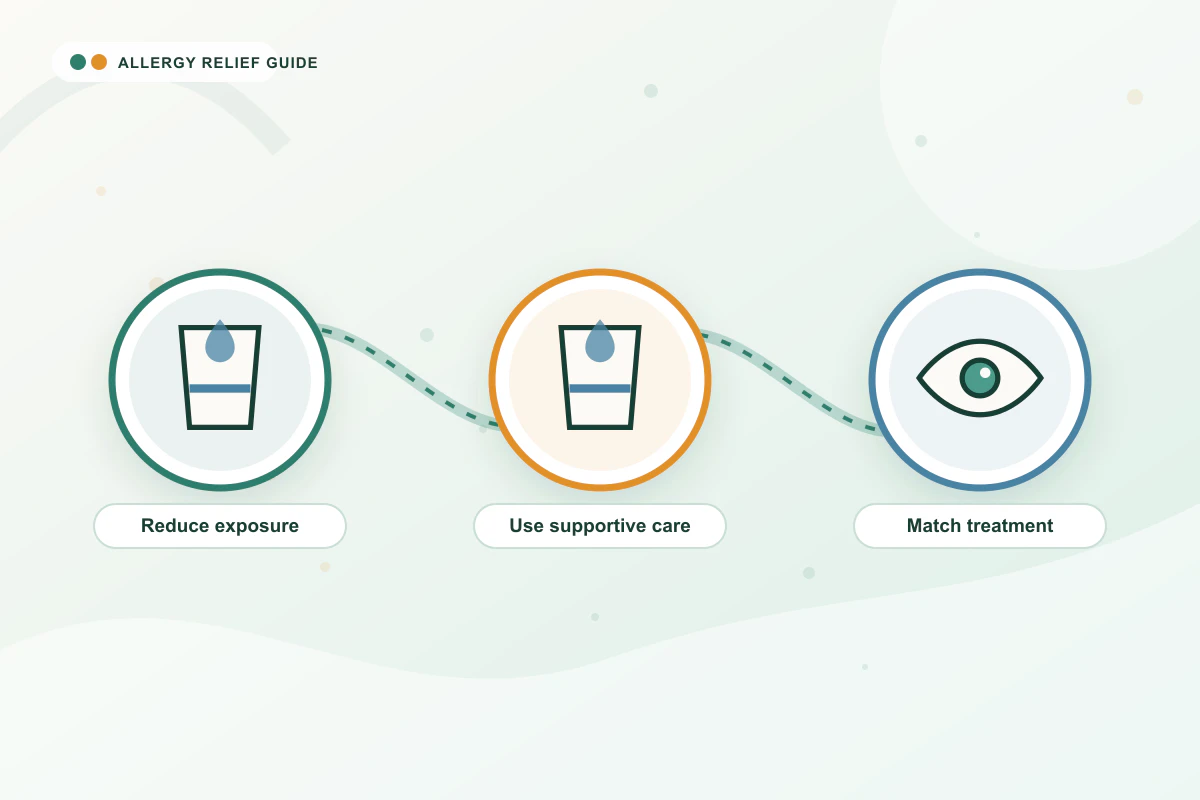
The fastest way to ease allergy symptoms is to get away from the allergen, flush it out with a saline nasal rinse, and take a fast-acting antihistamine — some work within about an hour. Cool compresses and lubricating eye drops help itchy eyes quickly. But it's worth being honest: nothing truly stops allergies instantly. The most effective medicine, a nasal corticosteroid spray, works best when started early and used consistently, taking days to reach full effect. So “fast” relief and “best” relief are slightly different goals.
Quick answer
The fastest way to ease allergy symptoms is to get away from the allergen, flush it out with a saline nasal rinse, and take a fast-acting antihistamine (some work within about an hour). Cool compresses and lubricating eye drops quickly soothe itchy eyes. But nothing truly stops allergies instantly — the most effective medicine, a nasal corticosteroid spray, works best started early and used consistently, taking days to reach full effect.
What you need to know
- The single fastest step is to remove yourself from the allergen (or the allergen from you) — go indoors, close windows, change clothes, shower.
- A saline nasal rinse physically flushes pollen and other allergens out of the nose and can be used soon after exposure.
- Fast-acting oral antihistamines can relieve sneezing, itching, and runny nose within about an hour.
- Cool compresses and lubricating eye drops quickly soothe itchy, watery eyes.
- Nasal corticosteroid sprays are the most effective allergy medicine but work best used consistently and take days to reach full effect — start them early in your season.
- Nothing stops allergies instantly; a severe allergic reaction (anaphylaxis) is different and is a 911 emergency.
The Fastest Things You Can Do Right Now
When symptoms hit, the quickest wins are about reducing your allergen exposure and rinsing away what's already triggering you:
- Get away from the trigger: go indoors on high-pollen days, close windows, and switch on filtered air conditioning
- Rinse it off: shower and change clothes to remove pollen from skin and hair; a saline nasal rinse flushes allergen out of the nose
- Take a fast-acting antihistamine: oral second-generation antihistamines can start working within about an hour (cetirizine tends to act fastest)
- Soothe your eyes: a cool compress and lubricating artificial tears quickly calm itchy, watery eyes — and don't rub
A saline rinse is a genuinely fast, drug-free way to cut the allergen load; see our allergic rhinitis guide for how it fits into overall care.
What Works Fastest, and How Fast
| Approach | How fast | Best for |
|---|---|---|
| Removing/avoiding the allergen and rinsing (shower, saline) | Minutes | Cutting exposure right away |
| Fast-acting oral antihistamine | About 1 hour | Sneezing, itching, runny nose, itchy eyes |
| Cool compress + lubricating eye drops | Minutes | Itchy, watery eyes |
| Allergy eye drops (antihistamine/mast-cell) | Fast for eyes | Ocular allergy symptoms |
| Nasal corticosteroid spray | Hours to days for full effect | The most effective overall control, used consistently |
For the medicines themselves, see our antihistamines, nasal sprays for allergies, and allergy eye drops guides.
Why "Instant" Isn't Realistic
It's worth setting expectations: no allergy treatment truly works instantly, and marketing that promises otherwise is overselling. Fast-acting antihistamines still take around an hour, and the single most effective allergy medicine — the nasal corticosteroid spray — is a slow-and-steady tool that reaches full effect over days of consistent use, not minutes. That's why the smartest "fast" strategy is often to start treatment before your symptoms peak (for example, ahead of your pollen season) so you're not playing catch-up. See our allergy treatment guide for the full toolkit.
The Fast Track for Ongoing Relief
If you find yourself constantly reaching for fast fixes, the quickest path to lasting relief is usually to treat the allergy properly: identify your triggers, reduce exposure, use a nasal corticosteroid spray consistently through your season, and add an antihistamine as needed. For persistent or severe allergies, an allergist can discuss testing and immunotherapy for longer-term change. See our natural allergy remedies for non-drug measures and allergy shots for the long game.
When to seek care
Routine
Everyday allergy symptoms you want to relieve quickly with over-the-counter measures.
Prompt (within days)
Symptoms that keep needing 'fast fixes' or aren't controlled — a consistent treatment plan usually works better.
Urgent (same day)
Allergy symptoms with wheezing, chest tightness, or shortness of breath, especially with asthma.
Emergency (call 911)
A severe allergic reaction (anaphylaxis) is not the same as everyday allergies and is not something to 'treat fast' at home — trouble breathing, swelling of the lips, tongue, or throat, widespread hives with dizziness. Use epinephrine if prescribed and call 911.
Practical next steps
Safe general steps
- Get away from the allergen: go indoors, close windows, shower, and change clothes
- Use a saline nasal rinse to flush allergen out of your nose
- Take a fast-acting antihistamine for quick symptom relief
- Use a cool compress and lubricating drops for itchy eyes, without rubbing
Actions that need medical guidance
- Symptoms not controlled despite over-the-counter measures
- Starting a nasal corticosteroid spray for consistent control
- Whether testing or immunotherapy could reduce your allergies long-term
Don't attempt without professional advice
- Don't expect any treatment to work truly instantly — even fast antihistamines take about an hour
- Don't overuse decongestant nasal sprays for fast relief — more than a few days causes rebound congestion
- Don't treat a severe allergic reaction as a 'fast relief' problem — that needs epinephrine and 911
Frequently asked questions
What's the fastest way to relieve allergies?
How fast do antihistamines work?
Can you get rid of allergies instantly?
Does a saline rinse help allergies quickly?
What's the most effective allergy medicine?
Should I start allergy treatment before my season?
Sources
- MedlinePlus (NIH/NLM) — Allergic rhinitis - self-care
- Cleveland Clinic — Allergic Rhinitis (Hay Fever): Symptoms & Treatment
- MedlinePlus (NIH/NLM) — Allergic rhinitis
Medical disclaimer: This guide is for general education and isn't a substitute for personalized medical advice. It doesn't provide dosing. Always talk to a qualified healthcare professional about your symptoms and treatment.
 MD
MDMedically reviewed
Dr. Hannah H. Walford, MD
Allergist and Immunologist
- Website role
- Owner, Medical Director and Medical Reviewer of Allergy Relief Guide
- Professional affiliation
- Stanford Health Care / Menlo Medical Clinic, Menlo Park, California
- Areas of expertise
- Food allergy, eczema, allergic rhinitis, sinusitis and asthma
Dr. Hannah H. Walford is a board-certified allergist and immunologist experienced in caring for adults and children with allergic conditions. Her areas of expertise include food allergy, eczema, allergic rhinitis, sinusitis and asthma. She provides medical leadership and review oversight for the educational health content published by Allergy Relief Guide.
Medical content is provided for education and is not a substitute for diagnosis or individualized medical care.
Continue building your allergy plan
Explore related guides to understand the full picture, from triggers to treatment to safety.
See the full allergy treatment & relief guide