
Pollen Count: What It Measures and How to Use It
A pollen count is a measurement of how much pollen is in the air — specifically, the number of pollen grains per cubic meter of air, collected by an instrument (often on a rooftop) over a set period and analyzed in a lab. Counts are usually grouped into levels like low, moderate, high, and very high, though the exact thresholds differ by pollen type. It's worth knowing that a count reflects the recent past, while a pollen forecast predicts the days ahead. Checking your local count and forecast helps you plan outdoor activity and start treatment before symptoms peak.
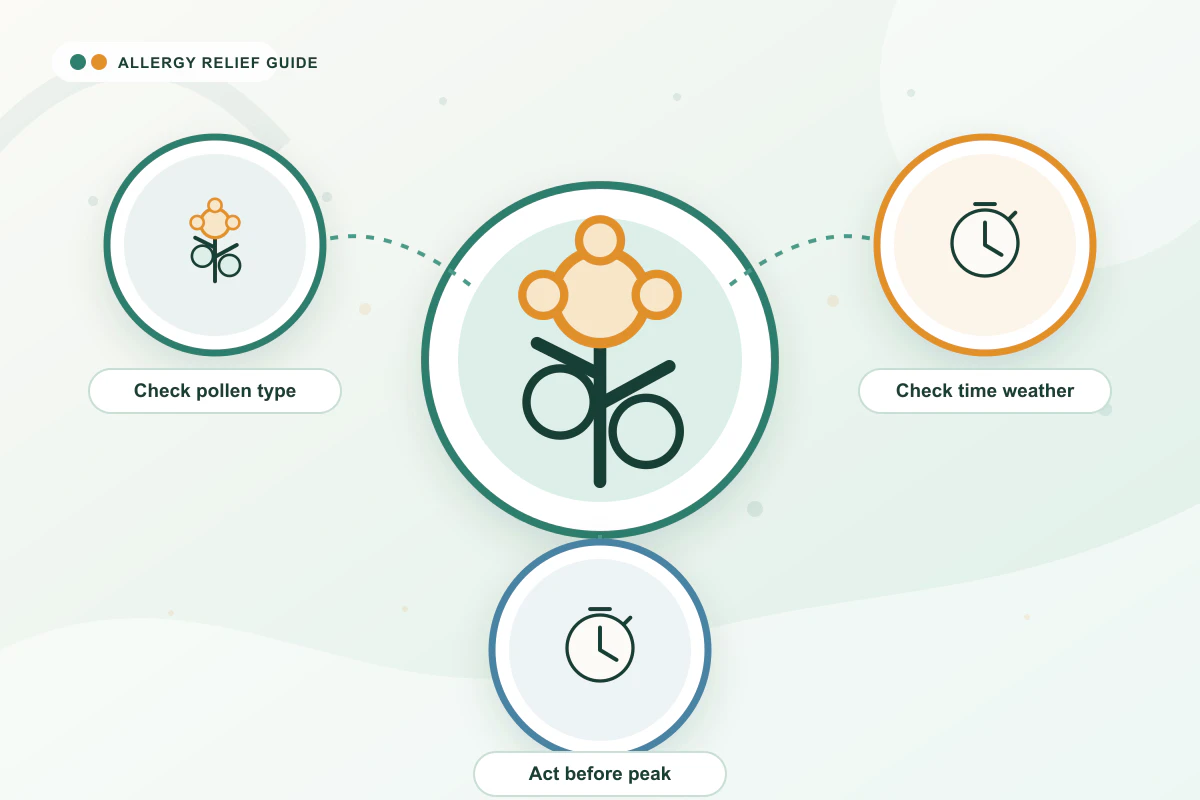
Quick answer
A pollen count measures how much pollen is in the air — the number of pollen grains per cubic meter, collected by an instrument over a set period and analyzed in a lab. Counts are grouped into levels like low, moderate, high, and very high, though thresholds differ by pollen type. A count reflects the recent past; a forecast predicts the days ahead. Checking your local count and forecast helps you plan outdoor activity and start treatment before symptoms peak.
What you need to know
- A pollen count measures the amount of pollen in the air, reported as pollen grains per cubic meter of air.
- It's collected by an instrument (often rooftop-mounted) over a set period and analyzed in a laboratory for pollen type and concentration.
- Counts are usually grouped into levels — low, moderate, high, very high — but the thresholds differ by pollen type.
- A count reflects what was in the air recently; a forecast predicts upcoming days based on past counts and weather.
- Pollen levels rise on warm, dry, windy days and fall after rain, and are often highest in the morning.
- Use your local count and forecast to plan outdoor activity and start allergy treatment before your symptoms peak.
What a Pollen Count Actually Measures
A pollen count tells you how much pollen is floating in the air. Technically, it's the number of pollen grains found in a cubic meter of air. To measure it, monitoring stations use an instrument — often placed on a rooftop — that traps airborne particles over a set collection period (commonly 24 hours). A trained analyst then examines the sample under a microscope to identify the types of pollen present and their concentration. Because it takes time to collect and analyze, a reported count reflects a recent snapshot rather than the exact moment you check it. For the trigger itself, see our pollen allergy guide.
Count vs. Forecast
These two terms get mixed up, but they're different. A count is a measurement of what was actually in the air during the collection period — a look at the recent past. A forecast is a prediction of what pollen levels will be over the coming days, based on previous years' patterns and current weather. For planning, the forecast is what helps you look ahead; the count confirms what's really happening. Many apps and websites show both, often for specific pollen types (tree, grass, weed) and outdoor mold.
What the Levels Mean
| Level | General meaning |
|---|---|
| Low | Only people who are highly sensitive are likely to notice symptoms |
| Moderate | Many people with pollen allergies begin to have symptoms |
| High | Most people with pollen allergies will have symptoms |
| Very high | Nearly everyone allergic to that pollen will have symptoms, often significant |
Important caveat: the numeric thresholds behind these categories differ by pollen type — a "high" grass-pollen count is a different number than a "high" ragweed count. What matters for you is your own response and which pollens affect you. See our allergy season by region and allergy season calendar guides for timing.
How to Use the Count
- Check your local pollen count and forecast during your allergy season, especially before outdoor plans
- On high or very-high days, limit prolonged outdoor time, keep windows closed, and use filtered indoor air
- Pollen is often highest in the morning and on warm, dry, windy days, and lower after rain
- Start your allergy treatment before counts peak, since prevention works better than catching up
- Shower and change clothes after being outdoors to remove pollen
See our outdoor allergens and allergy treatment guides for the broader plan.
When to seek care
Routine
You want to use pollen counts to plan around your seasonal allergies.
Prompt (within days)
Seasonal symptoms that a standard over-the-counter routine isn't controlling on high-count days.
Urgent (same day)
Seasonal symptoms with wheezing, chest tightness, or shortness of breath, especially with asthma.
Emergency (call 911)
Severe breathing difficulty or an asthma attack not responding to a reliever inhaler — call 911.
Practical next steps
Safe general steps
- Check your local pollen count and forecast during allergy season
- Limit outdoor time and keep windows closed on high or very-high days
- Start allergy treatment before counts peak
- Shower and change clothes after being outdoors
Actions that need medical guidance
- Seasonal symptoms not controlled by an over-the-counter routine
- Whether testing or immunotherapy fits your seasonal pattern
- Managing seasonal triggers alongside asthma
Don't attempt without professional advice
- Don't assume the count reflects the exact moment — it's a recent snapshot
- Don't compare 'high' across pollen types as if the numbers mean the same thing
- Don't wait until counts peak to start treatment — prevention works better
Frequently asked questions
What is a pollen count?
What's the difference between a pollen count and a forecast?
What do pollen count levels mean?
Is a 'high' count the same for all pollens?
When is pollen highest?
How do I use the pollen count for my allergies?
Sources
- AAAAI — Controlling Hay Fever Symptoms with Accurate Pollen Counts
- AAAAI — Pollen Counts Defined
- MedlinePlus (NIH/NLM) — Allergic rhinitis
Medical disclaimer: This guide is for general education and isn't a substitute for personalized medical advice. It doesn't provide dosing. Always talk to a qualified healthcare professional about your symptoms and treatment.
 MD
MDMedically reviewed
Dr. Hannah H. Walford, MD
Allergist and Immunologist
- Website role
- Owner, Medical Director and Medical Reviewer of Allergy Relief Guide
- Professional affiliation
- Stanford Health Care / Menlo Medical Clinic, Menlo Park, California
- Areas of expertise
- Food allergy, eczema, allergic rhinitis, sinusitis and asthma
Dr. Hannah H. Walford is a board-certified allergist and immunologist experienced in caring for adults and children with allergic conditions. Her areas of expertise include food allergy, eczema, allergic rhinitis, sinusitis and asthma. She provides medical leadership and review oversight for the educational health content published by Allergy Relief Guide.
Medical content is provided for education and is not a substitute for diagnosis or individualized medical care.
Continue building your allergy plan
Explore related guides to understand the full picture, from triggers to treatment to safety.
See the full seasonal allergies guide