Allergies During Pregnancy: Symptoms and Safer Relief
Pregnancy can make allergy symptoms better, worse, or unchanged, and it can also cause its own hormone-driven congestion — called pregnancy rhinitis — that looks like allergies but doesn't respond to allergy medicine. Because pregnancy changes how your body handles medications, and research on many drugs during pregnancy is more limited than for the general population, medication decisions are made individually with your OB provider or pharmacist rather than from a general list. Non-medication steps like trigger avoidance and saline rinses are reasonable to try in the meantime.
Quick answer
Pregnancy can make allergy symptoms better, worse, or unchanged, and it can also cause its own hormone-driven congestion — called pregnancy rhinitis — that looks like allergies but doesn't respond to allergy medicine. Medication decisions are made individually with your OB provider or pharmacist. Non-medication steps like trigger avoidance and saline rinses are reasonable to try in the meantime.
What you need to know
- Allergy symptoms during pregnancy are unpredictable — they can improve, worsen, or stay the same, and can change again from trimester to trimester.
- Pregnancy rhinitis is nasal congestion caused by pregnancy hormones and increased blood flow, not by allergens, and it typically doesn't respond to antihistamines.
- No allergy medicine can be responsibly labeled simply “safe” or “unsafe” for pregnancy on a general health page; that depends on your trimester, symptoms, and health history, decided with your OB provider or pharmacist.
- If you also have allergic asthma, staying well controlled matters — undertreating asthma is not automatically the safer choice.
- Non-medication measures such as saline rinses and trigger avoidance carry no medication-related pregnancy risk and are reasonable to try first.
- Signs of a severe allergic reaction (anaphylaxis) during pregnancy are a medical emergency; call 911 immediately.
Why Allergy Symptoms Change During Pregnancy
Pregnancy hormones and increased blood volume change blood flow to the mucous membranes lining your nose, and immune function shifts in ways that aren't fully predictable from one pregnancy to the next. Some people find their usual seasonal or environmental allergy symptoms improve during pregnancy, some find they get worse, and others notice little change at all. There's no reliable way to know in advance which pattern you'll have, which is one reason tracking your symptoms and mentioning changes at prenatal visits is useful.
Pregnancy Rhinitis vs. Allergic Rhinitis
Because pregnancy itself can cause nasal congestion, it helps to know the difference between that and true allergies.
| Feature | Pregnancy rhinitis | Allergic rhinitis |
|---|---|---|
| Cause | Hormonal and blood-flow changes of pregnancy | An IgE immune reaction to an allergen |
| Typical timing | Often starts around weeks 12–16 and can last through delivery | Tied to seasons or specific triggers, such as pollen, dust, or pets |
| Itchy or watery eyes, sneezing | Usually absent | Usually present |
| Response to antihistamines | Typically minimal | Usually helps |
| After delivery | Resolves, usually within about 2 weeks postpartum | Continues if the allergen exposure continues |
If you're not sure whether your congestion is allergy-related, pregnancy-related, or something else like a sinus infection, that's a good question for your OB provider rather than a guess.
If You Need Medication
This page intentionally does not sort allergy medications into “safe” or “unsafe” categories. Evidence on medication use during pregnancy is more limited than for the general population, so the right choice depends on your trimester, symptom severity, and health history. For that conversation, and a closer look at how clinicians and organizations such as ACOG approach it, see our allergy medicine during pregnancy guide, and bring specific product questions — including over-the-counter options — to your OB provider or pharmacist before starting, continuing, or stopping anything.
Non-Medication Steps You Can Try
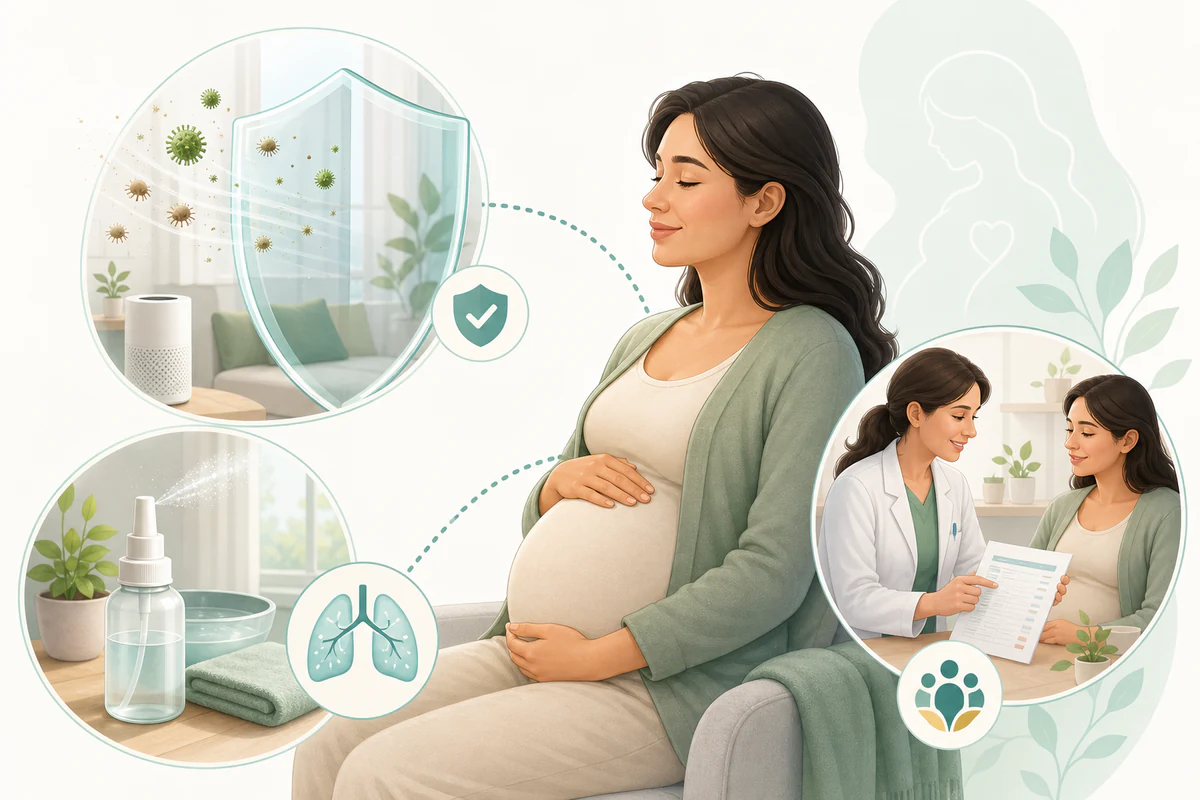
- Saline nasal rinses or sprays to help clear congestion without medication
- Keep windows closed on high-pollen days and rely on air conditioning or filtered indoor air
- Use a HEPA air filter and vacuum and dust regularly to reduce indoor allergens
- Shower and change clothes after spending time outdoors during allergy season
- Elevate your head while sleeping if congestion feels worse lying flat
- If you're already receiving allergy shots (immunotherapy), ask your allergist about continuing during pregnancy; it's generally not started new during pregnancy, but an established, stable-dose course is often continued
If You Also Have Allergic Asthma
Allergic asthma can improve, worsen, or stay the same during pregnancy, and it can change again from one trimester to the next, so ongoing monitoring matters even if you've felt stable. It's worth being direct about something people sometimes get backward: cutting back on asthma treatment on your own to "play it safe" is not automatically the safer path, since poorly controlled asthma is itself a real risk during pregnancy. See our allergic asthma management guide for more on long-term control.
When to seek care
Routine
Known, mild seasonal symptoms managed with guidance from your prenatal care team.
Prompt (within days)
Congestion or symptoms that are new, worsening, or not explained by your known allergies — discuss at your next prenatal visit or sooner.
Urgent (same day)
Breathing difficulty that isn't your known asthma pattern, or allergic asthma symptoms flaring outside your usual control.
Emergency (call 911)
Signs of anaphylaxis — swelling of the lips, tongue, or throat, widespread hives with dizziness or trouble breathing, or a sudden severe reaction. Call 911 immediately; anaphylaxis during pregnancy is treated as an emergency.
Practical next steps
Safe general steps
- Track which symptoms you're having and when, to share at prenatal visits
- Try non-medication measures first if symptoms are mild
- Bring any medication questions, including OTC products, to your OB provider or pharmacist before use
- Mention any allergic asthma so your control plan can be reviewed alongside your pregnancy care
Actions that need medical guidance
- Starting, continuing, or stopping any allergy medication during pregnancy
- Adjusting allergic asthma controller medicine during pregnancy
- Deciding whether to continue allergy shots (immunotherapy) during pregnancy
Don't attempt without professional advice
- Don't start, continue, or stop any allergy medication, including OTC products or supplements, without checking with your OB provider or pharmacist first
- Don't assume reducing asthma medication is automatically the “safer” choice — uncontrolled asthma is its own risk
- Don't start a new course of allergy shots (immunotherapy) during pregnancy without your allergist's guidance
Frequently asked questions
Is it normal for allergies to get worse during pregnancy?
What is pregnancy rhinitis?
Can I take allergy medicine while pregnant?
Are allergy shots (immunotherapy) safe during pregnancy?
Can allergies affect my baby?
When is an allergic reaction during pregnancy an emergency?
Sources
- ACOG — What medicine can I take for allergies while I'm pregnant?
- PMC (NIH) — Rhinitis and pregnancy: literature review
- PMC (NIH) — Asthma and Allergic Diseases in Pregnancy: A Review
- PMC (NIH) — Allergen immunotherapy in pregnancy
Medical disclaimer: This guide is for general education and isn't a substitute for personalized medical advice. It doesn't provide dosing. Always talk to a qualified healthcare professional about your symptoms and treatment.
 MD
MDMedically reviewed
Dr. Hannah H. Walford, MD
Allergist and Immunologist
- Website role
- Owner, Medical Director and Medical Reviewer of Allergy Relief Guide
- Professional affiliation
- Stanford Health Care / Menlo Medical Clinic, Menlo Park, California
- Areas of expertise
- Food allergy, eczema, allergic rhinitis, sinusitis and asthma
Dr. Hannah H. Walford is a board-certified allergist and immunologist experienced in caring for adults and children with allergic conditions. Her areas of expertise include food allergy, eczema, allergic rhinitis, sinusitis and asthma. She provides medical leadership and review oversight for the educational health content published by Allergy Relief Guide.
Medical content is provided for education and is not a substitute for diagnosis or individualized medical care.
Continue building your allergy plan
Explore related guides to understand the full picture, from triggers to treatment to safety.
See the allergy medicine during pregnancy guide