
Allergist Appointment: What to Expect & How to Prepare
At an allergist appointment, the doctor reviews your symptom history, does a physical exam, and often performs allergy testing — usually skin prick testing, which gives results within about 15 minutes. The single most important preparation step is stopping antihistamines beforehand, because they can suppress skin-test results; allergists commonly advise stopping them about 3 to 7 days before, but follow your office's exact instructions. Bring a symptom log, a full list of your medications and supplements, and your family allergy history.
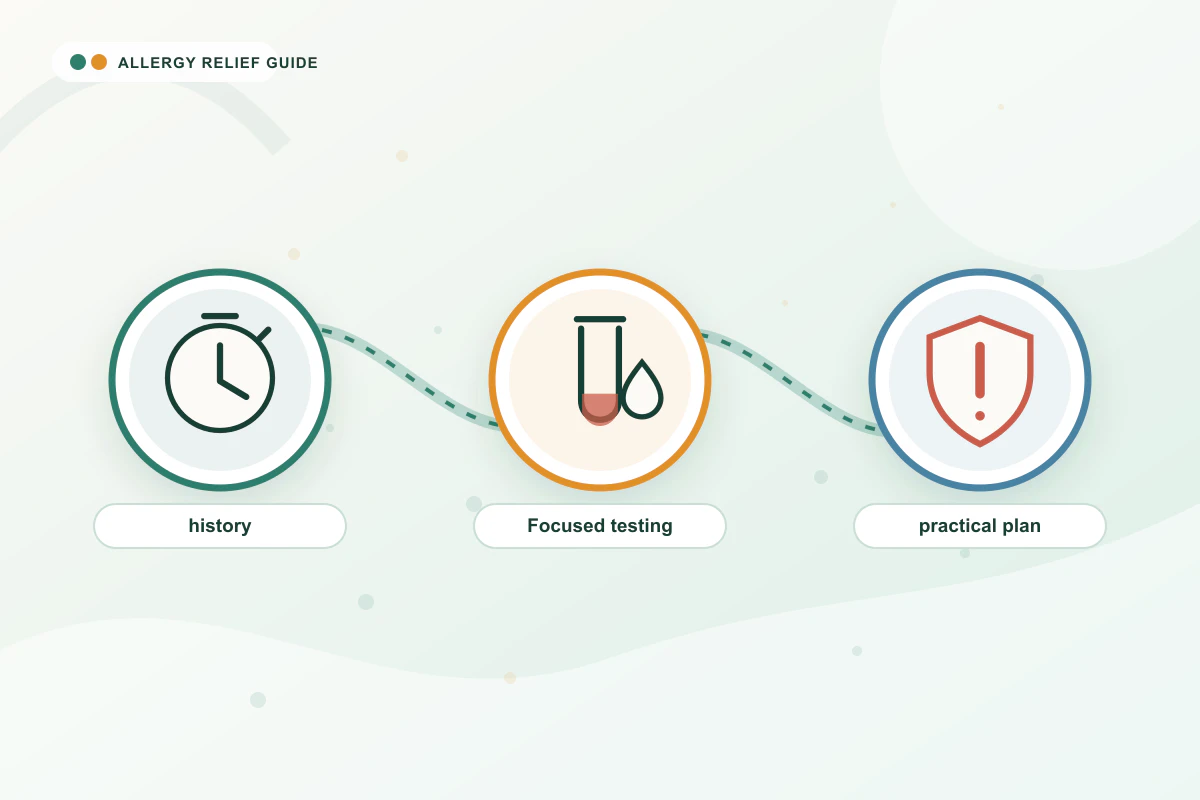
Quick answer
At an allergist appointment, the doctor reviews your symptom history, does a physical exam, and often performs allergy testing — usually skin prick testing, with results in about 15 minutes. The key preparation step is stopping antihistamines beforehand (commonly 3 to 7 days, but follow your office's instructions), because they suppress skin-test results. Bring a symptom log, a full list of medications and supplements, and your family allergy history.
What you need to know
- An allergist reviews your history, examines you, and often does allergy testing — skin prick testing is the common first-line method, with results in about 15 minutes.
- The most important prep step is stopping antihistamines before the visit, since they can suppress skin-test results; timing is often 3 to 7 days but your office will tell you exactly.
- Nasal steroid sprays and asthma inhalers generally don't need to be stopped — but confirm with your office.
- Bring a symptom diary (what, when, how often, suspected triggers), a full list of medications and supplements, and any family history of allergies or asthma.
- If you can't stop antihistamines or have a skin condition, a blood (specific IgE) test may be used instead.
- Test results are interpreted alongside your history — results alone don't diagnose an allergy.
How to Prepare: Stop Antihistamines First
The most important thing to get right before an allergist appointment is medication timing, because antihistamines can blunt or completely flatten skin-test reactions. Allergists commonly advise stopping antihistamines roughly 3 to 7 days before testing — often about 5 days for long-acting ones like cetirizine, loratadine, and fexofenadine — but the exact number depends on the medication, so follow your office's specific instructions. Some other medicines with antihistamine effects (like certain sleep aids or antidepressants) can also interfere; tell your office what you take and don't stop a prescription on your own. Nasal steroid sprays and asthma inhalers generally don't interfere. For the mechanics, see our skin prick test guide.
What to Bring
- A symptom diary: what symptoms you get, when, how often, and any suspected triggers or seasonal pattern
- A complete list of all medications and supplements, including over-the-counter products
- Any family history of allergies, asthma, or eczema
- A list of questions you want to ask
- Notes on how symptoms affect daily life, sleep, work, or school
What Happens During the Visit
A first allergist visit typically starts with a detailed conversation about your symptoms, triggers, and medical and family history, followed by a physical exam focused on your nose, eyes, ears, throat, skin, and chest. If testing is appropriate, the allergist often does skin prick testing, placing small amounts of allergen extracts on the skin and lightly pricking it; reactions appear within about 15 minutes. If skin testing isn't suitable — for example if you couldn't stop antihistamines or have widespread eczema — a specific IgE blood test may be used instead. See our allergy blood test guide for that option.
Understanding Your Results
An important point: test results don't diagnose an allergy on their own. A positive skin or blood test shows sensitization to an allergen, but whether that actually causes your symptoms is something the allergist judges by combining the results with your history and exposures. You'll usually discuss what the findings mean and a management plan — which may include avoidance strategies, medications, or immunotherapy — before you leave. For the bigger picture on testing, see our allergy testing guide, and to understand when a referral makes sense, see how to find an allergist.
When to seek care
Routine
You have ongoing allergy symptoms without a clear diagnosis and want an allergist evaluation.
Prompt (within days)
You have an appointment coming up and need to confirm which medications to stop and when.
Urgent (same day)
New or worsening symptoms before your appointment that concern you — contact the office for guidance.
Emergency (call 911)
A severe allergic reaction — trouble breathing, swelling of the lips, tongue, or throat, widespread hives with dizziness — is not something to wait for an appointment. Use epinephrine if prescribed and call 911.
Practical next steps
Safe general steps
- Ask your allergist's office exactly which medications to stop and for how long
- Keep taking nasal steroid sprays and asthma inhalers unless told otherwise
- Prepare a symptom diary and a full medication and supplement list
- Write down your questions and your family allergy history before the visit
Actions that need medical guidance
- Whether and when to stop any prescription medication before testing
- Whether skin testing or a blood test is right for you
- Interpreting your results and building a treatment plan
Don't attempt without professional advice
- Don't take antihistamines in the days before the visit unless your office says it's okay
- Don't stop a prescription antidepressant or other medicine on your own to prepare — ask the office
- Don't expect test results alone to be the whole answer — they're read alongside your history
Frequently asked questions
How do I prepare for an allergist appointment?
How long before an allergist appointment should I stop antihistamines?
Do I need to stop my nasal spray or inhaler before an allergist visit?
What happens at a first allergist appointment?
What should I bring to an allergist appointment?
Do allergy test results give a definite diagnosis?
Sources
- ACAAI Patient — Testing and Diagnosis
- ACAAI Patient — Allergy Testing
- Massachusetts General Hospital — Stopping Antihistamines Before Allergy Testing
Medical disclaimer: This guide is for general education and isn't a substitute for personalized medical advice. It doesn't provide dosing. Always talk to a qualified healthcare professional about your symptoms and treatment.
 MD
MDMedically reviewed
Dr. Hannah H. Walford, MD
Allergist and Immunologist
- Website role
- Owner, Medical Director and Medical Reviewer of Allergy Relief Guide
- Professional affiliation
- Stanford Health Care / Menlo Medical Clinic, Menlo Park, California
- Areas of expertise
- Food allergy, eczema, allergic rhinitis, sinusitis and asthma
Dr. Hannah H. Walford is a board-certified allergist and immunologist experienced in caring for adults and children with allergic conditions. Her areas of expertise include food allergy, eczema, allergic rhinitis, sinusitis and asthma. She provides medical leadership and review oversight for the educational health content published by Allergy Relief Guide.
Medical content is provided for education and is not a substitute for diagnosis or individualized medical care.
Related guides
Continue building your allergy plan
Explore related guides to understand the full picture, from triggers to treatment to safety.
See the full allergy testing guide