
Seasonal Allergies: Causes, Symptoms & Relief
Why hay fever flares at the same time each year, which pollen strikes when, how to get real relief, and when it's worth seeing a doctor.
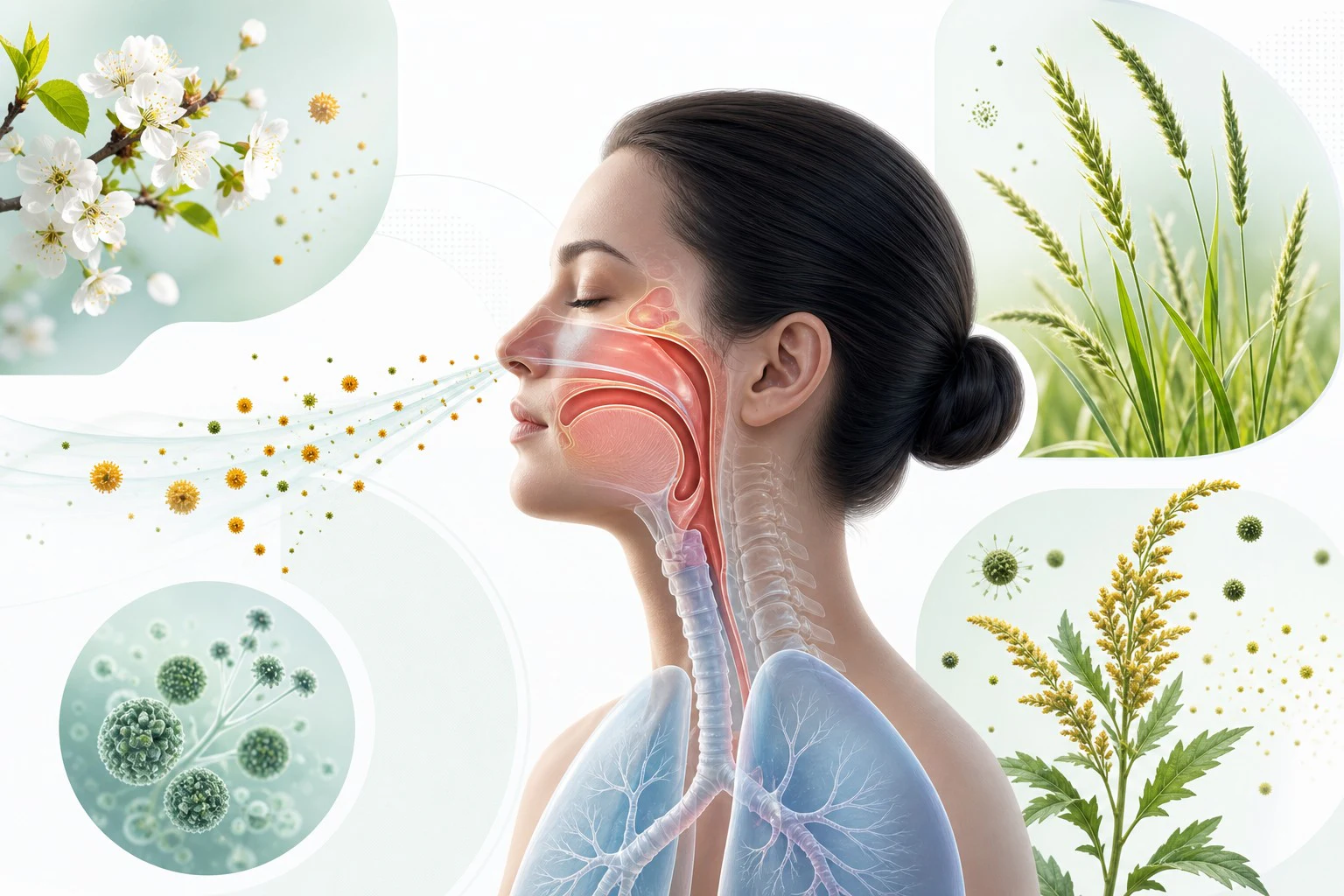
Quick answer: what seasonal allergies are and how to treat them
Short answer: seasonal allergies are an immune reaction to pollen or mold that is only airborne at certain times of year. Trees drive spring, grasses late spring and summer, ragweed late summer and fall. Cut exposure, start daily medicine one to two weeks before your season, and use a steroid nasal spray if congestion is the main problem.
Seasonal allergies — also called hay fever or allergic rhinitis — happen when your immune system overreacts to pollen or mold that's in the air at certain times of year, causing sneezing, a runny or blocked nose, and itchy, watery eyes. Tree pollen leads in spring, grass in late spring and summer, and weeds like ragweed in late summer and fall. The most effective plan is to reduce your exposure (windows closed on high-pollen days, air conditioning, a shower after being outside) and treat symptoms early with a saline rinse plus a non-drowsy antihistamine, or a steroid nasal spray for congestion. Starting medicine before your season begins works best; if symptoms are stubborn, a doctor can help.
What are seasonal allergies?
Seasonal allergies are an allergic reaction to airborne triggers that appear at particular times of year — most often pollen — and they're the reason millions of people sneeze their way through spring and fall. Doctors call the condition allergic rhinitis; many people know it as hay fever, even though it has nothing to do with hay and doesn't cause a fever.
The reaction itself is the same one behind other allergies: your immune system treats a harmless particle as a threat and releases histamine and other chemicals, which inflame the lining of your nose, sinuses and eyes. What makes these allergies "seasonal" is simply timing — the triggers are only in the air during their growing season. When the season passes, symptoms fade until next year. To understand the underlying nasal condition in more depth, see allergic rhinitis explained.
What causes seasonal allergies?
The main causes are pollen and mold spores. Different plants release pollen at different times, which is why your symptoms may show up in one season and not another — or in more than one if you react to several triggers.
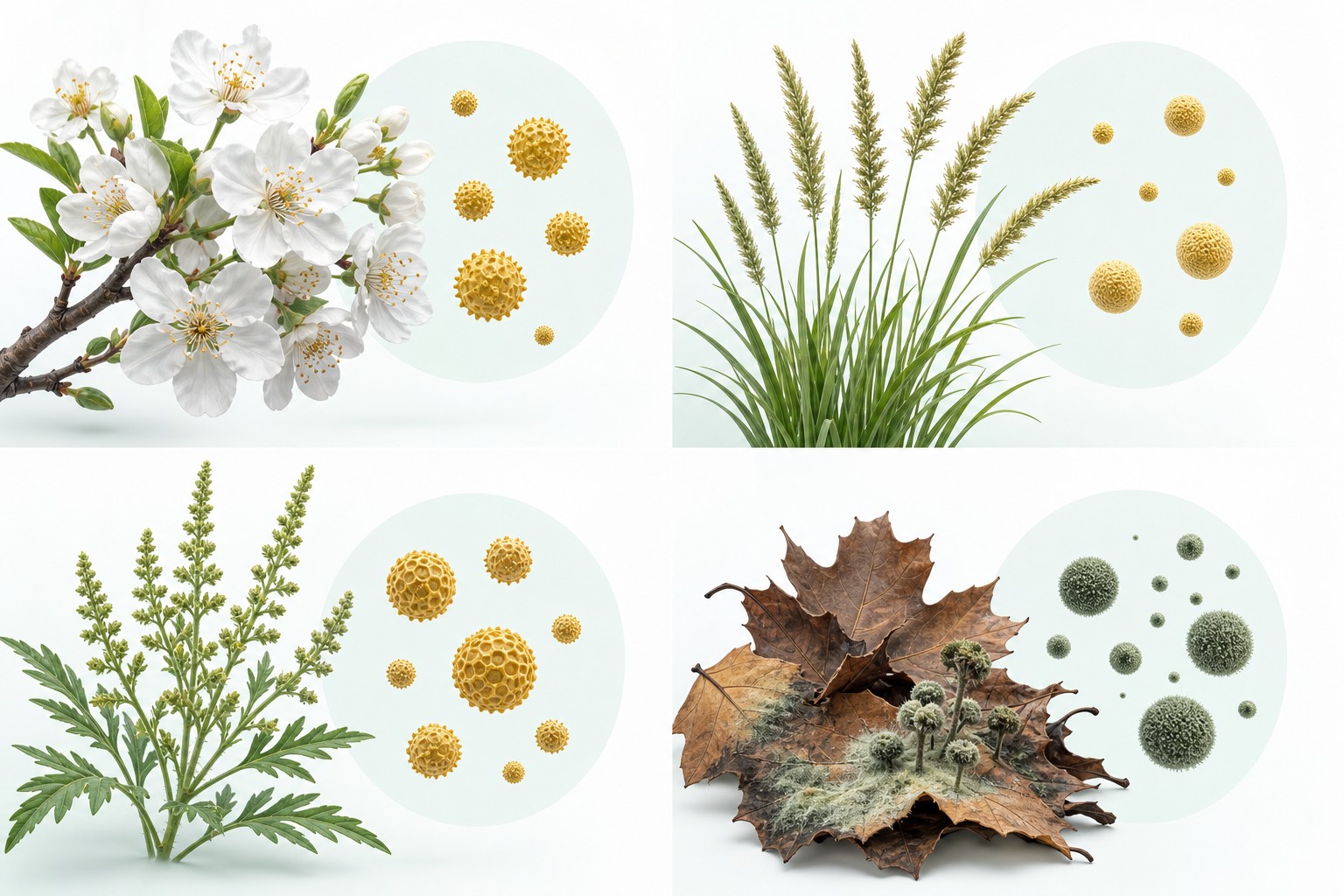
Pollen is light and travels far on the wind, so you don't need to be near the plant to react. Mold, which grows on damp leaves and soil, adds to the load in humid weather and during fall leaf litter. Weather matters too: pollen counts climb on warm, dry, windy days and drop after rain washes the air clean.
It also helps to know the three broad pollen groups, because they peak at different times. Trees (such as oak, birch, cedar and maple) release pollen first, in spring. Grasses take over in late spring and summer. Weeds — ragweed above all — dominate late summer and fall, and a single ragweed plant can release enormous amounts of pollen that drifts for miles. Many people react to more than one group, which is why symptoms can appear in several stretches across the year rather than one neat window.
Seasonal allergy calendar: which pollen peaks when
Knowing which pollen is active helps you predict — and pre-empt — your worst weeks. Exact timing shifts with your climate and each year's weather, but the general pattern across much of the United States looks like this:
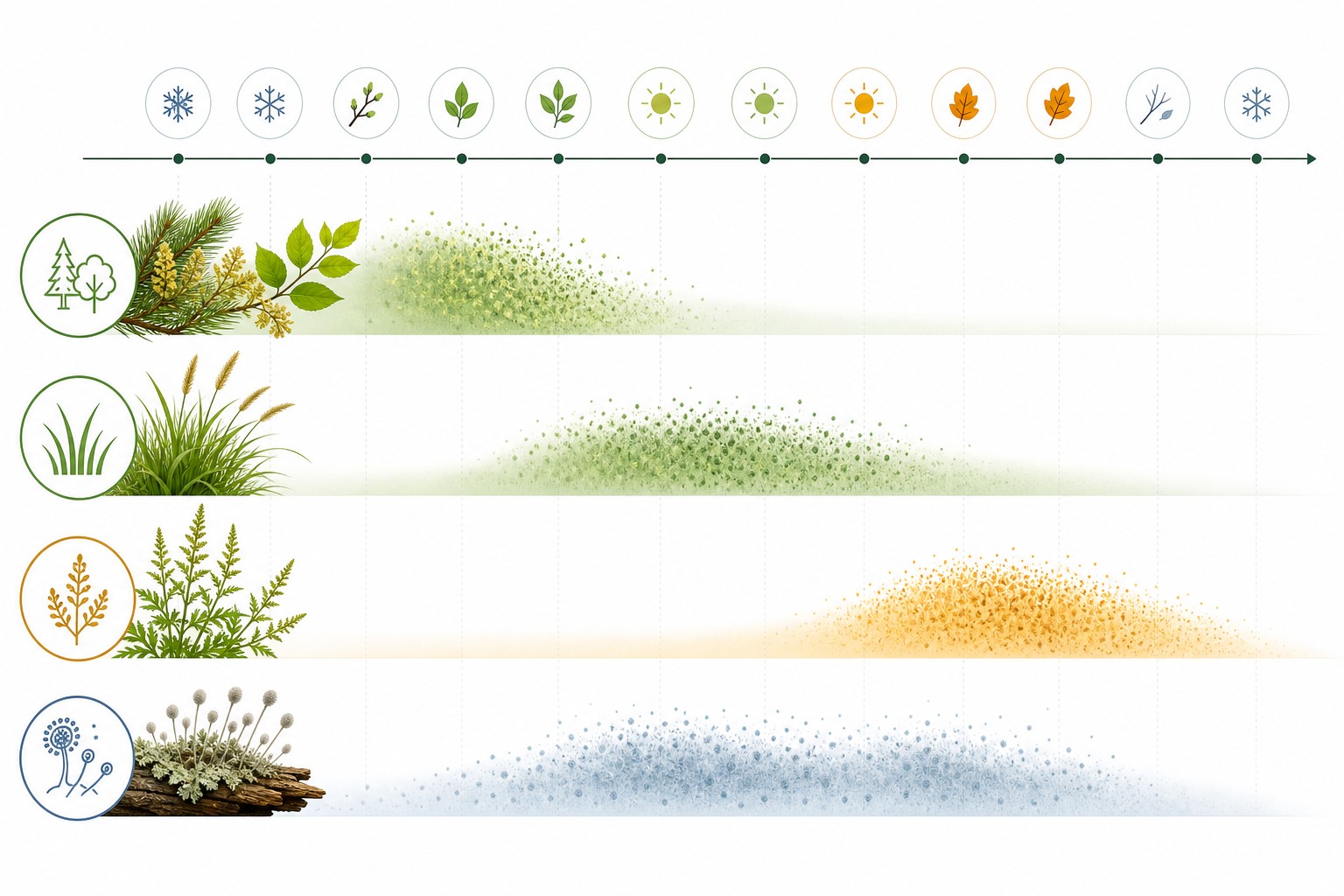
| Season | Main trigger | Typical timing |
|---|---|---|
| Spring | Tree pollen | Late winter to late spring |
| Late spring & summer | Grass pollen | Late spring into mid-summer |
| Late summer & fall | Weed pollen (ragweed) | Late summer until the first frost |
| Warm, damp periods | Mold spores | Spring through fall; worse in humidity |
Your local timing can run earlier or later, so a daily pollen forecast for your area is the most reliable guide. For a deeper breakdown, see our allergy season calendar, and for the specific plant behind fall symptoms, ragweed allergy.
Seasonal allergy symptoms
Seasonal allergies mostly affect the nose and eyes, and they tend to return at the same time each year. Common symptoms include:
- Sneezing and an itchy nose
- A runny nose or congestion
- Itchy, watery, red eyes
- Postnasal drip and throat clearing
- An itchy throat or ears
- A mild cough from postnasal drip
- Tiredness from disrupted sleep
- Reduced sense of smell during peak weeks
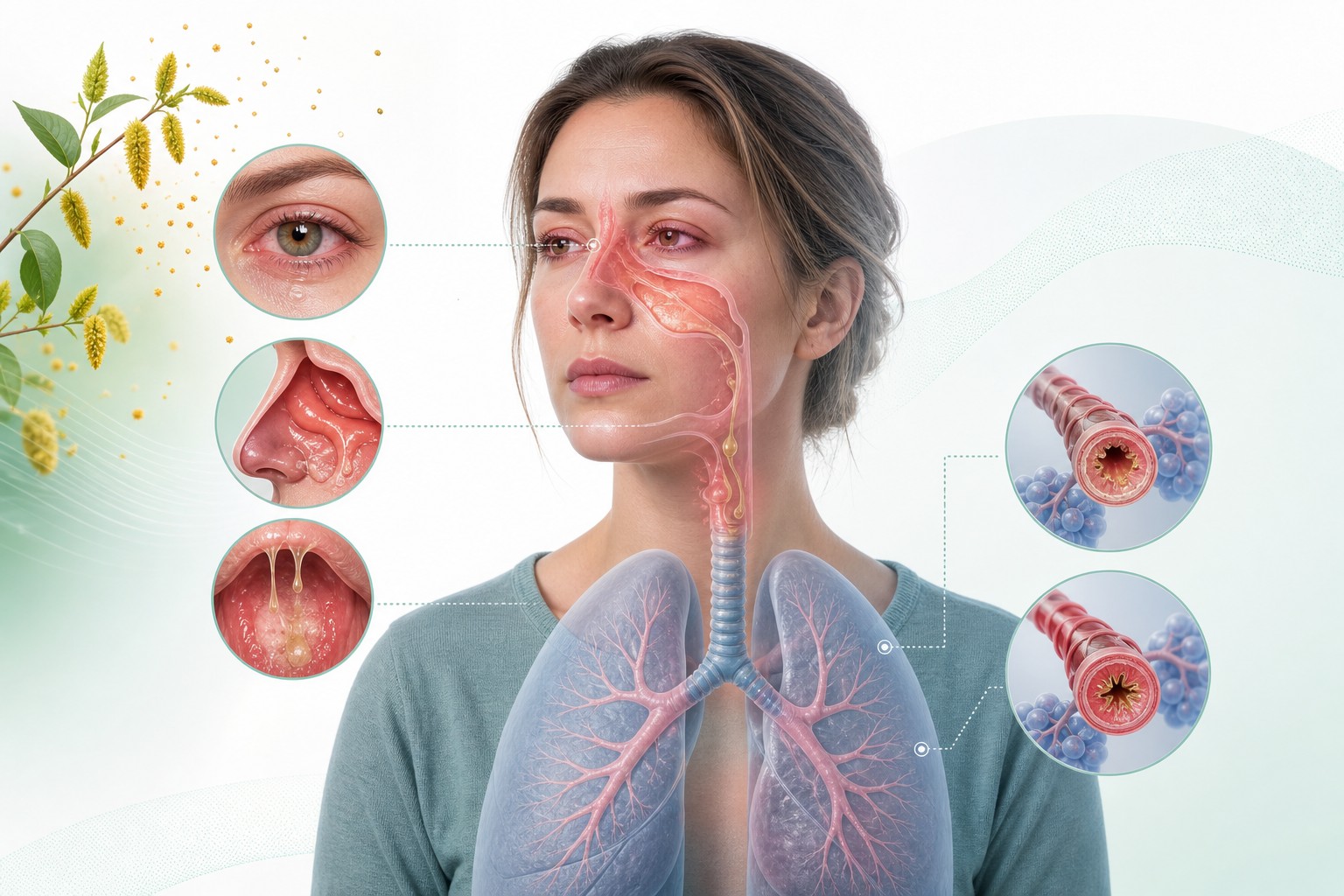
Because these overlap with a common cold, timing is the giveaway: seasonal allergies bring itching and no fever, and last for weeks in step with the pollen count, while a cold clears in about a week. For the full comparison, see allergies vs. a cold, and for the wider picture, our allergy symptoms guide.
Seasonal allergies and asthma
For many people, seasonal allergies and asthma go hand in hand — the same pollen that triggers a runny nose can also inflame the airways and set off asthma symptoms. This link is common enough that doctors sometimes describe the nose and lungs as "one airway."
If you have asthma, your allergy season may bring more coughing, wheezing, chest tightness or shortness of breath than usual. Keeping your seasonal allergies well controlled often helps your asthma too, but the two are managed together and any change in breathing deserves prompt attention. If pollen season regularly affects your chest — or a mild wheeze turns into real difficulty breathing — talk to your doctor about a plan, and treat serious breathing trouble as an emergency (see below).
How to get relief from seasonal allergies
The most effective plan combines reducing your pollen exposure with treating symptoms early — ideally before your season peaks. Work through these layers:
- Limit exposure. Keep windows closed and use air conditioning on high-pollen days, avoid outdoor activity in the early morning when counts are highest, and shower and change clothes after being outside so you don't carry pollen indoors.
- Rinse and soothe. A saline nasal rinse flushes out pollen and mucus (use distilled or previously boiled water), and a cool compress or lubricating drops calm itchy eyes. See itchy eyes relief.
- Use the right medicine. A non-drowsy antihistamine eases sneezing and itching; a steroid nasal spray works best for congestion. Compare options in antihistamines and best antihistamine.
- Start early. If you know your season is coming, ask a pharmacist about beginning daily medicine before symptoms start — some options work best that way.
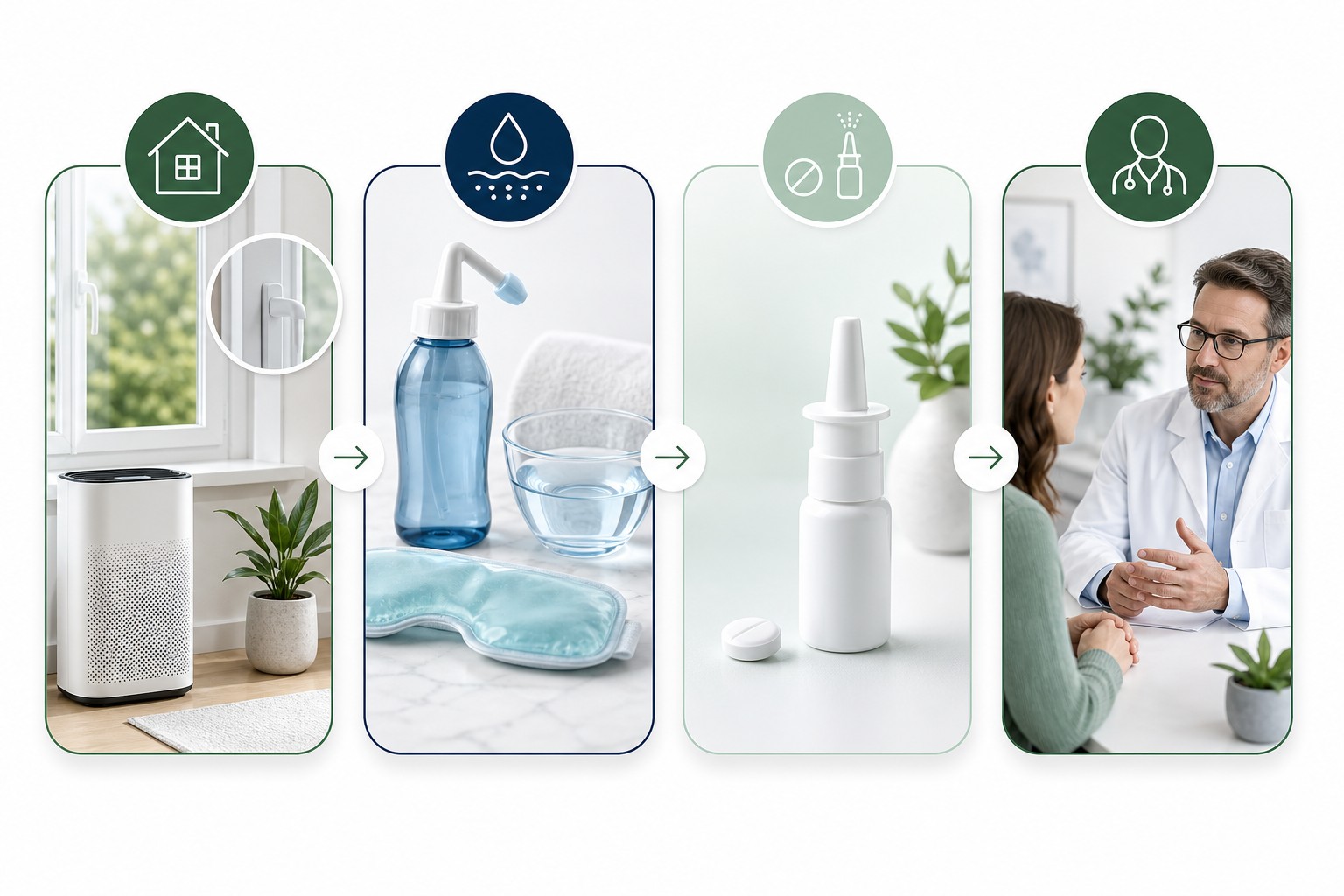
For the complete, step-by-step approach across every option, see our allergy treatment & relief guide.
Tip: check a local pollen forecast each morning during your season. On very high days, plan indoor activities, and remember that the air is usually cleanest right after rain.
How to read a pollen forecast and when to start medicine
Two details turn a pollen forecast from background noise into something you can act on: how to time your medicine against it, and how much to trust the number itself.
Start before the season, not after it hurts
The Allergy & Asthma Network advises that most people should start allergy medicine about one to two weeks before their pollen season begins. This is not a marketing line, it is mechanics: a steroid nasal spray takes days of daily use to reach full effect, so beginning it once you are already streaming means spending your worst week waiting for it to work. If your season is predictable — and for most people it is — put a reminder in the calendar a fortnight before the month your symptoms usually start.
The forecast is a lagging indicator
Pollen counts are useful but not live. The Allergy & Asthma Network points out that daily counts often represent collections made 24 to 48 hours earlier. So a low number today does not guarantee a low-pollen afternoon, and a high number can describe air that has already cleared. Use the forecast as a trend, and let the weather fill in the rest: warm, dry and windy pushes counts up, steady rain washes the air clean, and the hours from early morning to early afternoon are usually the worst for outdoor exertion.
Our pollen count guide explains what the numbers actually mean, and allergy season by region covers how far the timing shifts across the country. Local timing can be extreme: mountain cedar, for instance, is an early bloomer that can cause symptoms in December in Texas and Oklahoma, long before anyone else is thinking about allergy season.
If you react to more than one pollen group — say trees and ragweed — treat them as two separate seasons with two separate start dates, rather than one long stretch you try to push through. Read tree pollen, grass pollen and ragweed to work out which windows are yours.
Relief season by season
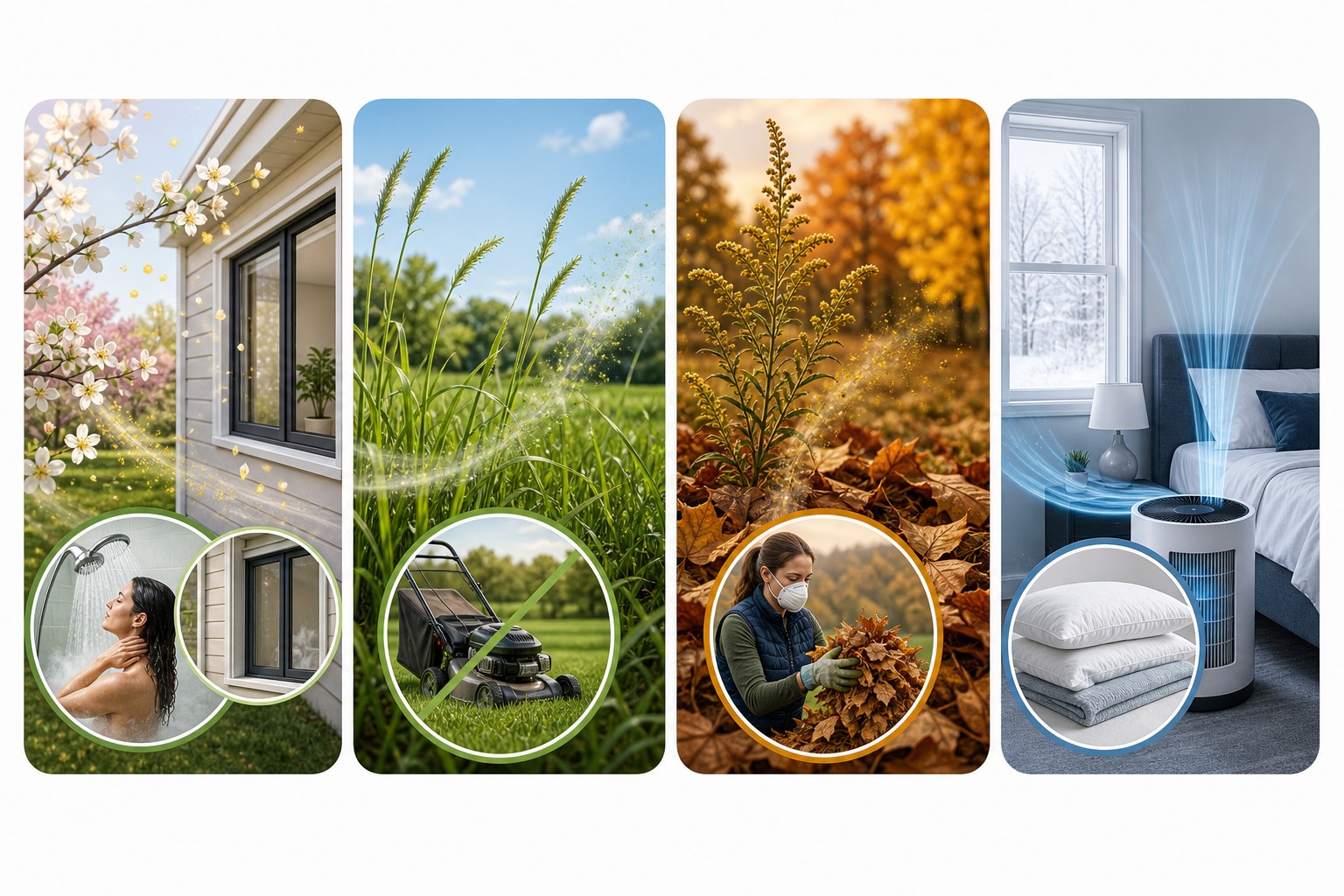
Your best moves shift a little as the year turns:
Spring
Tree pollen dominates. Start medicine early, keep windows shut on breezy days, and rinse pollen off at night.
Summer
Grass pollen peaks. Mow less (or wear a mask), avoid freshly cut lawns, and keep the car on recirculated air.
Fall
Ragweed and mold rise. Watch ragweed forecasts and rake damp leaves carefully — they release mold spores.
Winter
Outdoor pollen fades, but indoor triggers like dust mites take over. See indoor allergies.
Natural and at-home relief for seasonal allergies
Simple, drug-free steps can meaningfully reduce seasonal symptoms and are safe for most people, which makes them a sensible first line alongside medicine.
- Saline nasal rinse: flushes pollen and mucus from the nose. Make the solution with distilled or previously boiled (then cooled) water — never untreated tap water — and clean the device after each use.
- HEPA air purifier: lowers indoor pollen in the rooms you use most; keep it running during your season.
- Cool compress or eye drops: calm itchy, watery eyes without medication.
- Rinse pollen off: shower and change clothes after being outside, and keep pollen off your pillow at night.
You'll also see remedies like local honey and herbal supplements suggested for hay fever. The evidence for these is mixed, and supplements can interact with other medicines, so treat them as extras rather than proven relief — and check with your doctor first, especially for children or during pregnancy. For a fuller look, see natural allergy remedies.
How long do seasonal allergies last?
Seasonal allergies last as long as the pollen you react to is in the air — often several weeks to a few months a year. If you're allergic to more than one trigger (say, both tree and weed pollen), your symptoms can stretch across a large part of the year with breaks in between. Add year-round indoor triggers and it can start to feel constant, which is a good reason to get tested and pin down exactly what's affecting you.
Peak intensity usually tracks the daily pollen count, so your hardest days are the warm, dry, windy ones during your trigger's season. Once the season ends — or the first hard frost kills off ragweed in the fall — symptoms typically settle within days.
Are seasonal allergies getting worse?
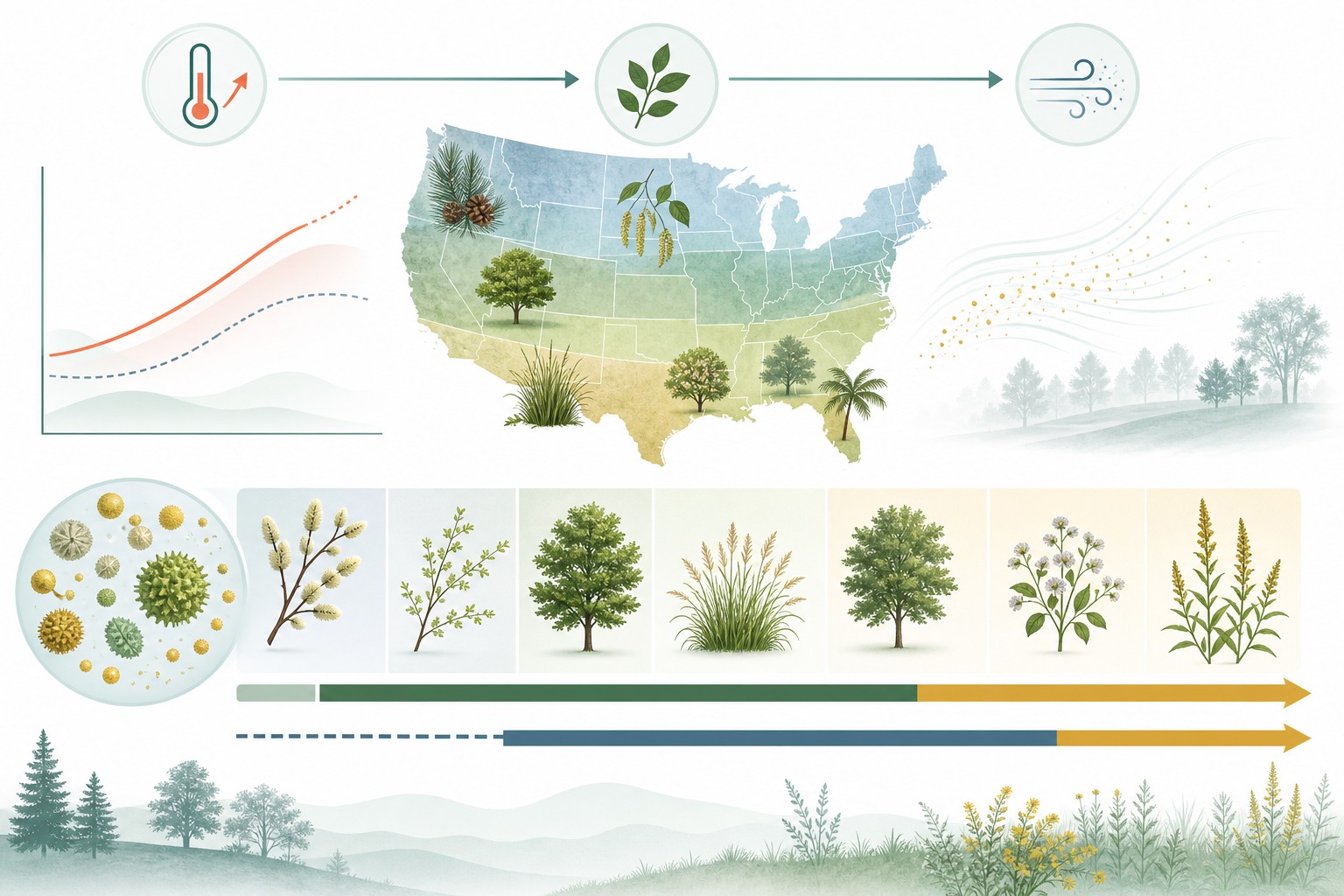
Many people feel their seasonal allergies have intensified, and longer, more intense pollen seasons are a genuine trend that researchers link to warming temperatures and higher carbon dioxide levels, which can lengthen growing seasons and increase pollen production.
On a personal level, allergies also simply change over time: you can develop new sensitivities as an adult — often after moving to a region with different plants — while others fade. The practical takeaway is the same either way: if your seasonal symptoms are new, clearly worse, or lasting longer than they used to, it's worth an up-to-date assessment so your relief plan matches your current triggers.
What the pollen data actually shows
The feeling that allergy season keeps arriving earlier is supported by measurement, though the widely repeated version of the statistic is not quite right. A 2021 study in PNAS by Anderegg and colleagues analysed 60 North American pollen monitoring stations across 821 site-years between 1990 and 2018. It found three separate changes:
| What changed | How much, 1990–2018 | Share attributed to human-caused climate change |
|---|---|---|
| Pollen season start date | About 20 days earlier | Roughly 35–66% |
| Pollen season length | About 8 days longer | Roughly 19–35% |
| Pollen concentration | Up about 21% | Roughly 4–8% |
The distinction matters. You will often read that pollen seasons are "20 days longer." They are not — they begin about 20 days earlier and run about 8 days longer. That is why the change tends to be felt as spring symptoms starting in what used to be winter, rather than as a season that drags on much further into summer.
The attribution figures are worth reading honestly too. Climate change accounts for a substantial share of the shift in timing, but only a small share of the rise in pollen concentration, which has other contributors. Either way, the practical consequence for you is the same: if you still start your medicine in the same week you did a decade ago, you may now be starting it late. More in why pollen seasons are getting longer and why are my allergies so bad this year?
Does where you live affect seasonal allergies?
Yes — your location shapes both what you react to and when. Different regions have different dominant plants and growing seasons, so the pollen that troubles you in one place may barely register in another. Warmer climates tend to have longer pollen seasons, while areas with harsh winters get a sharper start and stop.
This is why moving can change your allergies: some people find relief in a new region, while others develop fresh sensitivities to local plants over a few seasons. It's also why a local pollen forecast beats a national average — your neighbourhood's counts are what actually reach you. If you've recently relocated and your symptoms have shifted, it can be worth getting re-tested to update your trigger profile.
Preventing seasonal allergy flare-ups
Consistent habits during your season prevent many flare-ups before they start.
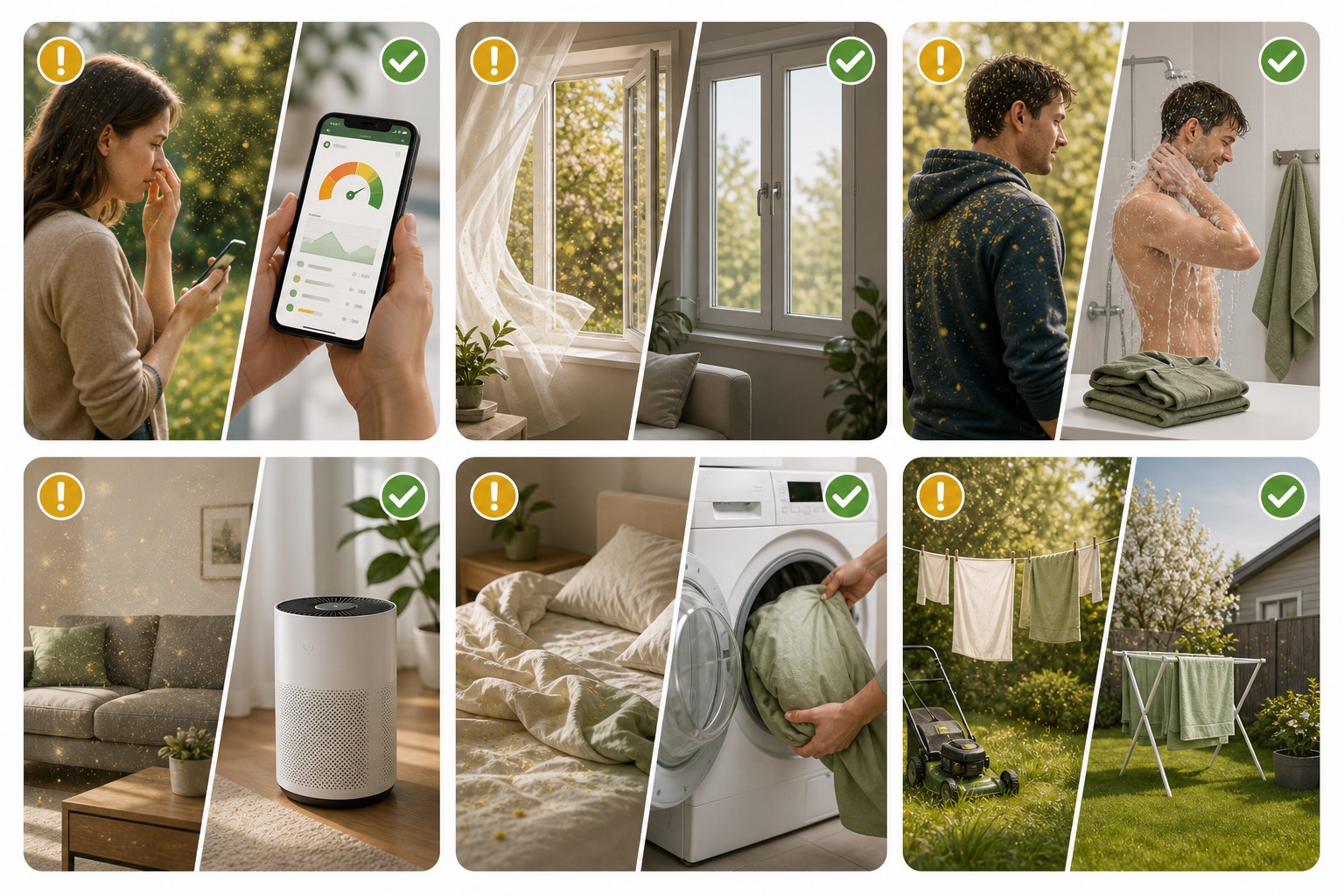
- Track the daily pollen forecast and plan around high-count days.
- Keep windows closed and use air conditioning (recirculate in the car).
- Change and wash clothes after being outdoors; don't dry laundry outside.
- Shower before bed to keep pollen off your pillow.
- Run a HEPA air purifier and keep indoor humidity moderate to limit mold.
- If your season is predictable, start daily medicine before it begins.
Common mistakes that make seasonal allergies worse
A few everyday habits quietly undo your relief efforts. Avoiding these makes your season noticeably easier.
- Starting medicine too late. Waiting until you're miserable means playing catch-up; several options work best begun before your season peaks.
- Sleeping in the pollen you carried home. Skipping an evening shower and wearing outdoor clothes to bed transfers pollen straight to your pillow.
- Opening windows on high-pollen days. Fresh air feels good but lets the trigger indoors; use air conditioning instead.
- Overusing decongestant nasal sprays. These help briefly but can cause rebound congestion if used more than a few days.
- Drying laundry outside. Sheets and clothes act like pollen traps on breezy days.
- Assuming it's "just a cold." Symptoms that return every year at the same time are usually allergies — and respond to different treatment.
Fixing even one or two of these often makes a bigger difference than adding another product.
Go deeper: your season, your trigger, your symptom
Seasonal allergy is a broad label covering several different problems. Use whichever of these is closest to your actual situation.
| If this is you | Guide |
|---|---|
| Worst in spring | Spring allergies and tree pollen allergy |
| Worst in summer | Summer allergies and grass pollen allergy |
| Worst in late summer and fall | Fall allergies and ragweed allergy |
| Symptoms continue through winter | Winter allergies and indoor allergies |
| Damp weather and leaf litter set you off | Mold allergy |
| Air quality and smoke days make it worse | Air quality and allergies |
| Your mouth itches with raw fruit in pollen season | Oral allergy syndrome |
| Pollen season affects your chest | Allergic asthma |
| Eyes are the worst part | Allergy eye drops |
| You want to compare medicines | Allergy medicine and nasal sprays |
| You prefer drug-free steps first | Saline rinsing and HEPA filters |
| You want to treat the cause, not the season | Allergy shots and under-the-tongue tablets |
When to see a doctor about seasonal allergies
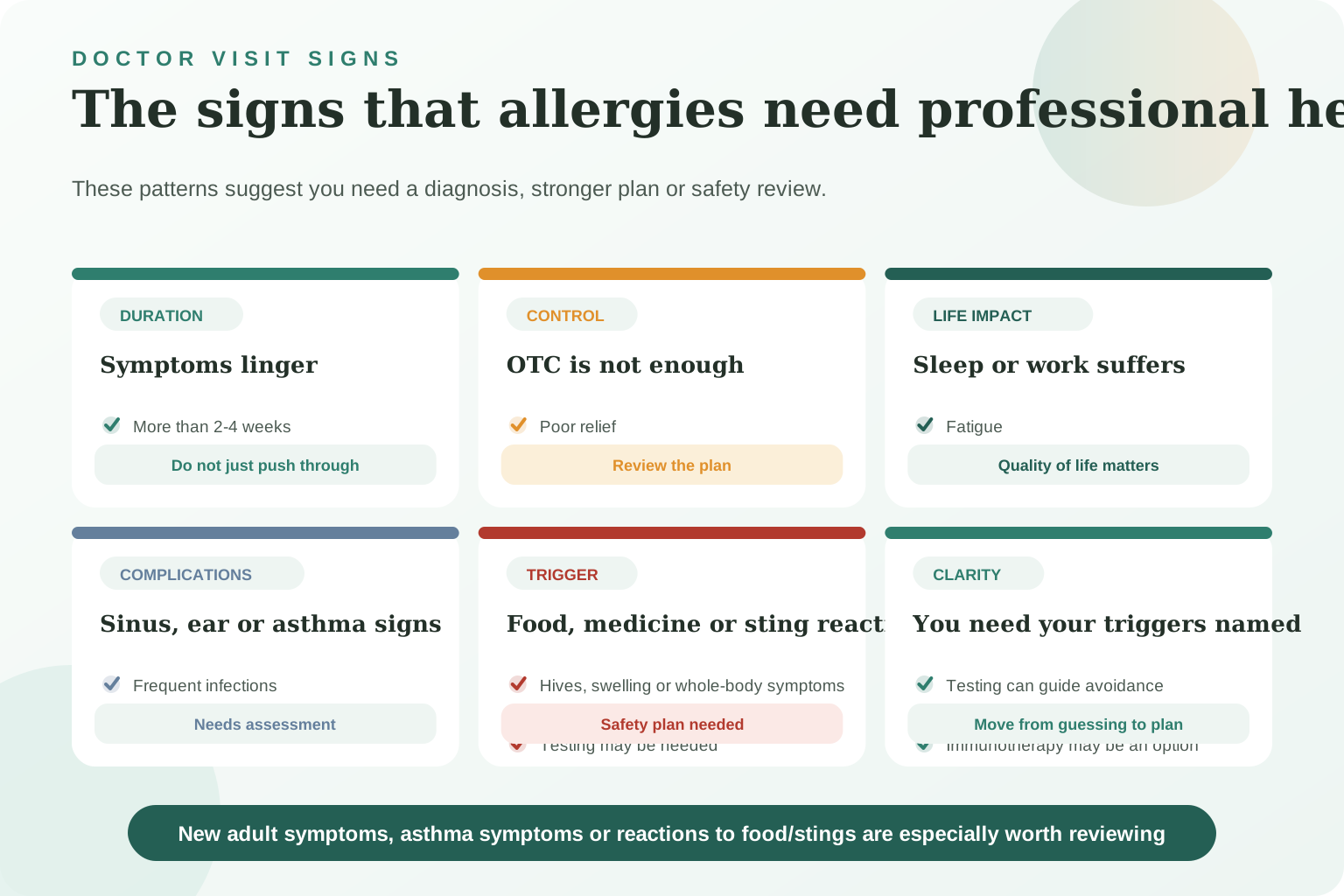
See a doctor or allergist if over-the-counter medicine isn't controlling your symptoms, if they disrupt your sleep or daily life, or if they last most of the year. A doctor can confirm your triggers with allergy testing and discuss stronger options, including prescription medicine and allergen immunotherapy (allergy shots or under-the-tongue tablets), which can reduce seasonal reactions over the long term. More on timing in when to see a doctor for allergies, and for children, allergies in children.
When it's an emergency
Ordinary hay fever isn't dangerous, but a severe, whole-body allergic reaction (anaphylaxis) — usually from foods, medicines or insect stings rather than pollen — is a medical emergency. Call 911 right away for trouble breathing; swelling of the face, lips, tongue or throat; widespread hives; or feeling faint, and use a prescribed epinephrine auto-injector if available. See our allergy safety guide.
Seasonal allergies: frequently asked questions
What causes seasonal allergies?
When is allergy season worst?
How do I get relief from seasonal allergies?
How long do seasonal allergies last?
Can seasonal allergies develop later in life?
When should I start taking allergy medicine for pollen season?
Are pollen seasons really getting longer?
How accurate is a daily pollen count?
Can seasonal allergies make my mouth itch when I eat fruit?
Is there a treatment that reduces seasonal allergies long term?
How we create and review this guide
This guide is written for a general audience using patient-education material from the authoritative sources below, not blogs or forums:
- American Academy of Allergy, Asthma & Immunology (AAAAI)
- American College of Allergy, Asthma & Immunology (ACAAI)
- Mayo Clinic
- U.S. National Institute of Allergy and Infectious Diseases (NIH / NIAID)
- U.S. Centers for Disease Control and Prevention (CDC)
Sources for the specific figures on this page
- Anderegg WRL, Abatzoglou JT, Anderegg LDL, Bielory L, Kinney PL, Ziska L. Anthropogenic climate change is worsening North American pollen seasons (opens in a new tab). PNAS 2021. Analysis of 60 North American pollen stations across 821 site-years, 1990–2018: pollen seasons starting about 20 days earlier, lengthening by about 8 days, and pollen concentrations rising about 21%, with human forcing attributed roughly 35–66% of start-date trends, 19–35% of season-length trends and 4–8% of annual concentration trends.
- Allergy & Asthma Network. Pollen allergy (opens in a new tab). Starting allergy medication about one to two weeks before pollen season begins; daily pollen counts often representing collections made 24 to 48 hours earlier; tree, grass and weed season timing including mountain cedar in December in Texas and Oklahoma; and exposure-reduction measures.
- American College of Allergy, Asthma & Immunology. Hay fever (allergic rhinitis) (opens in a new tab). Intranasal corticosteroids described as the single most effective drug class for allergic rhinitis, and rebound swelling from prolonged decongestant nasal spray use.
- American College of Allergy, Asthma & Immunology. Pollen food allergy syndrome (opens in a new tab). Cross-reacting proteins in pollen and raw foods, symptoms remaining local and settling quickly, and cooked foods usually being tolerated.
- MedlinePlus, U.S. National Library of Medicine. Hay Fever (opens in a new tab). Pollen-triggered allergy symptoms, the use of medicines and nasal sprays, safe water for nasal rinsing, and allergy shots for long-term relief.
Medical disclaimer: This guide is for general education and isn't a substitute for personalized medical advice. Always talk to a qualified healthcare professional about your symptoms.
 MD
MDMedically reviewed
Dr. Hannah H. Walford, MD
Allergist and Immunologist
- Website role
- Owner, Medical Director and Medical Reviewer of Allergy Relief Guide
- Professional affiliation
- Stanford Health Care / Menlo Medical Clinic, Menlo Park, California
- Areas of expertise
- Food allergy, eczema, allergic rhinitis, sinusitis and asthma
Dr. Hannah H. Walford is a board-certified allergist and immunologist experienced in caring for adults and children with allergic conditions. Her areas of expertise include food allergy, eczema, allergic rhinitis, sinusitis and asthma. She provides medical leadership and review oversight for the educational health content published by Allergy Relief Guide.
Medical content is provided for education and is not a substitute for diagnosis or individualized medical care.
Related guides
Keep exploring the allergy relief guide:
Spring allergies
Tree-pollen season, causes, symptoms and relief.
Fall allergies
Ragweed and mold, and how to manage them.
Pollen allergy
How pollen triggers symptoms across the year.
Treatment & relief
From home care and OTC medicine to immunotherapy.
Allergy symptoms
Identify what you're feeling before you treat it.
Testing & diagnosis
Pinpoint exactly which pollens affect you.
Pollen counts
What the daily number actually means.
Longer pollen seasons
What the measured data shows.
Allergy medicine
Which type suits which symptom.
Allergy shots
Treating the cause, not the season.
Get ahead of your allergy season
Know your trigger, start early, and match relief to your symptoms — our treatment guide walks you through every option.
Go to the treatment & relief guide