Itchy, Watery Eyes from Allergies
Itchy, watery, red eyes are a classic allergy symptom, medically called allergic conjunctivitis. It happens when an allergen — pollen, pet dander, dust mites, or mold — contacts the surface of the eye, prompting mast cells to release histamine, which makes the eyes itch, water, and redden. The most important self-care rule is counterintuitive: don't rub, because rubbing releases more histamine and worsens the itch. Cool compresses, rinsing, avoiding triggers, and allergy eye drops usually bring relief, and treating any nasal allergy alongside helps too.
Quick answer
Itchy, watery, red eyes from allergies are called allergic conjunctivitis. They happen when an allergen (pollen, pet dander, dust mites, mold) contacts the eye and triggers histamine release, causing itching, tearing, and redness. The key self-care rule: don't rub, because rubbing releases more histamine and worsens it. Cool compresses, rinsing, trigger avoidance, and allergy eye drops usually help, and treating any nasal allergy alongside helps too.
What you need to know
- Itchy, watery, red eyes from allergies are called allergic conjunctivitis and usually affect both eyes.
- They're caused by an allergen contacting the eye, triggering mast cells to release histamine, which makes the eyes itch, water, and redden.
- Common triggers are pollen, pet dander, dust mites, and mold; fragrances and other irritants can add to it.
- Don't rub your eyes — it releases more histamine, worsens the itch, and can irritate or even injure the eye.
- Cool compresses, rinsing the eyes, avoiding triggers, artificial tears, and allergy eye drops are the mainstays of relief.
- Eye pain, vision changes, light sensitivity, or thick pus-like discharge point to something other than simple allergy and need evaluation.
Why Allergies Make Your Eyes Itch and Water
The surface of your eye is covered by a thin membrane rich in mast cells — immune cells loaded with histamine. When an allergen like pollen lands on the eye, it binds to antibodies on those mast cells, which respond by releasing histamine and other chemicals. That causes the small blood vessels to leak (redness and puffiness), the tear glands to overproduce (watering), and the nerve endings to fire (itching). Because both eyes are usually exposed to the same airborne allergen, allergic conjunctivitis typically affects both eyes at once, which helps distinguish it from an infection that often starts in one eye.
Why You Shouldn't Rub
Rubbing itchy allergy eyes feels good for a second but makes things worse. The mechanical action triggers mast cells to release even more histamine, so the itch rebounds stronger, creating an itch-rub-itch cycle. Rubbing also physically irritates the already-inflamed surface and can introduce germs or even injure the eye. If your eyes itch, reach for a cool compress or rinse instead of your knuckles.
How to Get Relief
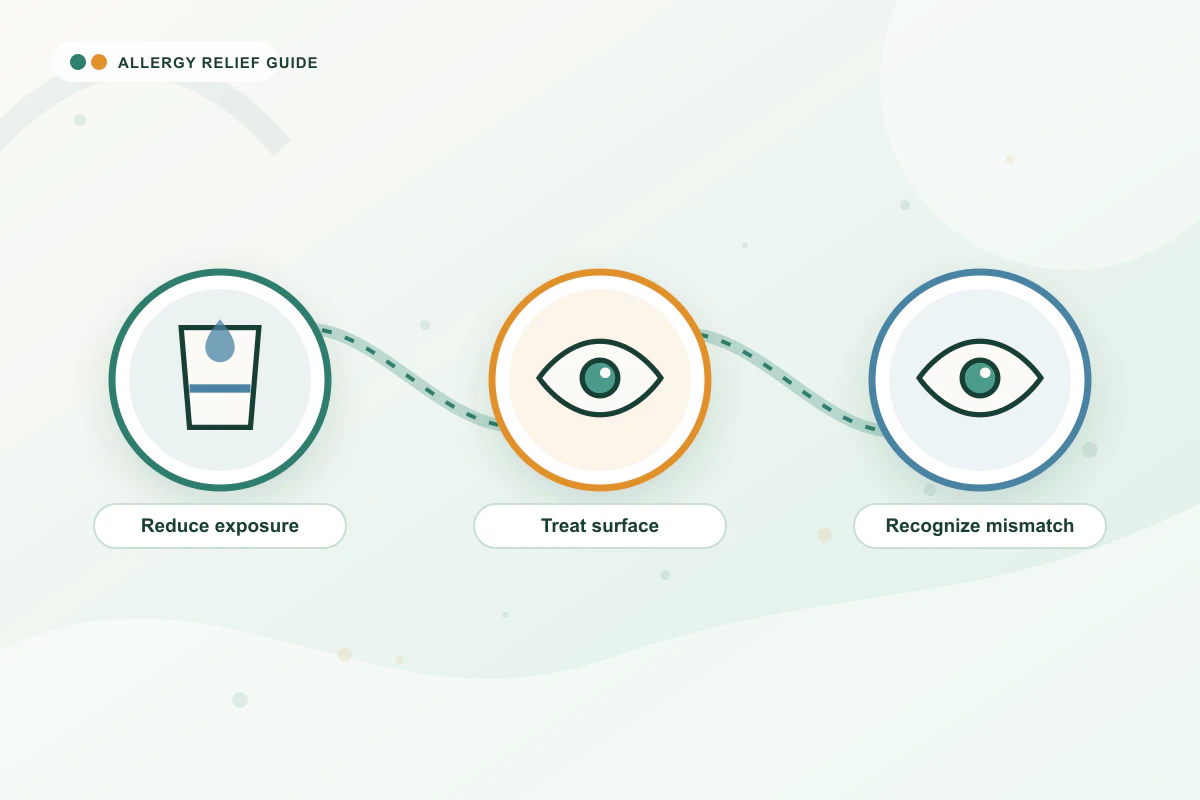
- Apply a cool compress over closed eyes to calm itching and inflammation
- Rinse the eyes with clean water or use lubricating artificial tears to flush allergen away
- Avoid your triggers — on high-pollen days, stay in during peak counts (often midmorning and early evening) and keep windows closed
- Use allergy eye drops — dual-action antihistamine/mast-cell-stabilizer drops are generally the first choice; see our eye drops guide
- Remove contact lenses during flares, since allergens cling to them
- Treat any accompanying nasal allergy, since eye and nasal symptoms often travel together
For a full comparison of drop types, see our allergy eye drops guide; for the nasal side, our allergic rhinitis and antihistamines guides.
Is It Really Allergies?
Allergic conjunctivitis is itchy, watery, affects both eyes, and usually comes with other allergy symptoms like sneezing and a runny nose, without fever. That's different from infectious conjunctivitis (pink eye), which more often starts in one eye, can produce thicker or pus-like discharge, and may be contagious. Eye pain, blurred or reduced vision, marked light sensitivity, or a foreign-body sensation are not typical of simple allergy and deserve prompt evaluation to rule out something more serious.
When to seek care
Routine
Mild itchy, watery eyes that come with your usual allergy symptoms and respond to compresses and over-the-counter drops.
Prompt (within days)
Eye symptoms that persist or aren't controlled by OTC measures, or that recur every season and need a plan.
Urgent (same day)
Eye pain, notable vision changes, marked light sensitivity, or thick pus-like discharge — these suggest something other than simple allergy.
Emergency (call 911)
Sudden vision loss or severe eye pain — seek emergency eye care. (Allergic conjunctivitis itself is not usually an emergency.)
Practical next steps
Safe general steps
- Use cool compresses and rinse or lubricate the eyes instead of rubbing
- Avoid triggers and limit outdoor time when pollen counts peak
- Try a dual-action antihistamine/mast-cell-stabilizer eye drop for itchy allergy eyes
- Treat any accompanying nasal allergy at the same time
Actions that need medical guidance
- Eye symptoms not controlled by over-the-counter measures
- Whether a prescription drop is appropriate for severe or persistent symptoms
- Distinguishing allergy from an eye infection if you're unsure
Don't attempt without professional advice
- Don't rub your eyes — it worsens the itch and can injure the eye
- Don't rely on decongestant redness-relief drops for more than a few days
- Don't ignore eye pain, vision changes, or light sensitivity — get those checked
Frequently asked questions
Why do allergies make my eyes itchy and watery?
Should I rub my itchy allergy eyes?
How do I get relief from itchy allergy eyes?
How do I know if it's allergies or an eye infection?
Can allergy eyes affect my vision?
Do contact lenses make allergy eyes worse?
Sources
- Cleveland Clinic — Allergic Conjunctivitis: Causes, Symptoms & Treatment
- ACAAI Patient — Eye Allergy
- MedlinePlus (NIH/NLM) — Allergic conjunctivitis
Medical disclaimer: This guide is for general education and isn't a substitute for personalized medical advice. It doesn't provide dosing. Always talk to a qualified healthcare professional about your symptoms and treatment.
 MD
MDMedically reviewed
Dr. Hannah H. Walford, MD
Allergist and Immunologist
- Website role
- Owner, Medical Director and Medical Reviewer of Allergy Relief Guide
- Professional affiliation
- Stanford Health Care / Menlo Medical Clinic, Menlo Park, California
- Areas of expertise
- Food allergy, eczema, allergic rhinitis, sinusitis and asthma
Dr. Hannah H. Walford is a board-certified allergist and immunologist experienced in caring for adults and children with allergic conditions. Her areas of expertise include food allergy, eczema, allergic rhinitis, sinusitis and asthma. She provides medical leadership and review oversight for the educational health content published by Allergy Relief Guide.
Medical content is provided for education and is not a substitute for diagnosis or individualized medical care.
Related guides
Continue building your allergy plan
Explore related guides to understand the full picture, from triggers to treatment to safety.
See the full allergy symptoms guide