
Ragweed Allergy: Symptoms, Season and Relief
One unremarkable-looking weed drives most fall hay fever. Here's how to recognise a ragweed allergy — and get ahead of it.
Quick answer: ragweed allergy in brief
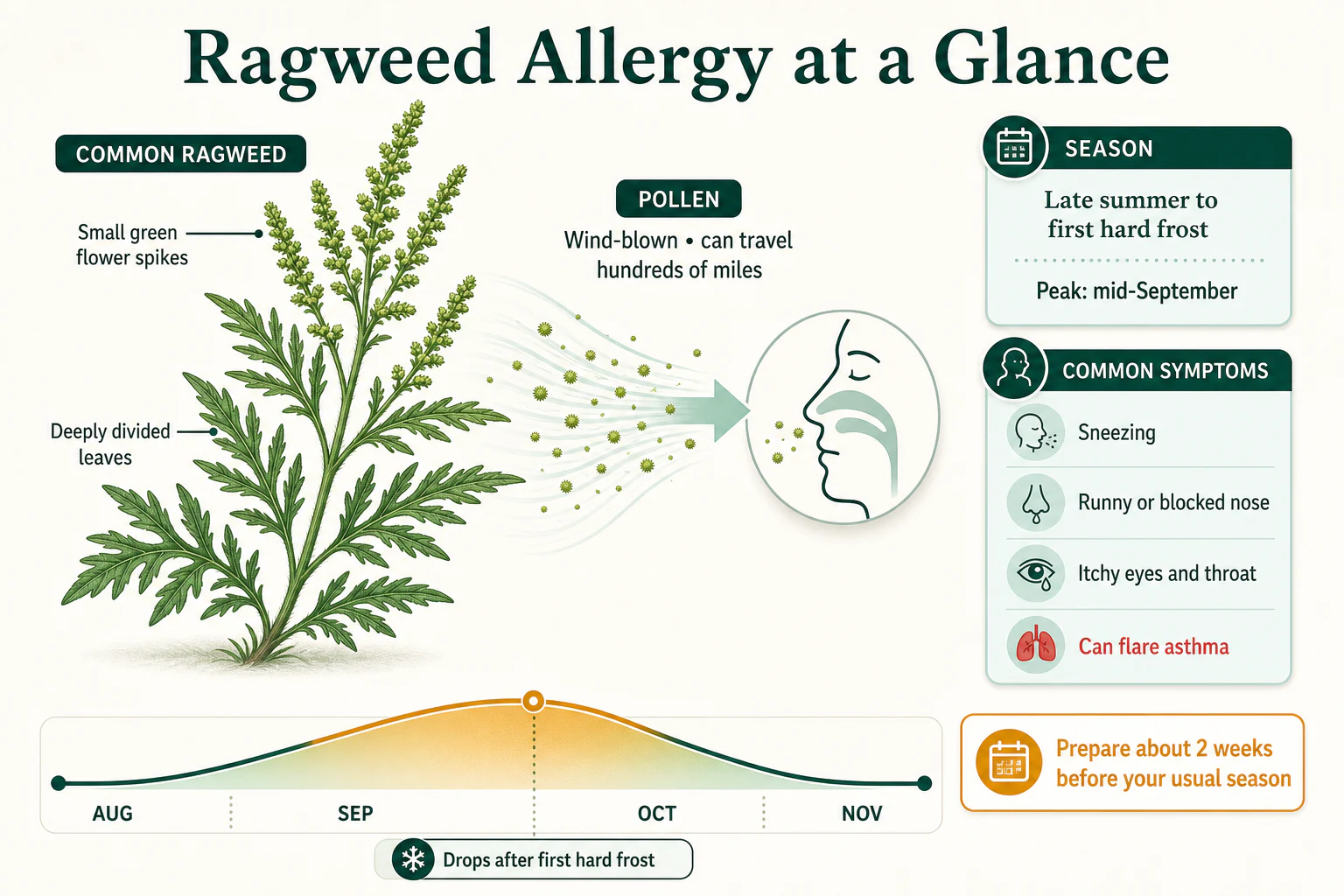
Short answer: ragweed is the main fall hay-fever trigger. Pollen starts around August, peaks mid-September and stops at the first hard frost. One plant makes up to a billion grains that travel hundreds of miles, so you can react with none growing nearby. Ragweed is also one of the few allergens with an under-the-tongue tablet.
A ragweed allergy is an allergic reaction to pollen from ragweed plants — the leading cause of fall hay fever, affecting tens of millions of people. Ragweed releases pollen from late summer, peaking in mid-September and easing at the first hard frost. Breathing it in triggers histamine, causing sneezing, a runny or blocked nose, an itchy throat and itchy, watery eyes; it can also flare asthma. A single plant makes up to a billion pollen grains that travel hundreds of miles, so you can react even without ragweed nearby. There's no cure, but reducing exposure, the right medicine started about two weeks early, and — for some — immunotherapy control it well. Ragweed is the main fall allergy trigger.
What is ragweed?
Ragweed is a common weed that produces some of the most allergenic pollen of any plant. There are around 17 species across North America, and ragweed grows in nearly every U.S. state and much of Canada — in fields, along roadsides and in vacant lots. It's an annual plant that sprouts in spring and releases its pollen in late summer and fall.
What makes it such a problem is the pollen itself: it's light, dry and produced in staggering quantities — a single plant can release around a billion grains in a season — and it's built to travel on the wind, sometimes hundreds of miles. That's why you can have a ragweed allergy even if you never see the plant. Ragweed belongs to a wider family that includes mugwort and sagebrush, which can cause similar symptoms. It's a leading cause of seasonal allergic rhinitis.
Ragweed allergy is common enough to be a public-health issue rather than a niche complaint. The American College of Allergy, Asthma & Immunology puts the number affected in the United States at as many as 25 million people, and describes ragweed pollen as reaching peak levels in mid-September, with the plants producing pollen from August into November. The Asthma and Allergy Foundation of America notes that a single plant lives only one season but can produce up to one billion pollen grains in that time.
Ragweed allergy symptoms
Symptoms appear when ragweed pollen is in the air and last as long as you're exposed. Cough, a runny nose and an itchy throat are among the most common. The full picture:
- Sneezing, often repeatedly
- Runny nose with clear mucus
- Nasal congestion and a blocked nose
- Itchy nose, throat and roof of the mouth
- Itchy, watery, red eyes
- Postnasal drip and cough
- Headache and sinus pressure
- Tiredness and disturbed sleep
In people with allergic asthma, ragweed can also trigger wheezing and breathlessness — see the safety note below. For the wider view, see our allergy symptoms guide.
When is ragweed season?
Ragweed season generally starts in August, peaks in mid-September, and continues until the first hard frost — often October or November, and later in warmer regions. In most areas it runs about six to ten weeks.
| Time | What's happening |
|---|---|
| August | Ragweed begins releasing pollen |
| Mid-September | Peak — the worst weeks for most people |
| October | Pollen declining but still present |
| First hard frost | Plants die and pollen ends for the year |
Ragweed counts are often highest from late morning to midday. See how it fits the year in our allergy season calendar.
Ragweed and food: the itchy-mouth link
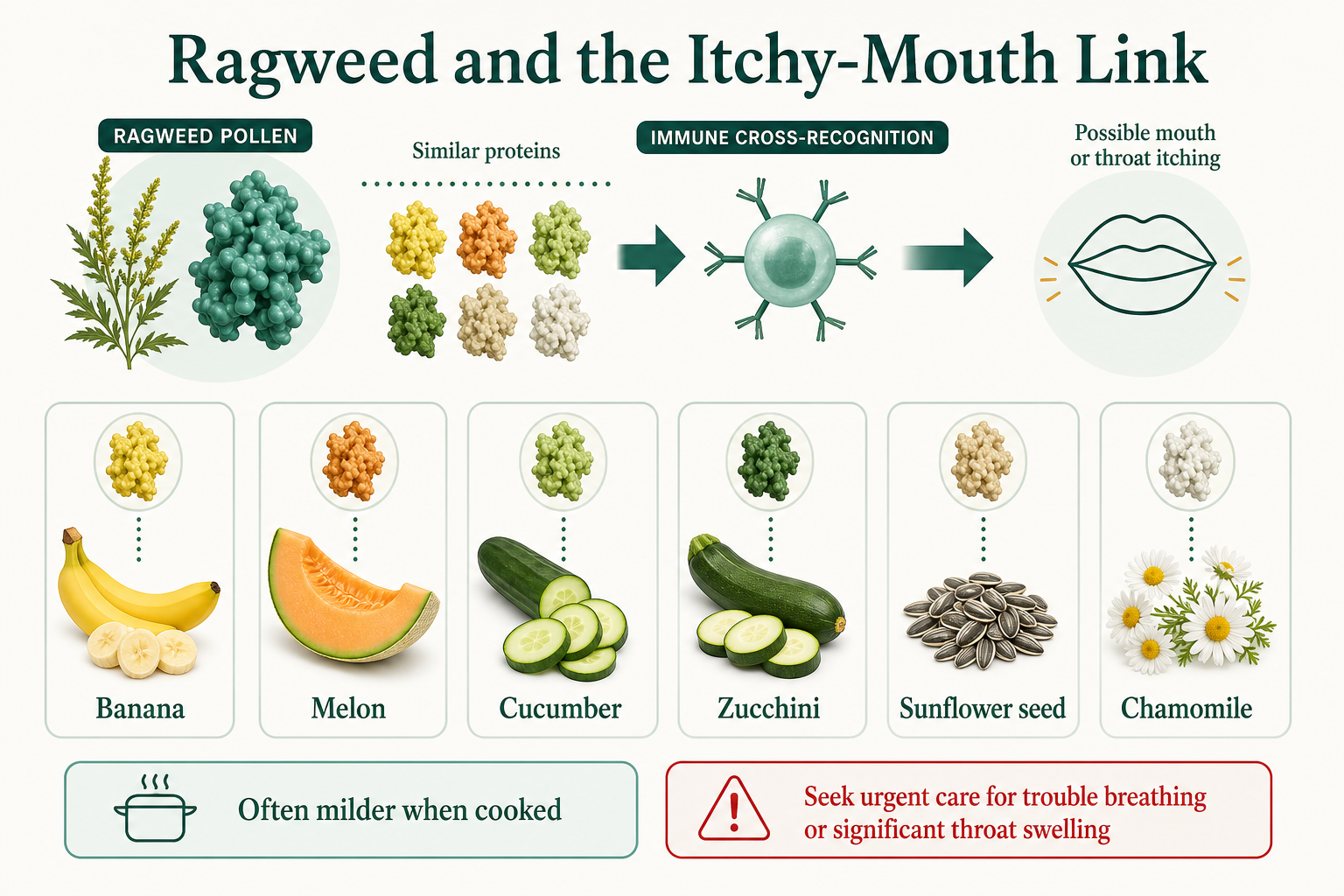
Many people with a ragweed allergy notice an itchy or tingly mouth, lips or throat when they eat certain raw foods — this is oral allergy syndrome (pollen-food syndrome). It happens because proteins in these foods closely resemble ragweed pollen proteins, so your immune system reacts to them too.
Common ragweed cross-reactors are melons (cantaloupe, watermelon, honeydew), banana, cucumber, zucchini, sunflower seeds, and chamomile and echinacea teas. Reactions are usually mild and brief, and because heat breaks down the proteins, cooked versions are often fine. It's typically harmless, but throat swelling can occasionally be more serious — so mention it to a doctor, and treat any trouble breathing as an emergency (see below).
The published cross-reaction list is worth checking against your own experience. The Asthma and Allergy Foundation of America lists banana, cantaloupe, cucumber, honeydew, watermelon, white potato, zucchini and sunflower seeds among the foods that can trigger oral allergy symptoms in people allergic to ragweed — white potato being the one most people are surprised by. Chamomile and echinacea belong to the same plant family as ragweed, which is the usual explanation given for those teas causing trouble.
ACAAI explains why it happens: the immune system recognises proteins in the raw food that resemble pollen proteins and reacts to the food. Symptoms usually stay local and settle quickly once the food is swallowed or removed from the mouth, and cooked versions are normally tolerated because heating distorts the protein enough that the immune system stops recognising it.
When it stops being minor
ACAAI notes that although uncommon, symptoms can progress beyond the mouth, with anaphylaxis reported in about 1.7% of people affected. Hives elsewhere, vomiting, trouble breathing or faintness are no longer a local reaction. Ask an allergist whether you should carry an epinephrine auto-injector. More in oral allergy syndrome.
The ragweed tablet: what immunotherapy actually involves
Ragweed is one of a very small number of allergens you can treat with an under-the-tongue tablet rather than injections, which makes it unusual and worth understanding properly. ACAAI states that the only sublingual immunotherapy tablets approved by the FDA are for ragweed, northern pasture grasses such as timothy, and dust mites. If ragweed is your trigger, that puts a home-based option on the table that most allergy sufferers do not have.
| Ragweed tablet (SLIT) | Allergy shots (SCIT) | |
|---|---|---|
| Where | First dose in the allergist's office, then daily at home | Every dose in the office |
| How | Held under the tongue for one to two minutes, then swallowed | Injection |
| When | Taken before and during ragweed season | Year-round, building up then maintaining |
| How long | Three years or longer for lasting effect | Usually three to five years |
| Safety arrangement | An epinephrine auto-injector is prescribed to treat a severe reaction at home | You wait in the office afterwards because of a small risk of anaphylaxis shortly after an injection |
| Covers | Ragweed only | A far wider range of allergens, including multiple triggers at once |
Two practical points. Because the tablet is seasonal, it has to be started before ragweed season rather than once symptoms arrive — this is a decision to make in spring or early summer, not in September. And if you react to several allergens rather than ragweed alone, shots may suit you better, since one tablet treats one trigger.
Either route aims at the underlying sensitivity rather than the symptoms, and ACAAI notes that allergy shots have a lasting beneficial effect well after therapy is completed. Read the detail in sublingual immunotherapy and allergy shots, and see allergy testing first — immunotherapy is only worth arranging once ragweed is confirmed.
Ragweed vs. goldenrod: blaming the wrong plant
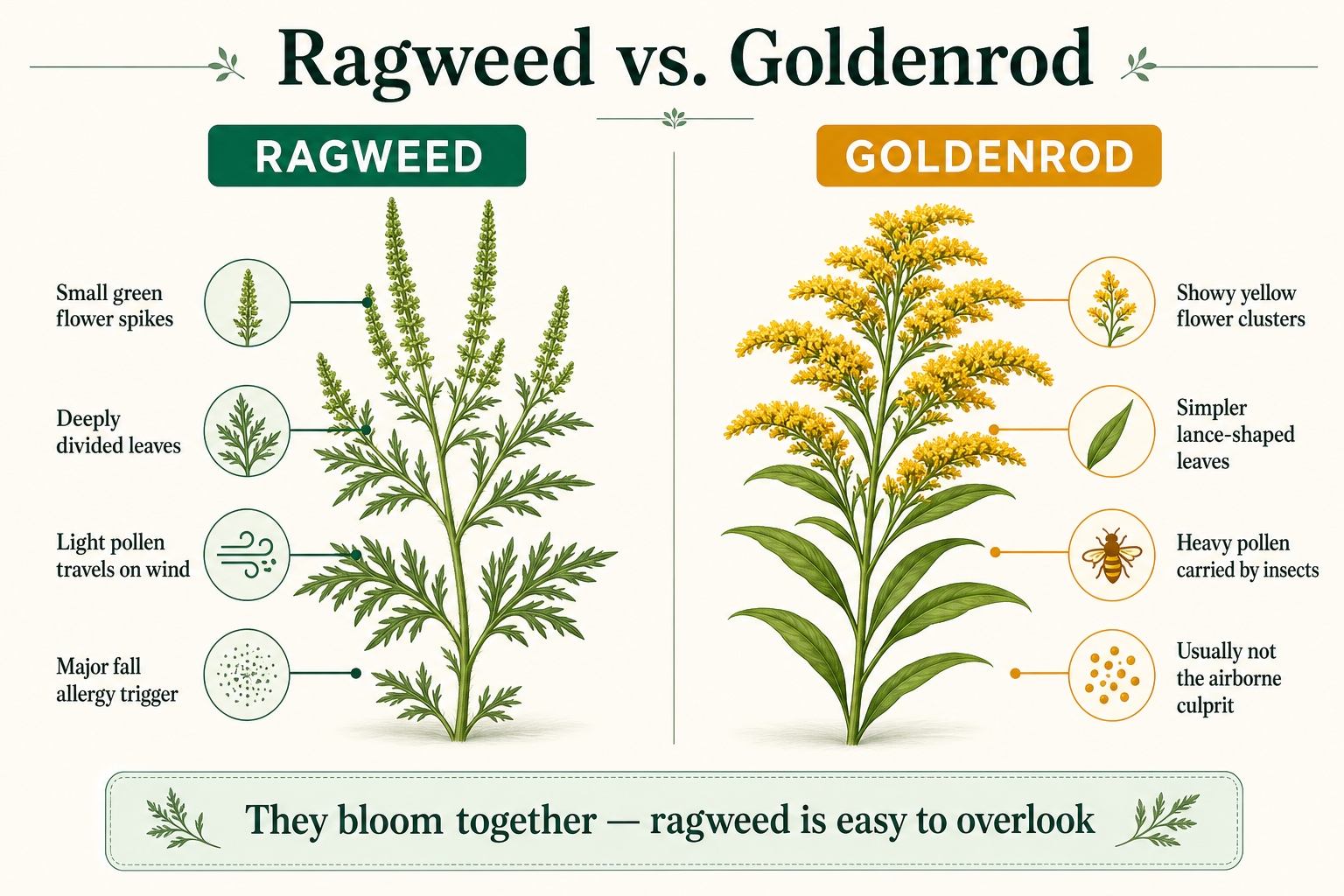
Goldenrod often takes the blame for ragweed's damage. The two bloom at the same time in late summer, but goldenrod has showy, bright-yellow flowers with heavy, sticky pollen that insects carry — it rarely becomes airborne, so it seldom causes allergies.
Ragweed's flowers are small, dull and green, easy to overlook, and its pollen is light and wind-blown. So the plant you notice (goldenrod) usually isn't the one making you sneeze — it's the plain ragweed growing nearby.
Ragweed and asthma
For people with allergic asthma, ragweed can do more than irritate the nose — it can inflame the airways and set off an asthma attack. Inhaled ragweed pollen can make the airways swell and tighten and produce extra mucus, leading to coughing, wheezing, chest tightness and shortness of breath.
If you have asthma and a ragweed allergy, keep taking your prescribed asthma medicines during ragweed season and follow your asthma action plan. Rising ragweed counts are a common reason for autumn flare-ups, so it's worth planning ahead with your doctor.
How a ragweed allergy is diagnosed
If your symptoms reliably appear in late summer and fall, a board-certified allergist can confirm ragweed as the cause. After taking your history, they may do a skin-prick test — placing a drop of ragweed extract on the skin and lightly pricking it; a raised, itchy bump within about 15–20 minutes indicates sensitivity. A blood test for ragweed-specific IgE antibodies is an alternative. Confirming the trigger makes both avoidance and immunotherapy far more effective. See our allergy testing guide.
How to treat a ragweed allergy
There's no cure, but a ragweed allergy is very manageable with a mix of avoidance, medicine and — for some — immunotherapy. This is general information, not dosing advice; a pharmacist can help you choose.
- Antihistamines — non-drowsy options ease sneezing, itching and a runny nose. See antihistamines.
- Steroid nasal sprays — the most effective option for congestion, used daily. See nasal sprays.
- Saline nasal rinses — flush pollen from the nose (use distilled, sterile or previously boiled water). See natural remedies.
- Antihistamine eye drops — for itchy, watery eyes. See itchy eyes.
- Immunotherapy — allergy shots or an under-the-tongue ragweed tablet can reduce your reaction long-term; the tablet is started several weeks before the season.
Start about two weeks early. Because ragweed's timing is predictable, beginning daily medicine — especially a steroid nasal spray, which takes days to build up — roughly two weeks before ragweed usually starts beats catching up once symptoms peak. See the full plan in our treatment & relief guide.
How to reduce your exposure
You can't escape ragweed pollen entirely, but you can limit how much reaches you.
- Check the daily pollen forecast; plan around high-count days and the late-morning-to-midday peak.
- Keep windows and doors closed, especially at night; use air conditioning rather than window fans.
- Run a HEPA air purifier and vacuum with a HEPA-filter cleaner.
- Shower and change clothes after being outdoors so you don't carry pollen to bed.
- Dry laundry indoors during ragweed season.
- Wear wraparound sunglasses, and a mask for mowing, raking or gardening.
- Treat the forecast as a trend, not a live reading: the Allergy & Asthma Network notes daily counts often reflect collections made 24 to 48 hours earlier. See our pollen count guide and allergy season by region.
- Start medicine ahead of the season. The Allergy & Asthma Network advises beginning about one to two weeks before your pollen season starts; steroid nasal sprays are the reason to lean toward the earlier end, since they need several days of daily use to reach full effect.
Is ragweed season getting worse?
Yes — ragweed season has been getting longer and more intense. As the climate warms, first frosts arrive later, letting ragweed keep pollinating for extra weeks; studies across North America have found the ragweed season has lengthened by around two to three weeks at many northern sites in recent decades, with higher pollen counts. Rising carbon-dioxide levels can also make ragweed plants produce more pollen. The upshot: symptoms that start earlier and last longer — and more people developing a ragweed allergy for the first time.
The lengthening has been measured, and it depends sharply on where you live. A 2011 study in PNAS by Ziska and colleagues tracked ragweed seasons across central North America and found that between 1995 and 2009 the season lengthened by 13 to 27 days at locations above about 44°N, with little change at southern sites. The correlation with latitude was strong, and the driver was exactly the mechanism described above: the first fall frost kept arriving later, and frost-free periods grew. Ragweed does not stop on a date — it stops when the cold stops it.
So the practical reading differs by region. In the northern US and Canada your ragweed season is likely materially longer than it was in the 1990s, and an October that used to be safe may no longer be. Further south, the change in length has been smaller. The wider pollen picture is in why pollen seasons are getting longer and fall allergies.
Go deeper on your fall symptoms
| If this is you | Guide |
|---|---|
| Symptoms carry on past the first frost | Mold allergy and winter allergies |
| You want the whole autumn picture | Fall allergies |
| Eyes are the worst part | Eye allergies and allergy eye drops |
| A cough that will not settle | Allergy cough |
| Ragweed reaches your chest | Allergic asthma |
| Smoke or poor air quality days | Air quality and allergies |
| Choosing a medicine | Allergy medicine |
| Rinsing and filtering at home | Saline rinsing, HEPA filters and air purifiers |
| A child with autumn symptoms | Allergies in children |
| This year feels worse than usual | Why are my allergies so bad this year? |
When to see a doctor
See a doctor if over-the-counter medicine isn't controlling your symptoms, if they disrupt your sleep or daily life, or if you also have asthma that flares in the fall. An allergist can confirm ragweed with allergy testing and tailor a stronger plan, including immunotherapy. More on timing in when to see a doctor for allergies.
Breathing symptoms need a doctor, not home remedies
Ragweed can trigger asthma. If it brings on wheezing, chest tightness or shortness of breath, see a healthcare provider — and although inhaled pollen rarely causes a severe whole-body reaction, call 911 for any trouble breathing or swelling of the face, lips, tongue or throat. See our allergy safety guide.
Ragweed allergy: frequently asked questions
When is ragweed season?
What are the symptoms of a ragweed allergy?
What foods should I avoid with a ragweed allergy?
How do you treat a ragweed allergy?
Is there an under-the-tongue tablet for ragweed allergy?
How many people have a ragweed allergy?
How much longer is ragweed season than it used to be?
Does the first frost end ragweed season?
Should I avoid melon and banana if I am allergic to ragweed?
How we create and review this guide
This guide is written for a general audience using patient-education material from the authoritative sources below, not blogs or forums:
- Asthma and Allergy Foundation of America (AAFA)
- American Academy of Allergy, Asthma & Immunology (AAAAI) & National Allergy Bureau
- American College of Allergy, Asthma & Immunology (ACAAI)
- U.S. Environmental Protection Agency (EPA) — pollen & climate
- Mayo Clinic
Sources for the specific figures on this page
- American College of Allergy, Asthma & Immunology. Ragweed allergy (opens in a new tab). Ragweed allergy affecting as many as 25 million people in the US, pollen reaching peak levels in mid-September, plants producing pollen from August into November, and ragweed among the common triggers of oral allergy syndrome.
- Asthma and Allergy Foundation of America. Ragweed pollen allergy (opens in a new tab). A single plant living one season but producing up to one billion pollen grains; season starting around August and lasting six to 10 weeks, peaking mid-September and lasting through October; and the ragweed cross-reacting foods including banana, cantaloupe, cucumber, honeydew, watermelon, white potato, zucchini and sunflower seeds.
- American College of Allergy, Asthma & Immunology. Immunotherapy with allergy tablets (opens in a new tab). FDA-approved sublingual tablets limited to ragweed, northern pasture grasses such as timothy, and dust mites; tablets held under the tongue for one to two minutes then swallowed; an epinephrine auto-injector prescribed for home use; treatment continued three years or longer; and grass and ragweed tablets taken before and during the season.
- Ziska L, Knowlton K, Rogers C, et al. Recent warming by latitude associated with increased length of ragweed pollen season in central North America (opens in a new tab). PNAS 2011. Ragweed pollen season lengthening by 13 to 27 days at latitudes above about 44°N between 1995 and 2009, and the association with delayed first fall frost and longer frost-free periods.
- American College of Allergy, Asthma & Immunology. Pollen food allergy syndrome (opens in a new tab). Cross-reacting proteins in pollen and raw foods, symptoms remaining local and subsiding quickly, cooked foods normally tolerated because heating distorts the protein, and anaphylaxis reported in about 1.7% of affected people.
- Allergy & Asthma Network. Pollen allergy (opens in a new tab). Starting allergy medication about one to two weeks before pollen season begins, and daily pollen counts often representing collections made 24 to 48 hours earlier.
- American College of Allergy, Asthma & Immunology. Allergy shots (immunotherapy) (opens in a new tab). Therapy lasting three to five years, shots given in an allergist's office because of a small danger of anaphylaxis shortly after an injection, and a lasting beneficial effect well after therapy is completed.
Medical disclaimer: This guide is for general education and isn't a substitute for personalized medical advice. It doesn't provide dosing. Always talk to a qualified healthcare professional about your symptoms and treatment.
 MD
MDMedically reviewed
Dr. Hannah H. Walford, MD
Allergist and Immunologist
- Website role
- Owner, Medical Director and Medical Reviewer of Allergy Relief Guide
- Professional affiliation
- Stanford Health Care / Menlo Medical Clinic, Menlo Park, California
- Areas of expertise
- Food allergy, eczema, allergic rhinitis, sinusitis and asthma
Dr. Hannah H. Walford is a board-certified allergist and immunologist experienced in caring for adults and children with allergic conditions. Her areas of expertise include food allergy, eczema, allergic rhinitis, sinusitis and asthma. She provides medical leadership and review oversight for the educational health content published by Allergy Relief Guide.
Medical content is provided for education and is not a substitute for diagnosis or individualized medical care.
Related guides
Fall allergies
Ragweed and mold, and the whole season.
Pollen allergy
Tree, grass and weed pollen explained.
Allergy season calendar
When each pollen peaks through the year.
Treatment & relief
Every option, step by step.
Ragweed tablets (SLIT)
The under-the-tongue option, in detail.
Oral allergy syndrome
Why melon and banana can itch in September.
Pollen counts
What the daily number actually means.
Allergy medicine
Which type suits which symptom.
Get ahead of ragweed season
See exactly when ragweed peaks so you can start relief two weeks early.
View the allergy season calendar