
Postnasal Drip from Allergies: Causes, Relief and Red Flags
Postnasal drip happens when extra or thickened mucus collects in the back of the nose and throat instead of draining unnoticed. Allergies are one of the most common causes, but colds, sinus infections, acid reflux, and non-allergic rhinitis can all produce the same feeling. Looking at which other symptoms are present, such as itchy eyes versus fever, is usually the first clue to the cause. Postnasal drip that is prolonged, blood-tinged, or paired with fever or breathing or swallowing trouble needs medical evaluation.

Quick answer
Postnasal drip happens when extra or thickened mucus collects in the back of the nose and throat instead of draining unnoticed. Allergies are one of the most common causes, but colds, sinus infections, acid reflux, and non-allergic rhinitis can all produce the same feeling. Looking at which other symptoms are present, such as itchy eyes versus fever, is usually the first clue to the cause. Postnasal drip that is prolonged, blood-tinged, or paired with fever or breathing or swallowing trouble needs medical evaluation.
What you need to know
- Postnasal drip is the sensation of mucus draining down the back of the throat, and it can come from allergies, infections, reflux, or non-allergic rhinitis.
- Allergy-driven postnasal drip usually comes with itchy or watery eyes, sneezing, and an itchy nose, and it is not typically associated with fever.
- Colds and sinus infections are more likely to bring fever, facial pain or pressure, and thick discolored discharge.
- Simple home steps like saline rinses, hydration, and steam can ease mild postnasal drip regardless of the cause.
- Postnasal drip lasting more than about 10 days, worsening after a week, or occurring with fever, blood, facial swelling, vision change, or trouble breathing or swallowing needs prompt medical attention.
What Is Postnasal Drip?
The nose and sinuses continuously make mucus to moisten the air you breathe and trap dust, germs, and other particles. Normally this mucus mixes with saliva and is swallowed without you noticing it. Postnasal drip happens when the body produces more mucus than usual, or when mucus becomes thicker, so it collects in the back of the nose and throat and becomes noticeable as it drips downward.
Postnasal drip itself is a symptom, not a specific illness. It can show up as a persistent urge to clear your throat, a tickling cough, a feeling of mucus stuck in the throat, hoarseness, or bad breath. Because so many different conditions can cause excess or thickened mucus, postnasal drip has a wide range of possible triggers, and allergies are only one of them.
How Allergies Cause Postnasal Drip
Allergic rhinitis, commonly called hay fever, develops when the immune system reacts to something you breathe in, such as pollen, dust mites, pet dander, or mold. The body responds by releasing chemicals that trigger inflammation in the lining of the nose. This inflammation increases mucus production and swells the nasal passages, which can leave mucus running from the front of the nose, dripping down the back of the throat, or both.
Allergy symptoms often appear soon after exposure to a trigger and can track with seasons, such as tree and grass pollen in spring, grass and ragweed in summer, or ragweed in fall, or they can persist year-round with indoor triggers like dust mites or pet dander.
- Seasonal triggers: tree, grass, and ragweed pollen
- Year-round triggers: dust mites, pet dander, indoor mold
- Pollen counts tend to rise on hot, dry, windy days and drop after rain
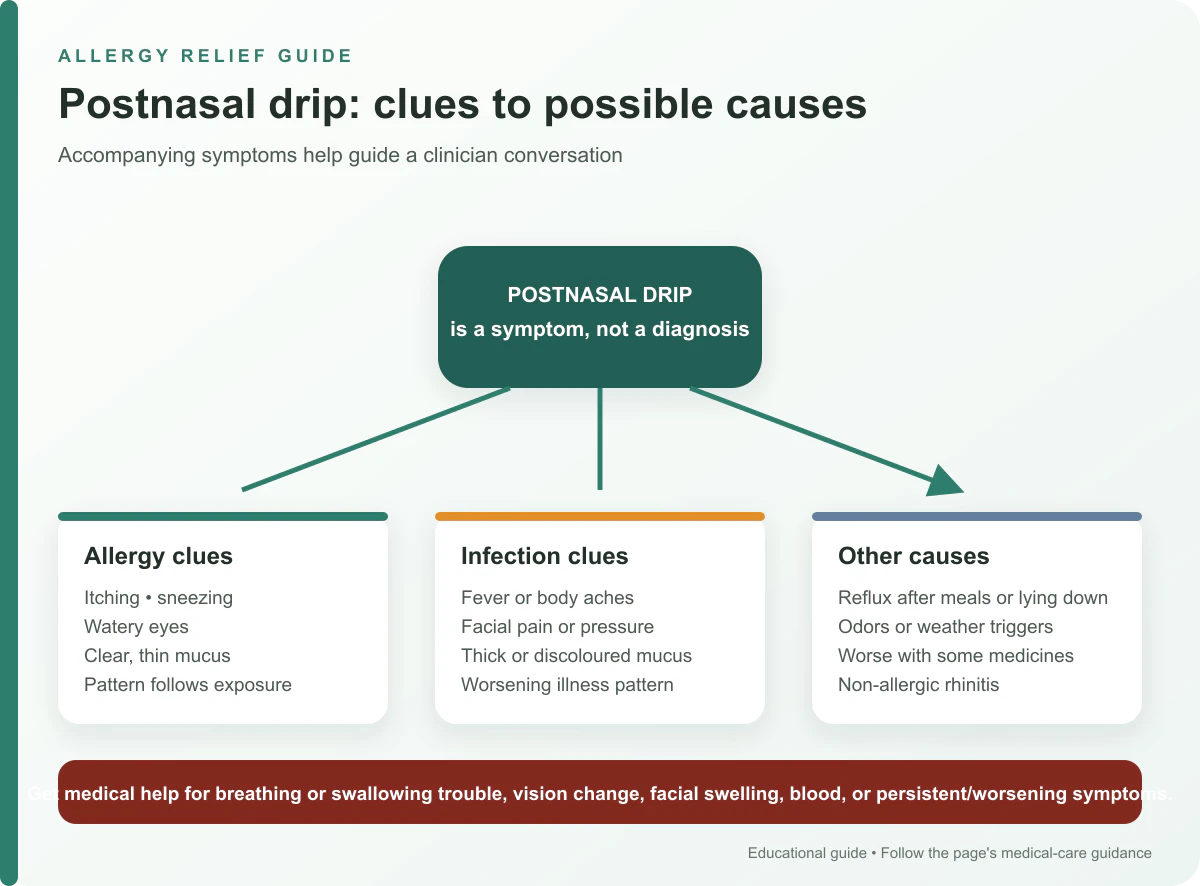
Allergic vs. Other Causes of Postnasal Drip
Because postnasal drip can come from several different sources, it helps to notice which other symptoms are present. This is general information to help you talk with a healthcare provider, not a way to diagnose the cause yourself.
Colds, flu, and sinus infections are typically driven by a virus or bacteria, and they usually come with fever or body aches that are uncommon with allergies. Acid reflux (GERD) can irritate the throat and trigger a similar drainage feeling, especially after meals or lying down. Non-allergic rhinitis produces congestion and drip similar to allergies, but it is set off by irritants such as strong odors, weather or temperature changes, or spicy food rather than an allergen, and it is not linked to a positive allergy test.
| Cause | Common clues |
|---|---|
| Allergic rhinitis | Itchy or watery eyes, sneezing, itchy nose, symptoms tied to pollen seasons or specific triggers, usually no fever |
| Common cold or flu | Fever, body aches, sore throat; symptoms generally ease within one to two weeks |
| Sinus infection (sinusitis) | Facial pressure or pain, thick or discolored discharge, symptoms lasting more than 10 days or worsening after 7 days, sometimes fever |
| Acid reflux (GERD) | Drainage feeling along with heartburn, sour taste, or symptoms that worsen after eating or lying down |
| Non-allergic rhinitis | Congestion and drip triggered by strong smells, weather changes, or spicy food, without a clear allergic trigger |
Symptoms That Often Come With Postnasal Drip
Postnasal drip rarely occurs alone. Because the drainage irritates the throat and airway, it tends to bring along a cluster of related symptoms, and the specific combination can offer clues about the underlying cause.
- Frequent throat clearing or a tickly, non-productive cough, often worse at night
- Sore or scratchy throat and hoarseness
- A sensation of mucus pooling in the throat or difficulty swallowing normally
- Bad breath
- Nasal congestion or a runny nose
- When allergies are the cause: itchy or watery eyes, sneezing, and an itchy nose or throat
Home Steps That May Help
Whatever the cause, keeping mucus thin and moving can make postnasal drip more manageable. These general comfort measures are commonly recommended alongside any medical treatment, not as a substitute for it when symptoms are significant or persistent.
- Drink plenty of fluids to help thin mucus
- Use a humidifier or breathe in steam a few times a day
- Rinse the nasal passages with a saline spray or rinse
- Elevate your head while sleeping, since drainage often feels worse lying flat
- Identify and limit contact with known allergy triggers, such as pollen, dust, or pet dander
- Avoid using over-the-counter decongestant nasal sprays for more than a few days in a row, since overuse can worsen congestion
Treatment Approaches for Allergy-Related Postnasal Drip
When allergies are driving postnasal drip, treatment generally focuses on reducing the underlying allergic inflammation and controlling exposure to triggers, rather than the drip alone. Common approaches include allergen avoidance, saline nasal rinses, over-the-counter or prescription antihistamines, and nasal corticosteroid sprays, which are often described as one of the more effective options for allergy-related nasal symptoms. For people with more persistent or severe allergies, a clinician may discuss allergen immunotherapy (allergy shots or under-the-tongue tablets) as a longer-term option.
If postnasal drip does not improve with allergy-focused treatment, that can be a sign the underlying cause is something other than allergies, such as reflux or non-allergic rhinitis, and warrants a closer look. For a broader overview of allergy treatment options, see our allergy treatment guide.
When Postnasal Drip Needs Medical Evaluation
Mild, intermittent postnasal drip tied to known allergy triggers can usually be managed at home or with routine allergy care. Certain patterns, however, point to a cause that needs a closer look from a healthcare provider.
- Symptoms lasting longer than about 10 to 14 days, or a cold that seems to get worse after 7 days instead of better
- Fever, especially alongside facial pain, pressure, or swelling
- Severe headache that is not relieved by over-the-counter pain medicine
- Thick, discolored, foul-smelling, or one-sided nasal discharge
- Blood-tinged mucus or drainage
- Any changes in vision
- Difficulty breathing or difficulty swallowing
- No improvement despite trying allergy-focused treatment, which may mean the cause is not allergic
When to seek care
Routine
Mild postnasal drip that comes with itchy eyes, sneezing, or other typical allergy symptoms and follows a seasonal or trigger-based pattern can usually be managed with home care and routine allergy treatment.
Prompt (within days)
Postnasal drip lasting more than 10 to 14 days, worsening after a week, or accompanied by facial pressure, thick discolored discharge, or a mild fever should be evaluated by a healthcare provider.
Urgent (same day)
Seek prompt medical care for a severe headache not relieved by over-the-counter pain medicine, facial swelling, changes in vision, or postnasal drip that does not respond at all to allergy treatment.
Emergency (call 911)
Seek emergency care for blood-tinged mucus that is heavy or persistent, or for any difficulty breathing or difficulty swallowing.
Practical next steps
Safe general steps
- Use a saline nasal rinse or spray to help clear mucus
- Increase fluid intake and use a humidifier or steam to keep mucus thin
- Elevate your head while sleeping
- Track when symptoms occur to spot patterns tied to seasons, indoor allergens, meals, or reflux
Actions that need medical guidance
- Choosing between antihistamines, nasal corticosteroid sprays, and decongestants for ongoing symptoms
- Postnasal drip that persists despite consistent home care and allergy treatment
- Sorting out whether reflux, non-allergic rhinitis, or allergies is the main driver
Don't attempt without professional advice
- Do not use decongestant nasal sprays for more than a few days in a row without medical guidance
- Do not ignore postnasal drip that comes with fever, facial swelling, or vision changes in hopes it resolves on its own
- Do not assume long-lasting or worsening symptoms are allergies without checking with a healthcare provider
Frequently asked questions
Can allergies really cause postnasal drip?
How can I tell if postnasal drip is from allergies or a cold?
Can postnasal drip be caused by something other than allergies?
Does postnasal drip go away on its own?
When should I be concerned about postnasal drip?
Can postnasal drip cause a cough?
Sources
- MedlinePlus (NIH/NLM) — Stuffy or runny nose - adult
- MedlinePlus (NIH/NLM) — Allergic rhinitis
- MedlinePlus (NIH/NLM) — Allergic rhinitis - self-care
- MedlinePlus (NIH/NLM) — Sinusitis
- MedlinePlus (NIH/NLM) — Nonallergic rhinopathy
- ACAAI Patient — Is postnasal drip related to allergies?
Medical disclaimer: This guide is for general education and isn't a substitute for personalized medical advice. It doesn't provide dosing. Always talk to a qualified healthcare professional about your symptoms and treatment.
 MD
MDMedically reviewed
Dr. Hannah H. Walford, MD
Allergist and Immunologist
- Website role
- Owner, Medical Director and Medical Reviewer of Allergy Relief Guide
- Professional affiliation
- Stanford Health Care / Menlo Medical Clinic, Menlo Park, California
- Areas of expertise
- Food allergy, eczema, allergic rhinitis, sinusitis and asthma
Dr. Hannah H. Walford is a board-certified allergist and immunologist experienced in caring for adults and children with allergic conditions. Her areas of expertise include food allergy, eczema, allergic rhinitis, sinusitis and asthma. She provides medical leadership and review oversight for the educational health content published by Allergy Relief Guide.
Medical content is provided for education and is not a substitute for diagnosis or individualized medical care.
Continue building your allergy plan
Explore related guides to understand the full picture, from triggers to treatment to safety.
Go to the treatment & relief guide