
Food Allergies: Symptoms, Causes and Treatment
Nine foods cause most reactions — here's how to recognise a true food allergy, what causes it, and how it's diagnosed and managed.
Quick answer: food allergies in brief
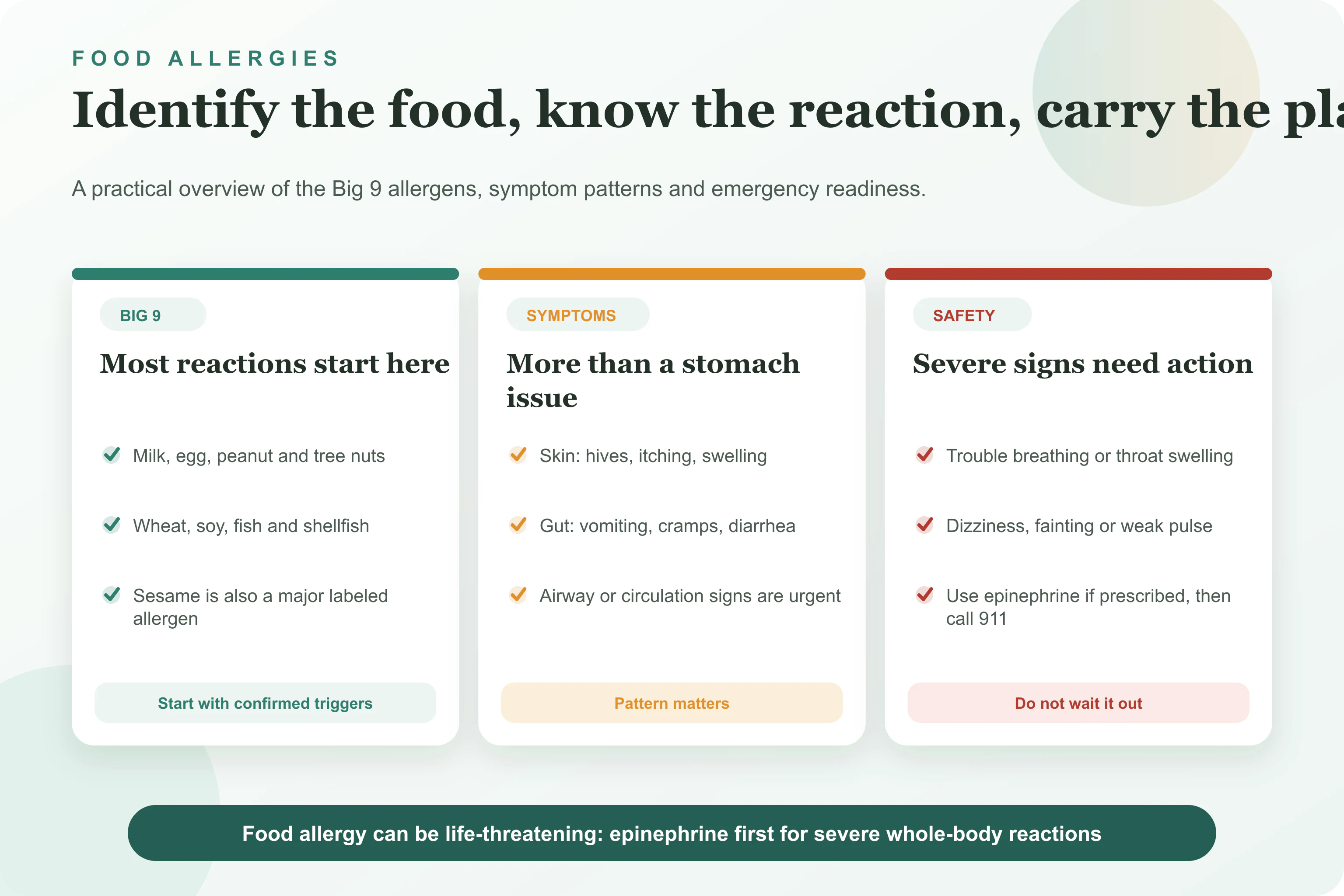
Short answer: a food allergy is an immune reaction to a food protein, and even a trace can trigger it. Nine foods cause most US reactions. Symptoms usually start within minutes to two hours. There is no cure — management is strict avoidance plus carrying epinephrine if you are at risk of a severe reaction.
A food allergy is an immune-system reaction to a specific food protein, and it can range from mild to life-threatening. In the U.S., nine foods — milk, eggs, peanuts, tree nuts, wheat, soy, fish, shellfish and sesame — cause most reactions. Symptoms usually appear within minutes to two hours of eating the food and can include hives, swelling, vomiting, and, in severe cases, anaphylaxis. A food allergy is different from food intolerance, which doesn't involve the immune system and isn't dangerous in the same way. There's no cure — management means strict avoidance of your trigger, and carrying epinephrine if you're at risk of a severe reaction.
What is a food allergy?
A food allergy happens when your immune system mistakenly identifies a harmless food protein as a threat. In the most common type — an IgE-mediated allergy — your body produces antibodies against that protein. The next time you eat the food, those antibodies trigger cells to release histamine and other chemicals, causing an allergic reaction that can affect the skin, gut, airway and circulation.
Food allergies affect adults and children, and while some are diagnosed in infancy, new food allergies can also develop later in life. Even a tiny amount of the trigger food can cause a reaction, which is what sets a true allergy apart from milder food problems.
The most common food allergens
Nine foods — often called the "Big 9" — account for the large majority of food allergy reactions in the U.S. and must be labeled on packaged food.
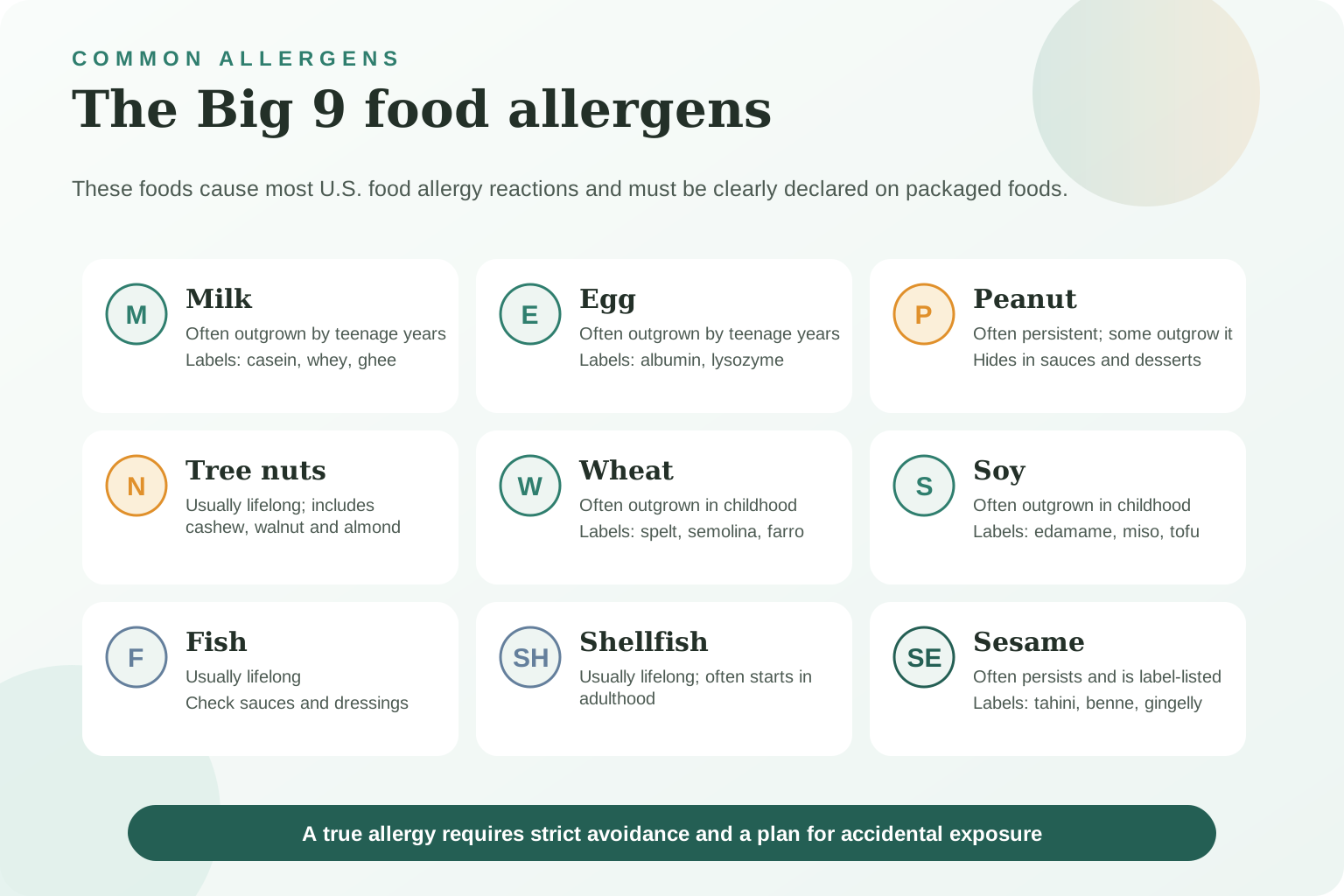
| Allergen | Typically outgrown? |
|---|---|
| Milk | Often, by the teenage years |
| Egg | Often, by the teenage years |
| Peanut | Usually lifelong; some outgrow it |
| Tree nuts (almond, cashew, walnut, etc.) | Usually lifelong |
| Wheat | Often outgrown in childhood |
| Soy | Often outgrown in childhood |
| Fish | Usually lifelong |
| Shellfish | Usually lifelong; often starts in adulthood |
| Sesame | Usually persists |
Peanut and tree nut allergies tend to cause the most severe reactions. In infants, milk allergy is most common; peanut allergy becomes more common from around age two.
Related: itchy mouth from fruits and vegetables?
If raw fruits, vegetables or nuts make your mouth or throat itch — but only during pollen season, or only raw and not cooked — that's likely oral allergy syndrome, a cross-reaction between pollen and food proteins, not a true food allergy. See oral allergy syndrome for the full food lists, and food allergy vs. intolerance if you are trying to work out which one you have. The pollen side is covered in ragweed allergy and spring allergies.
Each allergen, in detail
Every one of the Big 9 behaves differently — in how often it is outgrown, where it hides on a label, and what it cross-reacts with. Each has its own guide.
| Allergen | What its guide covers |
|---|---|
| Milk | Outgrowing it, and how it differs from lactose intolerance |
| Egg | Outgrowing it, baked egg, and the vaccine question |
| Peanut | Severity, the tree-nut relationship and management |
| Tree nuts | Cross-reactivity between individual nuts |
| Wheat | How it differs from celiac disease and gluten sensitivity |
| Soy | Outgrowing it and the hidden sources |
| Fish | Cross-reactivity and hidden sources |
| Shellfish | Crustaceans versus mollusks, and the iodine myth |
| Sesame | Hidden sources and the labeling rules |
For reading labels across all nine, see reading food labels for allergens. If you are weighing whether a reaction was allergy at all, food allergy vs. intolerance and histamine intolerance cover the common look-alikes.
How common are food allergies?
Food allergies affect an estimated 33 million people in the United States — around 1 in 10 adults and roughly 1 in 13 children, according to Food Allergy Research & Education (FARE). Rates have been rising in recent decades, and research shows food allergy is more common among Black, Hispanic and Asian populations in the U.S. than previously recognized.
Around 40% of children with a food allergy react to more than one food, and having one food allergy, eczema, or another allergic condition raises the likelihood of developing others — a pattern sometimes called the "atopic march." This is part of why an accurate diagnosis from an allergist matters more than self-diagnosing from symptoms alone.
Two further figures from FARE are worth knowing, because they shape how seriously to take a confirmed diagnosis. More than 40% of children with food allergies have already experienced a severe reaction such as anaphylaxis — this is not a rare complication of an otherwise mild condition. And the most common allergens differ by age: in children they are peanut, milk, shellfish and tree nut; in adults, shellfish, milk, peanut and tree nut. Shellfish rising to the top in adults reflects how often that allergy begins in adulthood rather than childhood.
Food allergy symptoms
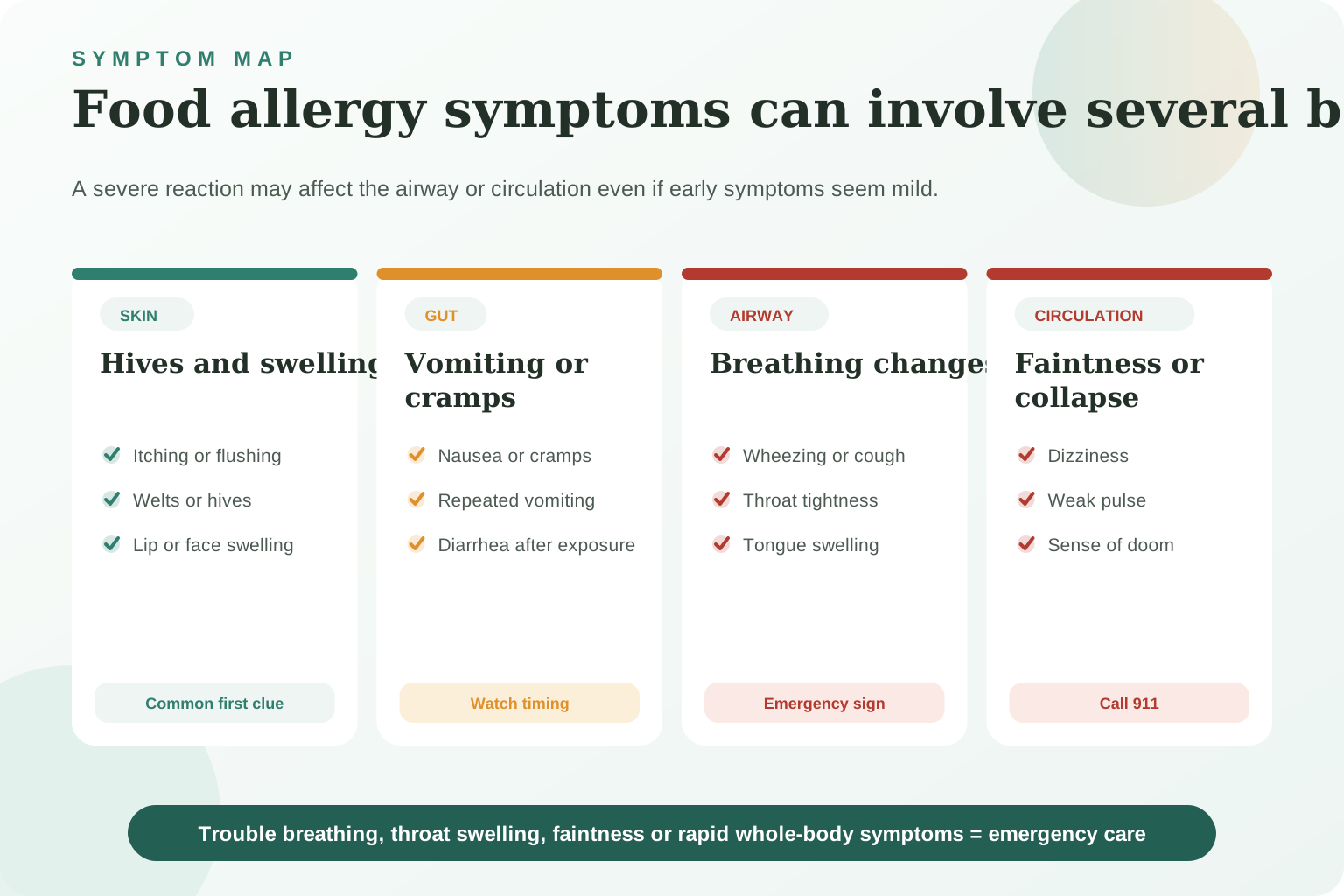
Symptoms usually appear within minutes to about two hours of eating the trigger food and can range from mild to severe:
Mild to moderate
- Hives, itching, flushed skin
- Tingling or itching in the mouth
- Mild swelling of lips or face
- Nausea, stomach cramps
- Nasal congestion, sneezing
Severe — treat as an emergency
- Trouble breathing, wheezing
- Swelling of the tongue or throat
- Repeated vomiting or diarrhea
- Dizziness, fainting, weak pulse
- A sense of impending doom
These severe signs can signal anaphylaxis — see the safety note below. Reactions can vary from one episode to the next, even to the same food.
Food allergy vs. food intolerance
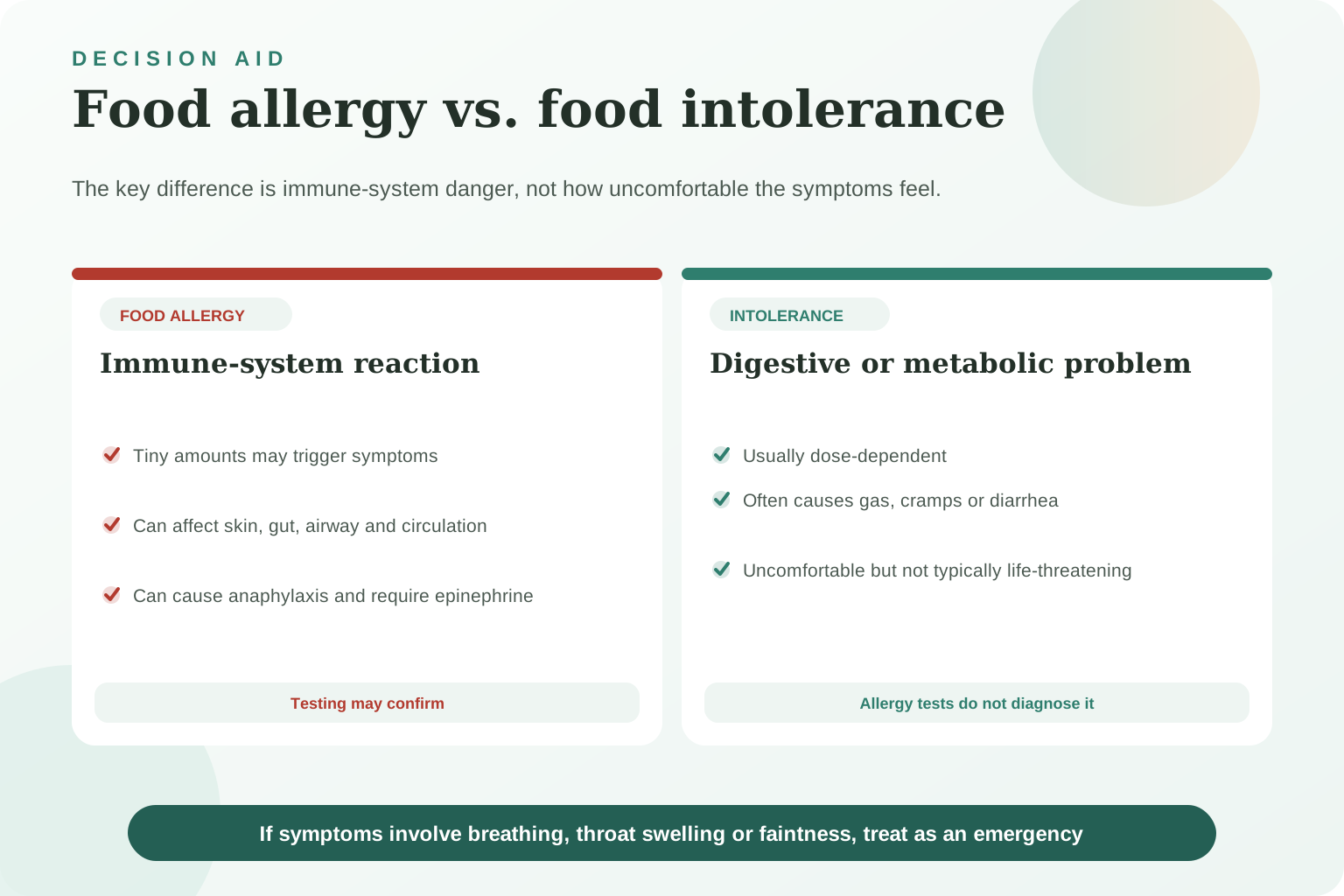
These two are often confused, but they're fundamentally different.
Food allergy
Involves the immune system. Can be triggered by a tiny amount. Affects skin, gut, airway and/or circulation. Can be life-threatening (anaphylaxis). Confirmed with allergy testing.
Food intolerance
Doesn't involve the immune system (e.g. lactose intolerance). Usually dose-dependent — a small amount may be tolerated. Causes digestive discomfort, not a dangerous reaction. Not detected by allergy tests.
In short: intolerance is uncomfortable; a true allergy can be dangerous. Getting the distinction right matters for how carefully you need to avoid a food.
How food allergies are diagnosed
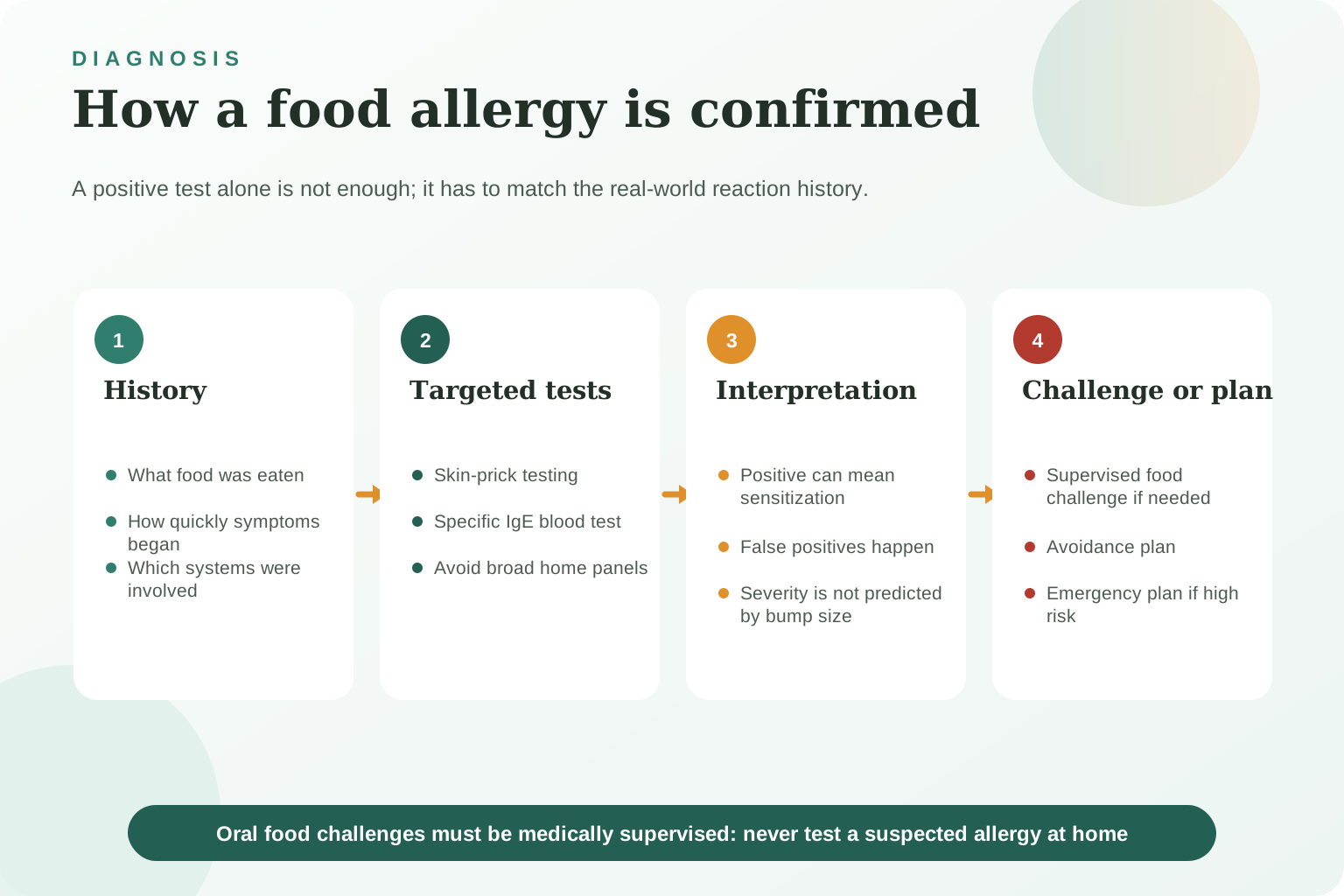
Diagnosis starts with your history — what you ate, how soon symptoms appeared, and what they were. From there, an allergist typically uses a skin prick test or a specific IgE blood test to check for sensitization to suspected foods.
Because these tests can be positive without a true allergy being present, an oral food challenge — eating the food in small, gradually increasing amounts under medical supervision — is often used to confirm or rule out the diagnosis. It's considered the most definitive test. Full detail in our allergy testing guide.
How food allergies are treated
There's no cure for a food allergy, so management centers on strict avoidance and being prepared for accidental exposure. This is general information, not dosing advice.
- Strict avoidance of the trigger food is the foundation — reading labels carefully and asking about ingredients when eating out.
- Antihistamines can ease mild symptoms like isolated hives or itching, but they don't treat a severe reaction. See antihistamines.
- Epinephrine is the essential treatment for a severe reaction. Anyone with a history of a serious food allergy should carry two auto-injectors and have a written action plan.
- Oral immunotherapy (OIT) is an emerging option, described below.
- An emergency action plan matters as much as the device itself. Everyone around you — family, school, workplace — should know where the auto-injector is and how to use it. See epinephrine auto-injectors, what to do in an allergy emergency and, for children, allergies at school.
Avoiding your allergen day to day
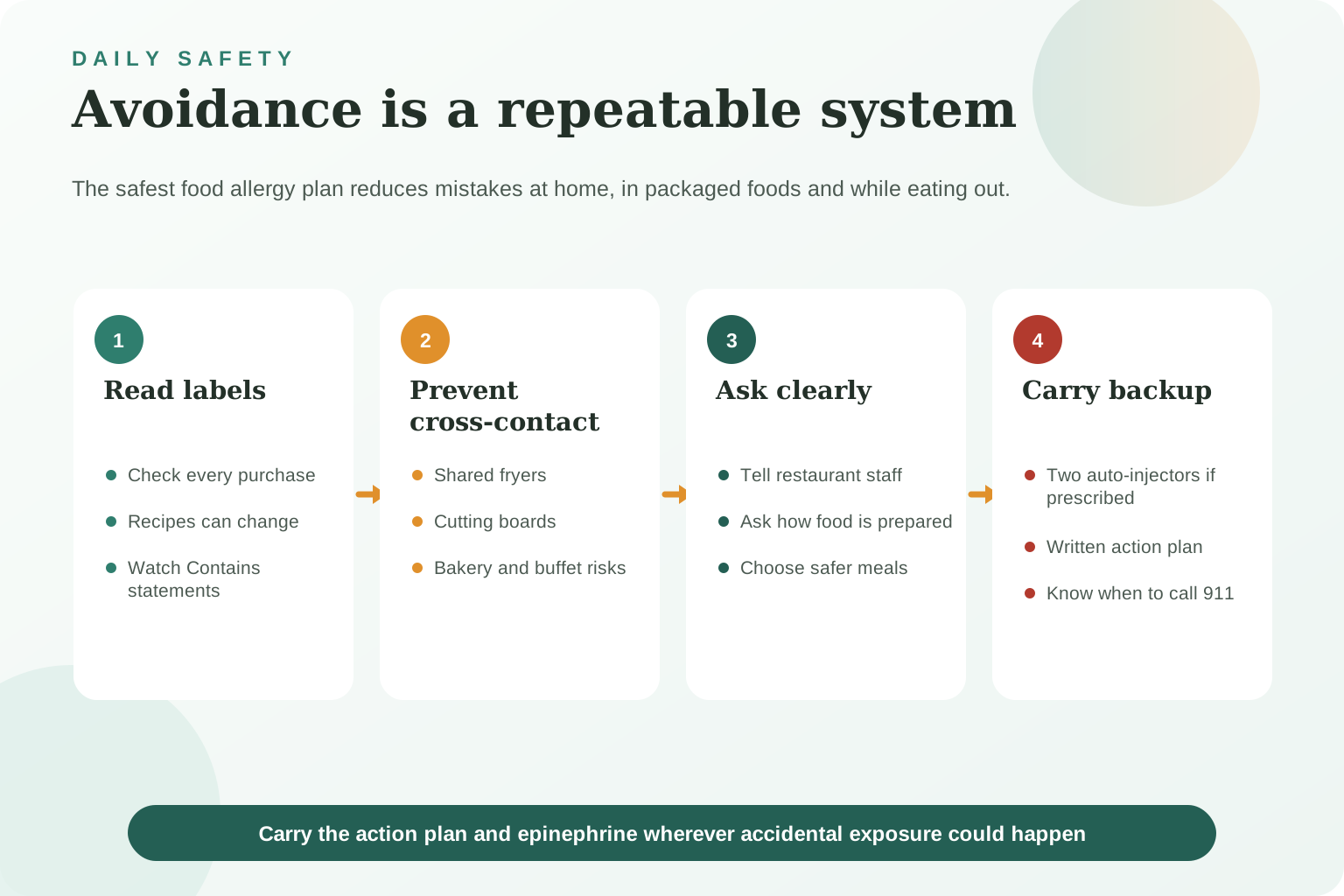
Careful avoidance is a daily skill, not a one-time decision.
- Read ingredient labels every time — recipes and suppliers change without notice.
- The Big 9 allergens must be declared on U.S. packaged food labels, usually in a "Contains" statement.
- Watch for cross-contact — where a safe food picks up traces of an allergen from shared equipment, fryers or surfaces.
- When eating out, tell staff clearly about your allergy and ask how dishes are prepared.
- Carry your epinephrine auto-injector everywhere, including on short trips.
- Sesame became the ninth mandatory US labeling allergen, so older packaging and recipes may not reflect it — see reading food labels for allergens and sesame allergy.
Emerging treatments: oral immunotherapy
Oral immunotherapy (OIT) is a treatment, overseen by an allergist, that gradually exposes you to tiny, increasing amounts of your allergen to build tolerance over time. It doesn't cure the allergy, but it can raise the amount of food needed to trigger a reaction, reducing the risk of a severe reaction from accidental exposure. Sublingual immunotherapy (under-the-tongue drops) is a related approach with a different safety profile. Both are done under specialist supervision — never attempted at home — and aren't right for everyone. Ask an allergist whether you're a candidate.
Can you outgrow a food allergy?
Some food allergies fade with time; others usually don't. Most children outgrow milk, egg, soy and wheat allergies by their teenage years. Peanut, tree nut, fish and shellfish allergies are far more likely to be lifelong — though a minority of children do outgrow a peanut allergy. Because reactions can become more severe over time in some people, don't assume an allergy has resolved; an allergist can retest periodically to check.
Can adults develop new food allergies?
Yes — food allergies aren't only a childhood condition. Adults can develop a new allergy to any food, and shellfish allergy in particular often first appears in adulthood. One increasingly recognized cause of adult-onset food allergy is worth knowing about specifically.
Alpha-gal syndrome (tick-bite red meat allergy)
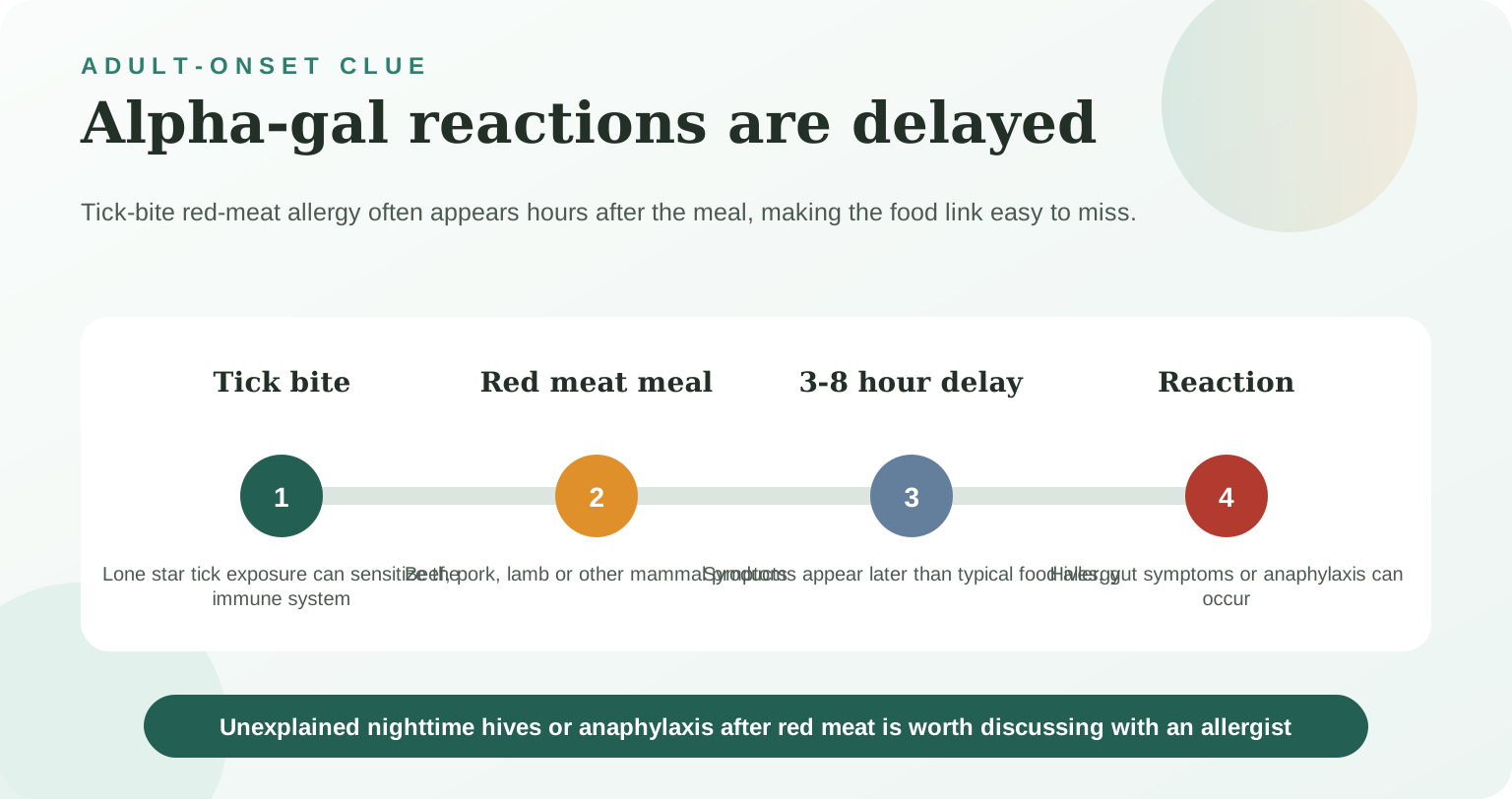
Alpha-gal syndrome (AGS) is an allergy to red meat and other mammal products, triggered by the bite of certain ticks — the lone star tick, in most confirmed U.S. cases. The tick bite can sensitize the immune system to a sugar molecule (galactose-α-1,3-galactose) found in mammalian meat, so eating beef, pork, lamb or other red meat afterward can trigger an allergic reaction.
What sets it apart from other food allergies is delayed onset — symptoms typically appear three to eight hours after eating the trigger, rather than within minutes, which makes it easy to miss the connection to food entirely. The U.S. Centers for Disease Control and Prevention estimates as many as 450,000 Americans may be affected, with cases concentrated in the South and eastern U.S. where the lone star tick is common, and numbers rising as tick ranges expand. If you develop unexplained hives, stomach symptoms or anaphylaxis hours after eating meat, mention any recent tick bites to your allergist — diagnosis uses a specific blood test alongside your history.
Food allergies in children
Food allergies are most often diagnosed in early childhood, and milk is typically the first one infants encounter. Current guidance favors introducing common allergens like peanut early in infancy under appropriate guidance, which research suggests may reduce the risk of developing an allergy — talk to your pediatrician about timing, especially if your child has eczema or another food allergy.
For a diagnosed child, make sure schools, daycare and other carers have a written action plan and know how to use an epinephrine auto-injector. More in allergies in children.
The early-introduction guidance is specific enough to be worth reading properly rather than paraphrasing — see how to safely introduce peanut and other allergens to babies. For recognising symptoms at the youngest ages, see allergies in babies and allergies in toddlers. Skin conditions often travel with food allergy in early childhood too — see eczema and allergies and hives.
When to see a doctor
See a doctor if you suspect a food allergy, after any reaction to a new food, or to confirm a diagnosis before eliminating foods long-term. An allergist can test accurately and build a safe, individualized plan. See when to see a doctor for allergies.
Severe reaction? Treat it as an emergency
Trouble breathing, throat or tongue swelling, widespread hives with dizziness, or a sense of impending doom can signal anaphylaxis. Use an epinephrine auto-injector immediately if available, and call 911. Go to the emergency department even if symptoms improve, since they can return. See our allergy safety guide.
Food allergies: frequently asked questions
What are the most common food allergies?
What is the difference between a food allergy and food intolerance?
How is a food allergy diagnosed?
Can you outgrow a food allergy?
How common are food allergies?
What is alpha-gal syndrome?
How many children with food allergies have had a severe reaction?
Which food allergies are most common in adults versus children?
Does a positive allergy test mean I have a food allergy?
Can I use antihistamines instead of epinephrine for a food reaction?
What is oral immunotherapy, and is it a cure?
How we create and review this guide
This guide is written for a general audience using patient-education material from the authoritative sources below, not blogs or forums:
- Food Allergy Research & Education (FARE)
- American Academy of Allergy, Asthma & Immunology (AAAAI)
- U.S. Centers for Disease Control and Prevention (CDC)
- Mayo Clinic Proceedings
- U.S. Food and Drug Administration (FDA) — food allergen labeling
- U.S. National Library of Medicine (MedlinePlus)
Sources for the specific figures on this page
- Food Allergy Research & Education. Food allergy facts and statistics (opens in a new tab). Approximately 33 million people in the United States with at least one food allergy; nearly 11% of adults, more than 27 million; 5.6 million children, nearly 8% or one in 13; about 40% of children with food allergies allergic to more than one food; more than 40% of children with food allergies having experienced a severe reaction such as anaphylaxis; and the most common allergens differing between children and adults.
- U.S. Centers for Disease Control and Prevention. About alpha-gal syndrome (opens in a new tab). Alpha-gal syndrome as an allergy to mammalian meat and by-products, most cases resulting from lone star tick bites, the estimate of up to 450,000 affected people in the United States, and diagnosis requiring both compatible symptoms and detection of alpha-gal IgE antibodies.
- American College of Allergy, Asthma & Immunology. Pollen food allergy syndrome (opens in a new tab). Cross-reacting proteins in pollen and raw foods, symptoms remaining local and subsiding quickly, cooked foods usually being tolerated because heating distorts the protein, and anaphylaxis reported in about 1.7% of affected people.
- American College of Allergy, Asthma & Immunology. Anaphylaxis (opens in a new tab). Anaphylaxis as a severe, potentially life-threatening reaction requiring immediate epinephrine and emergency care.
- MedlinePlus, U.S. National Library of Medicine. Food Allergy (opens in a new tab). Patient-facing overview of food allergy, the foods responsible for most reactions, symptom timing and the role of strict avoidance and emergency treatment.
Medical disclaimer: This guide is for general education and isn't a substitute for personalized medical advice. It doesn't provide dosing. If you suspect a food allergy, talk to a qualified healthcare professional before eliminating foods or starting any treatment.
 MD
MDMedically reviewed
Dr. Hannah H. Walford, MD
Allergist and Immunologist
- Website role
- Owner, Medical Director and Medical Reviewer of Allergy Relief Guide
- Professional affiliation
- Stanford Health Care / Menlo Medical Clinic, Menlo Park, California
- Areas of expertise
- Food allergy, eczema, allergic rhinitis, sinusitis and asthma
Dr. Hannah H. Walford is a board-certified allergist and immunologist experienced in caring for adults and children with allergic conditions. Her areas of expertise include food allergy, eczema, allergic rhinitis, sinusitis and asthma. She provides medical leadership and review oversight for the educational health content published by Allergy Relief Guide.
Medical content is provided for education and is not a substitute for diagnosis or individualized medical care.
Related guides
Anaphylaxis
The most serious food allergy reaction.
Allergy testing
How a food allergy is confirmed.
Allergies in children
Food allergies from infancy onward.
Allergy safety
Staying safe with a serious allergy.
Reading food labels
Finding the Big 9 on any package.
Epinephrine auto-injectors
How and when to use one.
Allergy vs. intolerance
Telling the two apart properly.
Introducing allergens to babies
Early introduction, done safely.
Think you have a food allergy?
Testing confirms your exact triggers so you can manage them with confidence.
Learn about allergy testing