Milk Allergy vs. Lactose Intolerance: Symptoms and Outgrowing It
Milk allergy is one of the most common food allergies in young children, affecting an estimated 2–3% of children under 3, and most outgrow it — around 80% by age 16. It's an immune reaction to the proteins in cow's milk, which is what makes it different from lactose intolerance (a digestive problem with the milk sugar lactose, not an allergy). Reactions can range from hives and vomiting to, in some people, anaphylaxis. Because milk is hidden in so many foods under names like casein and whey, careful label-reading is essential.
Quick answer
Milk allergy is one of the most common food allergies in young children (about 2–3% of under-3s), and most outgrow it — around 80% by age 16. It's an immune reaction to cow's milk proteins, which makes it different from lactose intolerance (a digestive problem with milk sugar, not an allergy). Reactions range from hives and vomiting to anaphylaxis in some people. Because milk hides in many foods under names like casein and whey, careful label-reading is essential.
What you need to know
- Milk allergy is one of the most common food allergies in young children, affecting about 2–3% of children under 3.
- Most children outgrow it — around 80% by age 16.
- It's an immune (IgE) reaction to cow's milk proteins — different from lactose intolerance, which is a digestive problem with the milk sugar lactose and not an allergy.
- Symptoms range from hives, swelling, and vomiting to, in some people, anaphylaxis.
- Milk hides in many foods under names like casein, caseinate, whey, and lactalbumin, and even in some non-dairy products, so label-reading matters.
- Milk is one of the major allergens that must be declared on U.S. packaged-food labels; those at risk of severe reactions should carry epinephrine.
Milk Allergy vs. Lactose Intolerance
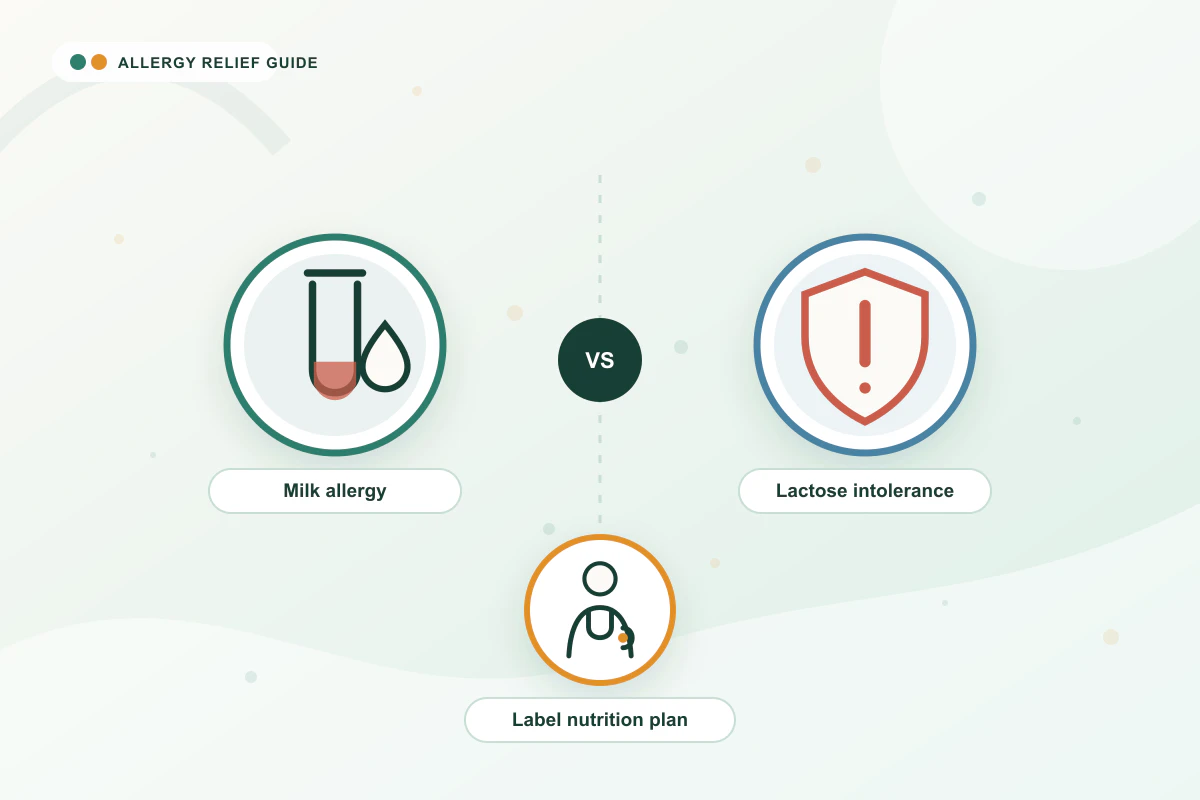
This is the most important distinction, because the two are completely different and often confused. A milk allergy is an immune-system reaction to the proteins in cow's milk — the body makes IgE antibodies and releases histamine, causing allergic symptoms that can be serious. Lactose intolerance, by contrast, is not an allergy at all: it's a digestive problem caused by a shortage of lactase, the enzyme that breaks down the milk sugar lactose, and it causes discomfort (bloating, gas, diarrhea) but not a dangerous allergic reaction.
| Feature | Milk allergy | Lactose intolerance |
|---|---|---|
| Involves the immune system | Yes (IgE reaction to milk protein) | No (enzyme shortage) |
| Typical symptoms | Hives, swelling, vomiting, wheezing, anaphylaxis | Bloating, gas, cramps, diarrhea |
| Can be life-threatening | Yes | No |
| Most common in | Young children (often outgrown) | Can develop in older children and adults |
For the broader picture, see our food allergy vs. intolerance guide.
Symptoms and Outgrowing It
Milk allergy symptoms usually appear soon after consuming milk and can include hives, swelling, itching of the mouth or throat, vomiting, diarrhea, a runny or congested nose, wheezing, and in severe cases anaphylaxis. The reassuring news is that milk allergy is largely a childhood condition that most children outgrow — around 80% by age 16. Whether a child has outgrown it should be checked by an allergist, sometimes with a supervised oral food challenge, rather than tested at home. See our anaphylaxis guide for severe-reaction signs.
Hidden Sources of Milk
Milk is one of the trickier allergens to avoid because it's in far more than obvious dairy foods. On labels, milk protein can appear as casein, caseinate (for example sodium caseinate), whey, and lactalbumin, and it shows up in baked goods, chocolate and other candy, protein powders, and even some unexpected non-dairy products like certain canned tuna, sausages, and lunch meats. Butter, cream, cheese, and ghee are all dairy. Because of this, label-reading is essential — and helpfully, milk is one of the major allergens that must be declared on U.S. packaged-food labels. See our reading food labels for allergens guide.
Living With Milk Allergy
Management centers on avoiding milk and cow's-milk-protein-containing foods, reading labels carefully, and being prepared for accidental exposure. Anyone at risk of a severe reaction should carry an epinephrine auto-injector and have an emergency plan. For infants with cow's milk allergy, feeding choices (including certain specialized formulas, or dietary changes for a breastfeeding parent) should be guided by a clinician. An allergist confirms the diagnosis, monitors for outgrowing it, and helps with a management plan. See our food allergies and allergy testing guides.
When to seek care
Routine
You suspect a milk allergy, or want to check whether a child's milk allergy has been outgrown — see an allergist.
Prompt (within days)
A mild reaction after milk (like a few hives), to confirm the diagnosis and get a management plan.
Urgent (same day)
A reaction with spreading hives, swelling, or vomiting after consuming milk, and any first-time reaction.
Emergency (call 911)
Signs of anaphylaxis — trouble breathing, swelling of the lips, tongue, or throat, widespread hives with dizziness or vomiting. Use epinephrine if prescribed and call 911.
Practical next steps
Safe general steps
- Avoid milk and cow's-milk-protein foods, and read labels for casein, whey, and caseinate
- Carry an epinephrine auto-injector if you're at risk of a severe reaction, and have a plan
- See an allergist to confirm the diagnosis and monitor for outgrowing it
- For infants, get feeding and formula guidance from a clinician
Actions that need medical guidance
- Whether a child has outgrown milk allergy (needs supervised evaluation)
- Infant feeding and formula choices with cow's milk allergy
- Distinguishing milk allergy from lactose intolerance
Don't attempt without professional advice
- Don't confuse milk allergy with lactose intolerance — they're managed very differently
- Don't reintroduce milk at home to 'test' for outgrowing it — do it under medical guidance
- Don't rely on antihistamines for a severe reaction — that needs epinephrine and 911
Frequently asked questions
Is milk allergy common in children?
What's the difference between milk allergy and lactose intolerance?
Do children outgrow milk allergy?
What are the symptoms of milk allergy?
Where does milk hide in foods?
Is milk a labeled allergen?
Sources
- ACAAI Patient — Milk & Dairy Allergy
- MedlinePlus (NIH/NLM) — Food Allergy
- MedlinePlus (NIH/NLM) — Allergies
Medical disclaimer: This guide is for general education and isn't a substitute for personalized medical advice. It doesn't provide dosing. Always talk to a qualified healthcare professional about your symptoms and treatment.
 MD
MDMedically reviewed
Dr. Hannah H. Walford, MD
Allergist and Immunologist
- Website role
- Owner, Medical Director and Medical Reviewer of Allergy Relief Guide
- Professional affiliation
- Stanford Health Care / Menlo Medical Clinic, Menlo Park, California
- Areas of expertise
- Food allergy, eczema, allergic rhinitis, sinusitis and asthma
Dr. Hannah H. Walford is a board-certified allergist and immunologist experienced in caring for adults and children with allergic conditions. Her areas of expertise include food allergy, eczema, allergic rhinitis, sinusitis and asthma. She provides medical leadership and review oversight for the educational health content published by Allergy Relief Guide.
Medical content is provided for education and is not a substitute for diagnosis or individualized medical care.
Continue building your allergy plan
Explore related guides to understand the full picture, from triggers to treatment to safety.
See the full food allergies guide