Peanut Allergy: Symptoms, Tree-Nut Risk and Management
Peanut allergy is one of the most common food allergies in children and a leading cause of severe, life-threatening allergic reactions. A key point of confusion: peanuts are legumes, not tree nuts — but many people allergic to peanuts also react to tree nuts, and cross-contact is a real concern, so an allergist's guidance matters. Unlike milk or egg allergy, peanut allergy is usually lifelong, with only about a fifth of children outgrowing it. Management centers on strict avoidance, careful label-reading, and carrying epinephrine. Early guided introduction in infancy can help prevent it.
Quick answer
Peanut allergy is one of the most common childhood food allergies and a leading cause of severe, life-threatening reactions. Peanuts are legumes, not tree nuts, but many peanut-allergic people also react to tree nuts. Unlike milk or egg allergy, peanut allergy is usually lifelong — only about 20% of children outgrow it. Management centers on strict avoidance, label-reading, and carrying epinephrine. Early guided introduction in infancy can help prevent it.
What you need to know
- Peanut allergy is a common childhood food allergy and a leading cause of severe, life-threatening allergic reactions (anaphylaxis).
- Peanuts are legumes, not tree nuts — but a notable share of peanut-allergic people also react to tree nuts, and cross-contact between them is common.
- It's usually lifelong: only about 20% of children outgrow peanut allergy.
- Reactions can range from hives and stomach upset to anaphylaxis, and even tiny amounts can trigger a reaction in sensitive people.
- Peanut hides in many foods (sauces, baked goods, candy, some cuisines) and is one of the major allergens that must be declared on U.S. labels.
- Management is strict avoidance plus carrying epinephrine; early guided introduction of peanut in infancy can help prevent the allergy in at-risk babies.
Symptoms and Severity
Peanut allergy is an immune reaction to peanut proteins, and it's notable for how serious it can be — it's one of the most common causes of food-related anaphylaxis. Reactions usually come on quickly after exposure and can include:
- Skin: hives, redness, swelling, or itching
- Mouth and throat: itching or tightening
- Digestive: stomach cramps, nausea, vomiting, or diarrhea
- Breathing: coughing, wheezing, or shortness of breath
- Anaphylaxis: a severe, whole-body reaction with trouble breathing, throat swelling, and a drop in blood pressure
Even trace amounts can trigger a reaction in highly sensitive people, which is why avoidance has to be careful. See our anaphylaxis guide.
Peanuts vs. Tree Nuts
This distinction causes a lot of confusion. Botanically, peanuts are legumes (like beans and lentils), not tree nuts (like almonds, walnuts, and cashews) — they're different plant families. However, being allergic to peanuts and being allergic to tree nuts often go together: a substantial share of peanut-allergic people also react to one or more tree nuts. On top of that, peanuts and tree nuts are frequently processed and served together, so cross-contact is common. For these reasons, an allergist often advises how to handle both, rather than assuming a peanut allergy means tree nuts are automatically safe (or vice versa). See our food allergies guide.
Is Peanut Allergy Outgrown?
Unlike milk and egg allergies — which most children outgrow — peanut allergy tends to be lifelong. Only about 20% of children outgrow it, usually by school age, and the majority remain allergic into adulthood. Whether a child has outgrown it should only be checked by an allergist, sometimes with a supervised oral food challenge, never tested at home. See our allergy testing guide.
Management — and Prevention
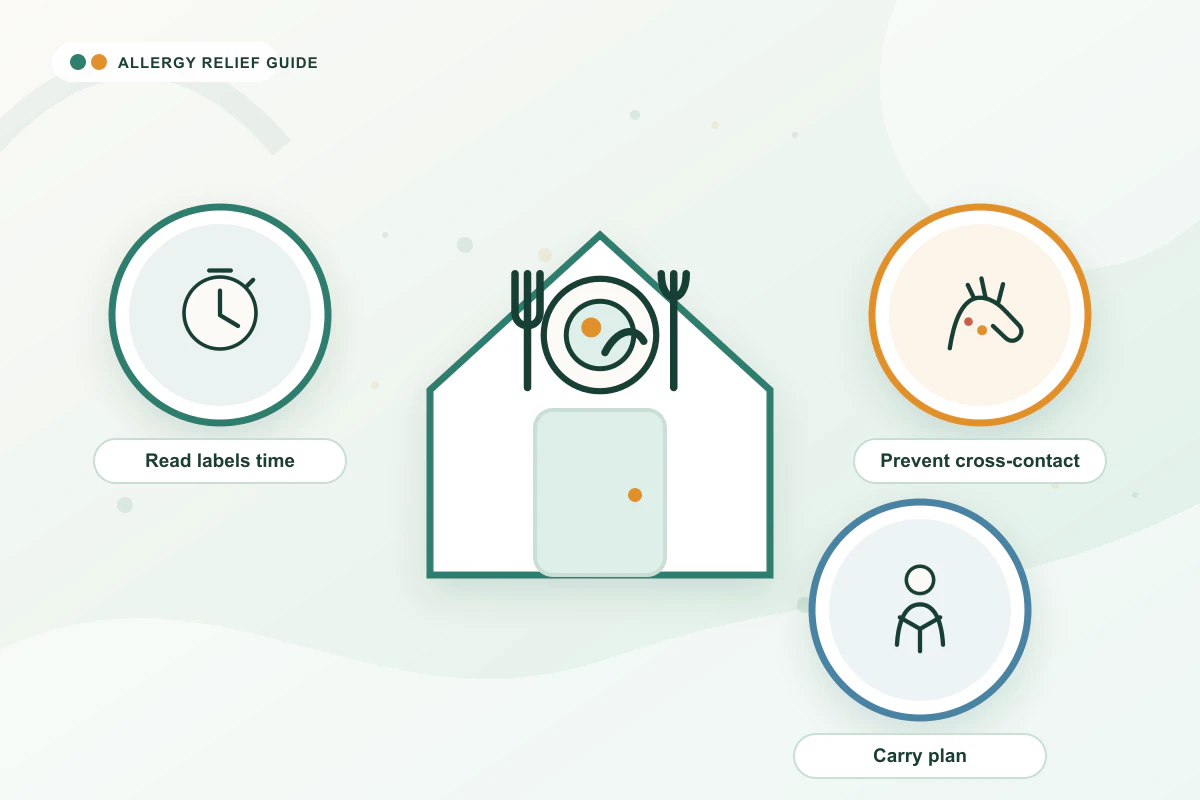
Because peanut allergy can be severe and is usually lifelong, management rests on two pillars: strict avoidance and preparedness. Avoidance means careful label-reading (peanut is one of the major allergens that must be declared on U.S. packaged-food labels), watching for hidden sources (sauces like satay, baked goods, candy, and some cuisines), and asking about ingredients and cross-contact when eating out. Preparedness means anyone at risk carrying an epinephrine auto-injector (often two) and having an emergency plan. There's also good news on prevention: guided early introduction of peanut in infancy can substantially lower the chance of developing the allergy in at-risk babies — see our introducing peanut to baby guide. For established allergy, newer treatments like oral immunotherapy exist and are managed by specialists. See our reading food labels for allergens guide.
When to seek care
Routine
You suspect a peanut allergy, or want to check whether a child has outgrown it — see an allergist.
Prompt (within days)
A mild reaction after peanut (like a few hives), to confirm the diagnosis and get an avoidance and emergency plan.
Urgent (same day)
A reaction with spreading hives, swelling, or vomiting after peanut exposure, and any first-time reaction.
Emergency (call 911)
Signs of anaphylaxis — trouble breathing, swelling of the lips, tongue, or throat, widespread hives with dizziness or vomiting. Use epinephrine immediately and call 911.
Practical next steps
Safe general steps
- Avoid peanut and read labels, since peanut must be declared on U.S. packaged foods
- Watch for hidden sources (sauces, baked goods, candy) and ask about cross-contact when eating out
- Carry an epinephrine auto-injector (often two) and have an emergency action plan
- See an allergist to confirm the diagnosis and get guidance on tree nuts too
Actions that need medical guidance
- Whether a child has outgrown peanut allergy (needs supervised evaluation)
- How to handle tree nuts if you're allergic to peanuts
- Whether oral immunotherapy or other newer treatments fit your situation
Don't attempt without professional advice
- Don't assume a peanut allergy means tree nuts are automatically safe — ask an allergist
- Don't test tolerance or reintroduce peanut at home — do it only under medical guidance
- Don't rely on antihistamines for a severe reaction — use epinephrine and call 911
Frequently asked questions
Is peanut allergy serious?
Are peanuts tree nuts?
Do children outgrow peanut allergy?
What are the symptoms of peanut allergy?
Where does peanut hide in foods?
Can peanut allergy be prevented?
Sources
- MedlinePlus (NIH/NLM) — Nut allergies
- ACAAI Patient — Food Allergies
- MedlinePlus (NIH/NLM) — Food Allergy
Medical disclaimer: This guide is for general education and isn't a substitute for personalized medical advice. It doesn't provide dosing. Always talk to a qualified healthcare professional about your symptoms and treatment.
 MD
MDMedically reviewed
Dr. Hannah H. Walford, MD
Allergist and Immunologist
- Website role
- Owner, Medical Director and Medical Reviewer of Allergy Relief Guide
- Professional affiliation
- Stanford Health Care / Menlo Medical Clinic, Menlo Park, California
- Areas of expertise
- Food allergy, eczema, allergic rhinitis, sinusitis and asthma
Dr. Hannah H. Walford is a board-certified allergist and immunologist experienced in caring for adults and children with allergic conditions. Her areas of expertise include food allergy, eczema, allergic rhinitis, sinusitis and asthma. She provides medical leadership and review oversight for the educational health content published by Allergy Relief Guide.
Medical content is provided for education and is not a substitute for diagnosis or individualized medical care.
Continue building your allergy plan
Explore related guides to understand the full picture, from triggers to treatment to safety.
See the full food allergies guide