Allergies at School: Action Plans, Staff Training and Emergency Care
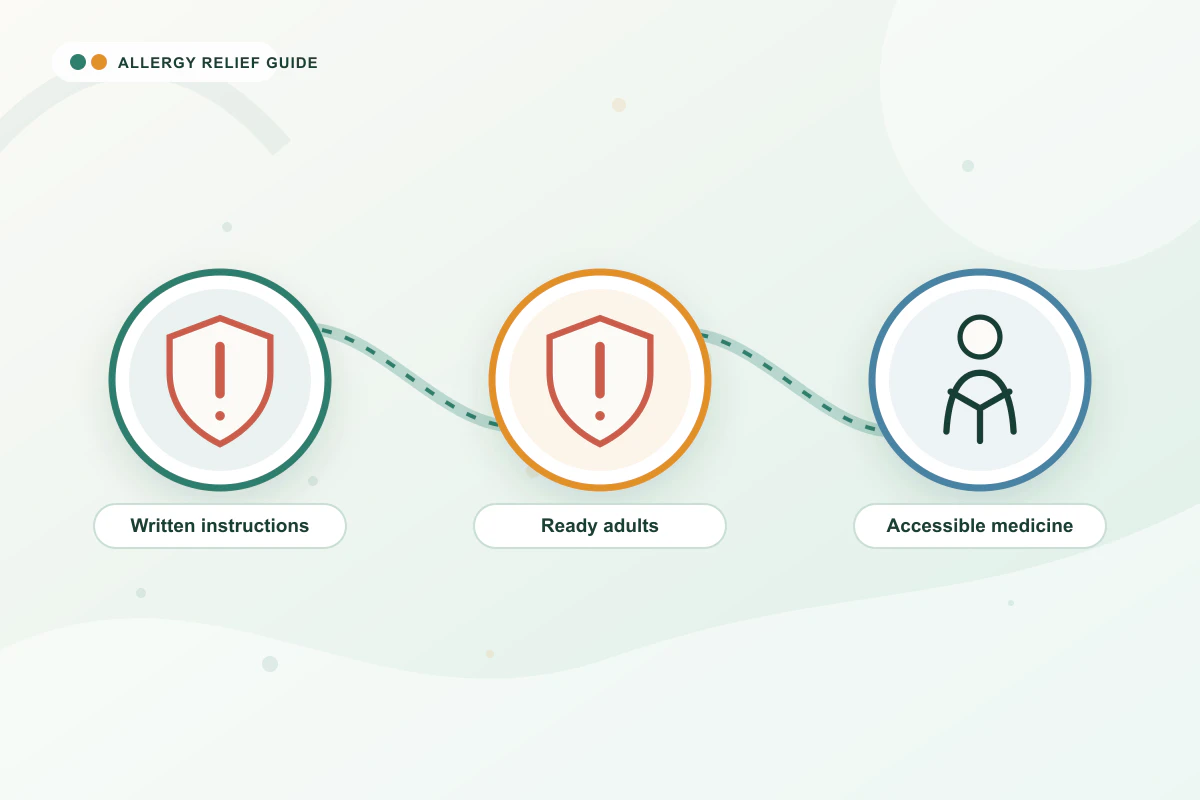
Managing allergies at school means preparing for two different things: everyday environmental symptoms like sneezing and congestion, and — for children with a diagnosed food or insect-sting allergy — a written emergency plan the school can act on immediately. A 504 Plan or Individualized Healthcare Plan, a signed Emergency Care Plan, and epinephrine that's quickly accessible (not locked away) are the core pieces for a child with a serious allergy; for environmental allergies, communicating triggers to teachers and reducing classroom exposure usually covers it.
Quick answer
Managing allergies at school means preparing for two different things: everyday environmental symptoms like sneezing and congestion, and — for children with a diagnosed food or insect-sting allergy — a written emergency plan the school can act on immediately. A 504 Plan or Individualized Healthcare Plan, a signed Emergency Care Plan, and epinephrine that's quickly accessible (not locked away) are the core pieces for a child with a serious allergy.
What you need to know
- Routine seasonal or environmental allergy symptoms and diagnosed food or insect allergies with anaphylaxis risk need very different levels of school planning.
- Section 504 of the Rehabilitation Act protects students with food allergies as a disability and can require specific school accommodations.
- CDC's national voluntary guidelines identify five priority areas schools should cover: daily management, emergency preparedness, staff training, family and student education, and a safe environment.
- Epinephrine auto-injectors should be quickly accessible to trained staff, not locked in a distant office.
- A written, clinician-signed Emergency Care Plan (sometimes called an Anaphylaxis Action Plan) tells staff exactly what symptoms to watch for and what to do.
- Even a well-prepared plan needs a yearly update as a child grows and their allergies, medications, or doses change.
Environmental Allergies vs. Food Allergies at School
Environmental allergies — pollen, dust, mold, or a classroom pet — usually cause sneezing, congestion, and itchy eyes that can be managed with the child's usual allergy treatment plan and a bit of teacher awareness about known triggers in the room. Diagnosed food or insect-sting allergies are a different situation: they carry a risk of anaphylaxis, a sudden, severe, potentially life-threatening reaction, and they call for formal written plans and trained staff, not just awareness.
Both situations benefit from the school knowing about the allergy in writing, but the level of preparation should match the risk. For background on anaphylaxis itself, see our anaphylaxis guide.
Building a Formal School Allergy Plan
For a child with a diagnosed food or insect allergy, three documents typically work together:
| Document | What it covers | Who's usually involved |
|---|---|---|
| 504 Plan | Legal accommodations under Section 504 of the Rehabilitation Act, such as safe seating, food-free zones, or supervision at meals | Parent/guardian, the school's 504 coordinator, and the child's healthcare provider |
| Individualized Healthcare Plan (IHP) | Day-to-day medical care details, usually written by the school nurse | School nurse, parent/guardian, and healthcare provider |
| Emergency Care Plan / Anaphylaxis Action Plan | Step-by-step symptoms-to-action instructions for a reaction, signed by a clinician | Healthcare provider, parent/guardian, and school staff |
CDC's voluntary guidelines for schools organize planning around five priority areas: day-to-day management of individual children's allergies, preparing for emergencies, training staff, educating children and families, and maintaining a safe overall environment. Not every school will use every document above, but the underlying goal — a written plan specific staff know how to follow — stays the same.
Epinephrine Access at School
Immediate epinephrine is the recommended treatment for a confirmed or suspected severe allergic reaction, and delay is one of the biggest risk factors in a bad outcome. In practice, that means an auto-injector needs to be genuinely reachable — not locked in an office across the building — and staff who spend time with the child need to know how to recognize a reaction and use it. Many states also allow schools to keep undesignated "stock" epinephrine on hand for a student having a first, unknown reaction; ask your school nurse what your district's policy allows. For a walkthrough of how the device itself works, see our epinephrine auto-injector guide.
Reducing Everyday Triggers in the Classroom
For environmental allergies, that can mean an air purifier or filter, keeping a classroom pet away from a sensitive child, and asking that the room be vacuumed and dusted regularly. For food allergies, it more often means cross-contact prevention on shared surfaces, thinking through cafeteria seating and food-sharing policies, and shifting toward non-food classroom celebrations and rewards.
Bullying and social exclusion related to a visible allergy or a "special table" at lunch is a real concern raised in pediatric guidance on this topic, and it's worth asking the school directly how they handle it — the goal of a plan is full, safe participation, not isolation.
Talking with Teachers and School Staff
- Share the written emergency plan, and a recent photo of your child if the school requests one, before the school year starts
- Confirm who is trained to recognize symptoms and give epinephrine, and where the auto-injector is kept
- Ask how the plan travels with your child to field trips, the bus, and after-school activities
- Reconfirm the plan at the start of each school year and any time a medication, dose, or diagnosis changes
When to seek care
Routine
Mild, known seasonal or environmental symptoms managed with the child's usual treatment routine.
Prompt (within days)
New or worsening symptoms at school that don't match the usual pattern, or a 504 Plan / IHP that needs updating for the new school year.
Urgent (same day)
Any reaction the family's Emergency Care Plan flags as needing same-day evaluation, even if epinephrine wasn't used.
Emergency (call 911)
Signs of anaphylaxis — difficulty breathing, swelling of the lips, tongue, or throat, or widespread hives with vomiting. Call 911 immediately, and always call 911 after epinephrine is given, even if symptoms improve.
Practical next steps
Safe general steps
- Request a 504 Plan meeting with the school if your child has a diagnosed food or insect allergy
- Provide an up-to-date Emergency Care Plan signed by your child's clinician
- Confirm epinephrine auto-injectors on site are accessible, unexpired, and staff know where they are
- Revisit and re-sign the plan every school year
Actions that need medical guidance
- Determining whether your child's allergy qualifies for a formal 504 Plan
- Deciding on emergency medication doses and any changes to the Emergency Care Plan
- Assessing whether a reaction needs same-day medical evaluation
Don't attempt without professional advice
- Don't assume a verbal conversation with a teacher replaces a written, signed plan
- Don't let an auto-injector go unlocated, expired, or out of reach during the school year
- Don't wait to see if symptoms improve on their own once epinephrine has been given — always call 911
Frequently asked questions
Does my child need a 504 Plan for allergies?
Who is allowed to give epinephrine at school?
What's the difference between a 504 Plan and an Individualized Healthcare Plan?
What should happen if my child has a reaction at school?
How often should we update the school allergy plan?
Can a school exclude my child from activities because of their allergy?
Sources
- CDC — Managing Food Allergies in Schools: Voluntary Guidelines
- FARE (Food Allergy Research & Education) — Food Allergy Management in Schools (FAMS) Expert Recommendations
- American Academy of Pediatrics — Management of Food Allergy in Schools: Clinical Report
- Allergy & Asthma Network — Is a 504 Plan Right For Your Food-Allergic Child?
Medical disclaimer: This guide is for general education and isn't a substitute for personalized medical advice. It doesn't provide dosing. Always talk to a qualified healthcare professional about your symptoms and treatment.
 MD
MDMedically reviewed
Dr. Hannah H. Walford, MD
Allergist and Immunologist
- Website role
- Owner, Medical Director and Medical Reviewer of Allergy Relief Guide
- Professional affiliation
- Stanford Health Care / Menlo Medical Clinic, Menlo Park, California
- Areas of expertise
- Food allergy, eczema, allergic rhinitis, sinusitis and asthma
Dr. Hannah H. Walford is a board-certified allergist and immunologist experienced in caring for adults and children with allergic conditions. Her areas of expertise include food allergy, eczema, allergic rhinitis, sinusitis and asthma. She provides medical leadership and review oversight for the educational health content published by Allergy Relief Guide.
Medical content is provided for education and is not a substitute for diagnosis or individualized medical care.
Continue building your allergy plan
Explore related guides to understand the full picture, from triggers to treatment to safety.
See the complete guide to allergies in children