Neti Pot & Saline Rinse for Allergies
A neti pot or saline nasal rinse flushes pollen, allergens, and excess mucus out of your nose with salt water — a simple, drug-free way to ease allergy congestion and postnasal drip. But there's one non-negotiable safety rule: only ever use distilled, sterile, or previously boiled-and-cooled water — never untreated tap water. Tap water can contain organisms, including a rare amoeba, that are harmless to swallow but can cause a serious, sometimes fatal infection if they get into your nasal passages. Used with safe water and a clean device, nasal rinsing is a genuinely useful allergy measure.
Quick answer
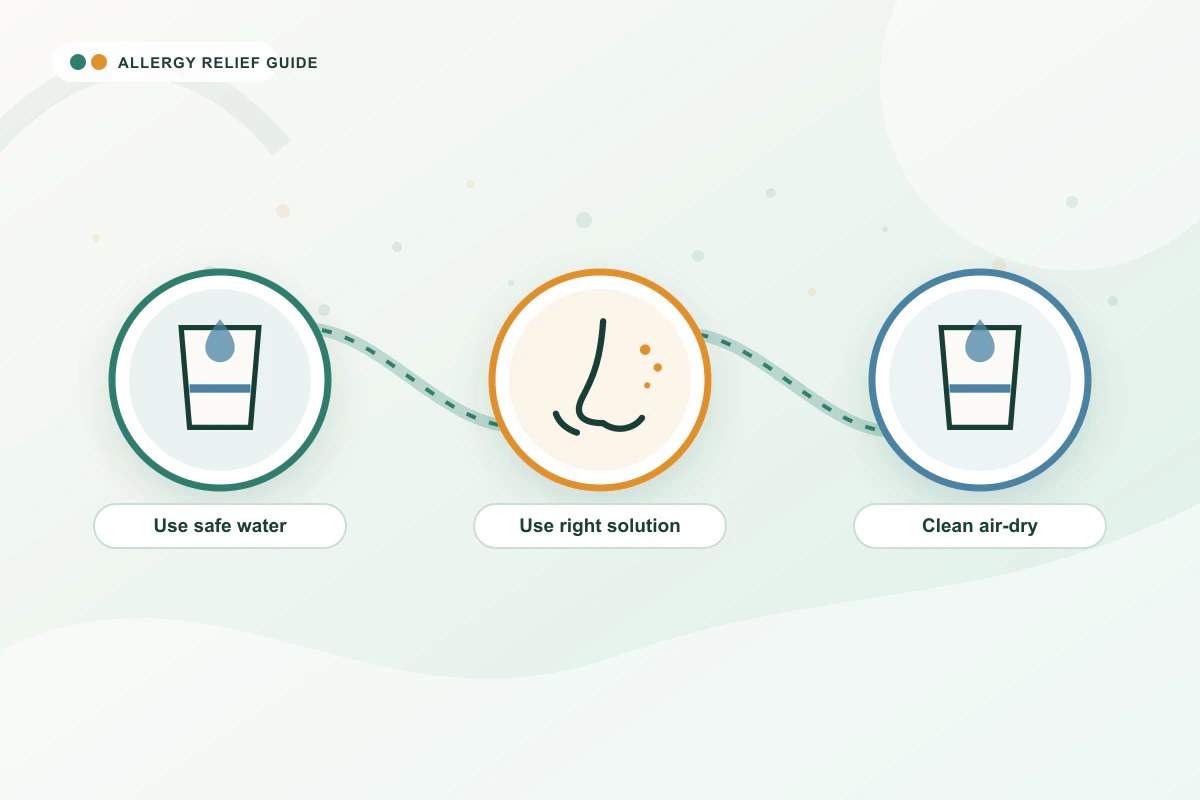
A neti pot or saline rinse flushes pollen, allergens, and mucus out of the nose with salt water — a drug-free way to ease allergy congestion. The critical safety rule: only use distilled, sterile, or previously boiled-and-cooled water, never untreated tap water, because tap water can contain organisms (including a rare amoeba) that are harmless to swallow but can cause a serious, sometimes fatal infection in the nose. With safe water and a clean device, nasal rinsing is genuinely useful.
What you need to know
- A neti pot or saline nasal rinse flushes allergens and mucus out of the nose, easing allergy congestion and postnasal drip — drug-free.
- Critical safety rule: use only distilled, sterile, or previously boiled-and-cooled water; never untreated tap water.
- Tap water can contain organisms (including a rare but serious amoeba, Naegleria fowleri) that are safe to swallow but dangerous if they enter the nasal passages.
- To make water safe, boil it for 3–5 minutes, then cool it; or use store-bought distilled or sterile water, or water passed through an appropriate filter.
- Use a non-iodized salt (canning/pickling salt), and clean and dry the device after every use.
- Nasal rinsing is a complementary measure that pairs well with allergy medicines like nasal corticosteroid sprays.
How Nasal Rinsing Helps Allergies
A saline nasal rinse — whether from a neti pot, squeeze bottle, or bulb syringe — sends salt water through your nasal passages to physically wash out pollen and other allergens, thin and clear mucus, and soothe the irritated lining. Because it removes the allergen rather than just masking symptoms, it's one of the more evidence-supported home measures for nasal allergy and congestion, and it's drug-free, so it can be combined with other treatments. See our home remedies for allergies and allergic rhinitis guides.
The One Rule You Can't Skip: Safe Water
Never use untreated tap water in a neti pot
This is the single most important safety point about nasal rinsing. Only use water that is distilled, sterile, or previously boiled and cooled. Tap water isn't filtered or treated to be safe for your nasal passages — it can contain low levels of organisms, including a rare amoeba (Naegleria fowleri), that stomach acid would kill if swallowed, but that can survive in the nose and cause a serious, sometimes fatal infection. This risk is rare, but it's severe enough that the rule is absolute.
How to Make Water Safe
| Method | How |
|---|---|
| Boil it | Boil tap water for 3–5 minutes, then let it cool to lukewarm before use; store in a clean, closed container and use within about 24 hours |
| Buy distilled or sterile water | Look for bottles labeled 'distilled' or 'sterile' |
| Filter it | Use a filter designed to trap infectious organisms (an absolute pore size of 1 micron or smaller); note that an ordinary pitcher filter is not sufficient |
Whichever method you use, make the rinse lukewarm (not cold or hot) and use a non-iodized salt such as canning or pickling salt.
How to Use It, and Keep the Device Clean
- Lean over a sink, tilt your head to one side, and gently pour or squeeze the solution into the upper nostril so it drains out the lower one
- Breathe through your mouth, not your nose, during the rinse
- Repeat on the other side, then gently blow your nose
- After every use, wash the device with safe (distilled/sterile/boiled) water and let it air-dry completely
- Don't share a neti pot or rinse device with anyone else
Nasal rinsing works well alongside allergy medicines; for the medication side, see our nasal sprays for allergies guide.
When to seek care
Routine
Mild allergy congestion you'd like to ease with a saline rinse alongside your usual care.
Prompt (within days)
Congestion that persists despite rinsing and treatment, or recurrent sinus symptoms.
Urgent (same day)
Fever with facial pain or swelling, or worsening sinus symptoms — possible sinus infection.
Emergency (call 911)
After nasal rinsing, seek urgent care for severe headache, stiff neck, confusion, or seizures — extremely rare but serious signs of a nasal-route infection. And a severe allergic reaction (trouble breathing, throat swelling) is always a 911 emergency.
Practical next steps
Safe general steps
- Use only distilled, sterile, or previously boiled-and-cooled water — never untreated tap water
- Make a lukewarm rinse with non-iodized salt
- Rinse leaning over a sink, breathing through your mouth
- Clean and air-dry the device after every use
Actions that need medical guidance
- Persistent congestion or recurrent sinus infections despite rinsing
- Whether nasal rinsing is appropriate if you've had sinus or nasal surgery
- Combining rinsing with nasal corticosteroid sprays
Don't attempt without professional advice
- Don't use untreated tap water in a neti pot — this is the critical safety rule
- Don't reuse or share a device without cleaning and drying it
- Don't use water that's too hot or too cold — lukewarm is best
Frequently asked questions
Does a neti pot help with allergies?
What water should I use in a neti pot?
Why can't I use tap water in a neti pot?
How do I make tap water safe for nasal rinsing?
How often can I use a saline nasal rinse?
How do I clean a neti pot?
Sources
- AAAAI — Saline Sinus Rinse Recipe
- MedlinePlus (NIH/NLM) — Saline nasal washes
- U.S. FDA — Is Rinsing Your Sinuses With Neti Pots Safe?
Medical disclaimer: This guide is for general education and isn't a substitute for personalized medical advice. It doesn't provide dosing. Always talk to a qualified healthcare professional about your symptoms and treatment.
 MD
MDMedically reviewed
Dr. Hannah H. Walford, MD
Allergist and Immunologist
- Website role
- Owner, Medical Director and Medical Reviewer of Allergy Relief Guide
- Professional affiliation
- Stanford Health Care / Menlo Medical Clinic, Menlo Park, California
- Areas of expertise
- Food allergy, eczema, allergic rhinitis, sinusitis and asthma
Dr. Hannah H. Walford is a board-certified allergist and immunologist experienced in caring for adults and children with allergic conditions. Her areas of expertise include food allergy, eczema, allergic rhinitis, sinusitis and asthma. She provides medical leadership and review oversight for the educational health content published by Allergy Relief Guide.
Medical content is provided for education and is not a substitute for diagnosis or individualized medical care.
Continue building your allergy plan
Explore related guides to understand the full picture, from triggers to treatment to safety.
See the full allergy treatment & relief guide