
Allergy Shots (Immunotherapy): How They Work and What to Expect
Allergy shots, known medically as subcutaneous immunotherapy, treat the underlying allergy rather than just masking symptoms. An allergist injects gradually increasing amounts of the allergens you react to, training your immune system to become less sensitive over time. Treatment has two phases: a build-up phase of frequent shots over several months, then a maintenance phase of less frequent shots, with the full course usually lasting three to five years. Because there's a small risk of a severe reaction, shots are given in a medical office where you wait afterward.
Quick answer
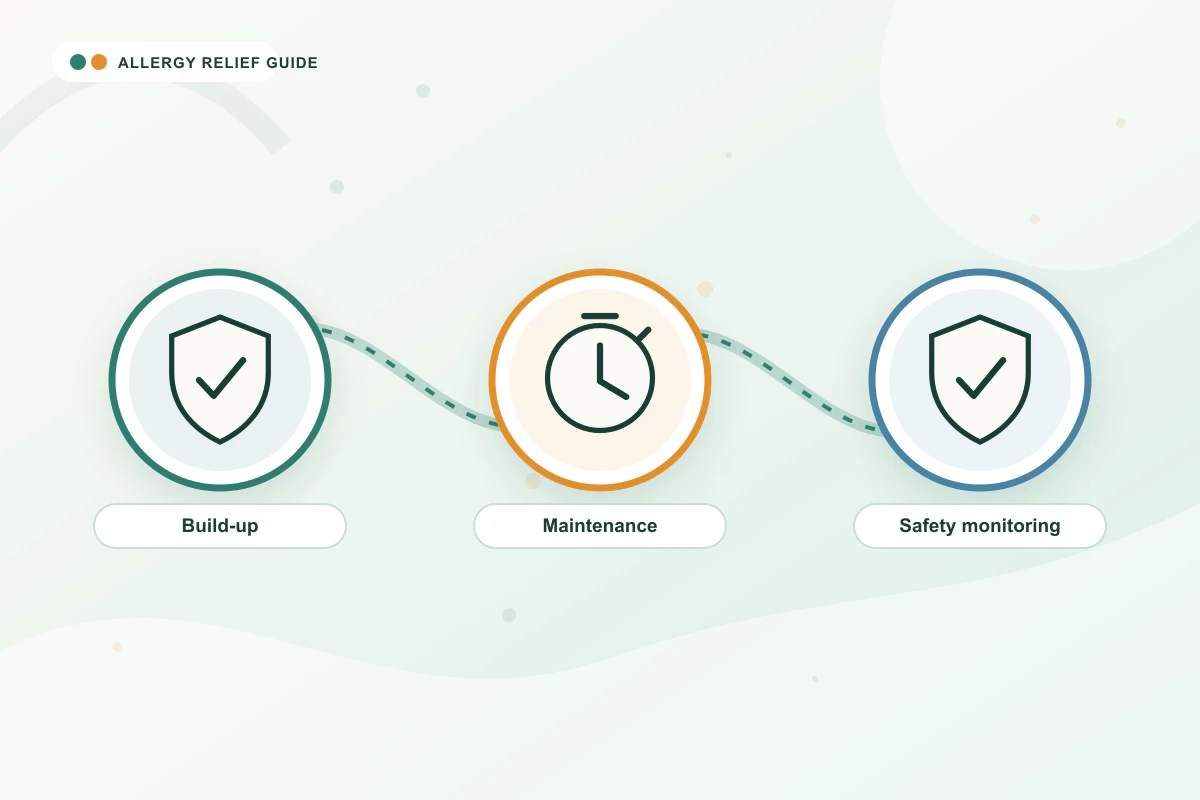
Allergy shots (subcutaneous immunotherapy) treat the underlying allergy by injecting gradually increasing amounts of the allergens you react to, training your immune system to become less sensitive. Treatment has a build-up phase of frequent shots over several months, then a maintenance phase of less frequent shots, with the full course usually lasting three to five years. Because of a small risk of a severe reaction, shots are given in a medical office where you wait afterward.
What you need to know
- Allergy shots are a form of allergen immunotherapy — they aim to reduce your underlying sensitivity, not just relieve symptoms day to day.
- They're used for allergic rhinitis and conjunctivitis (nose and eye allergies), allergic asthma, and severe insect-sting allergy, targeting allergens like pollen, dust mites, mold, and animal dander.
- The build-up phase involves frequent shots (often about weekly) with gradually increasing doses over roughly three to six months.
- The maintenance phase spaces shots out to about every 2 to 4 weeks, and the overall course usually lasts three to five years.
- Allergen immunotherapy is described by allergists as the treatment that actually changes the immune response, and benefits can persist after the course ends.
- Because there's a small risk of anaphylaxis after an injection, allergy shots are given in an allergist's office and you're asked to wait afterward for monitoring.
How Allergy Shots Work
Allergy shots deliver gradually increasing amounts of the specific allergens you're sensitive to, injected under the skin, usually in the upper arm. With repeated, controlled exposure, the immune system shifts toward tolerance rather than the allergic overreaction it would normally mount. This is why immunotherapy is often described as the only allergy treatment that changes the underlying immune response, as opposed to medications like antihistamines that relieve symptoms while you take them. The allergens used are chosen based on your history and allergy testing.
What Conditions They Treat
- Allergic rhinitis and allergic conjunctivitis (nasal and eye allergy symptoms)
- Allergic asthma, where allergens trigger asthma symptoms
- Severe allergic reactions to insect stings (venom immunotherapy is a related, specialized form)
- Sensitivities to common allergens such as tree, grass, and weed pollen, dust mites, mold, and animal dander
Shots can address several allergens at once, which is useful for people sensitive to more than one trigger. For insect-sting allergy specifically, see our insect sting allergy guide, and for asthma see managing allergic asthma.
The Two Phases and How Long It Takes
| Phase | Frequency | Duration |
|---|---|---|
| Build-up | Often about once a week (sometimes more often), with the dose increasing each visit | Roughly 3 to 6 months, until you reach your target maintenance dose |
| Maintenance | Spaced out to about every 2 to 4 weeks | Continued for about 3 to 5 years total, sometimes longer |
Reaching lasting benefit takes commitment, since the schedule stretches over years. Your allergist may adjust the plan if you miss doses, since gaps can change how the next dose is given.
Effectiveness and What to Expect
Allergen immunotherapy is considered the most established and effective form of allergy immunotherapy, and its benefits can persist even after the treatment course is finished. Some people also find it can reduce the chance of developing new allergen sensitivities or, in some cases, asthma. Results build gradually over months rather than immediately, so many people continue their usual allergy medications during the build-up phase and taper them as symptoms improve, guided by their allergist. An alternative for some allergens is under-the-tongue treatment; see our sublingual immunotherapy guide for how that compares.
Safety and Why You Wait Afterward
Most reactions to allergy shots are minor, such as redness or swelling at the injection site. However, because injecting an allergen carries a small risk of a severe, whole-body allergic reaction (anaphylaxis), allergy shots are given in an allergist's office, and you're asked to wait afterward — commonly around 30 minutes — so any reaction can be treated immediately. This monitoring requirement is a core safety feature of the treatment, not an optional step. See our anaphylaxis guide for what a severe reaction looks like.
When to seek care
Routine
You're interested in whether immunotherapy could reduce your long-term allergy symptoms — discuss candidacy and testing with an allergist.
Prompt (within days)
Mild, expected local redness or swelling after a shot that you want to mention at your next visit, or you've missed doses and need your schedule adjusted.
Urgent (same day)
A large or spreading local reaction after a shot, or symptoms starting soon after leaving the office.
Emergency (call 911)
Signs of anaphylaxis after a shot — difficulty breathing, throat tightness, widespread hives, dizziness, or swelling of the lips or tongue. Use epinephrine if prescribed and call 911.
Practical next steps
Safe general steps
- Ask an allergist whether immunotherapy fits your allergies and goals
- Have allergy testing so the shots can be tailored to your specific triggers
- Plan for the time commitment of the build-up and maintenance schedule
- Always wait the full monitoring period in the office after each shot
Actions that need medical guidance
- Deciding whether allergy shots or sublingual immunotherapy is a better fit
- Adjusting your dose after missed appointments
- Tapering allergy medications as immunotherapy takes effect
Don't attempt without professional advice
- Don't leave the office before your monitoring period is over — that window exists to catch a serious reaction
- Don't skip or double up on shots on your own — let your allergist adjust the schedule after gaps
- Don't expect immediate relief — benefits build gradually over months
Frequently asked questions
How do allergy shots work?
How long do allergy shots take to work?
How long is the full course of allergy shots?
What do allergy shots treat?
Why do I have to wait after an allergy shot?
Are allergy shots better than allergy pills?
Sources
- ACAAI Patient — Allergy Shots (Subcutaneous Immunotherapy)
- AAAAI — Allergen Immunotherapy
- MedlinePlus (NIH/NLM) — Allergen immunotherapy
Medical disclaimer: This guide is for general education and isn't a substitute for personalized medical advice. It doesn't provide dosing. Always talk to a qualified healthcare professional about your symptoms and treatment.
 MD
MDMedically reviewed
Dr. Hannah H. Walford, MD
Allergist and Immunologist
- Website role
- Owner, Medical Director and Medical Reviewer of Allergy Relief Guide
- Professional affiliation
- Stanford Health Care / Menlo Medical Clinic, Menlo Park, California
- Areas of expertise
- Food allergy, eczema, allergic rhinitis, sinusitis and asthma
Dr. Hannah H. Walford is a board-certified allergist and immunologist experienced in caring for adults and children with allergic conditions. Her areas of expertise include food allergy, eczema, allergic rhinitis, sinusitis and asthma. She provides medical leadership and review oversight for the educational health content published by Allergy Relief Guide.
Medical content is provided for education and is not a substitute for diagnosis or individualized medical care.
Continue building your allergy plan
Explore related guides to understand the full picture, from triggers to treatment to safety.
See the full allergy treatment & relief guide