Does Local Honey Help Allergies?
The popular idea is that eating local honey exposes you to tiny amounts of local pollen and gradually desensitizes you to your seasonal allergies. It's a lovely theory — but it isn't supported by good evidence. The pollen in honey comes mostly from flowers pollinated by insects, not the wind-blown tree, grass, and weed pollen that actually causes hay fever, and the amount is far too small and inconsistent to work like allergy treatment. A well-known clinical trial found local honey no better than a placebo. Honey is fine to enjoy as a food — just not as an allergy remedy.
Quick answer
The idea that eating local honey desensitizes you to seasonal allergies isn't supported by good evidence. Honey mostly contains insect-pollinated flower pollen, not the wind-blown tree, grass, and weed pollen that causes hay fever, and the amount is far too small and inconsistent to work like treatment. A clinical trial found local honey no better than placebo. Enjoy honey as a food, but don't rely on it as an allergy remedy.
What you need to know
- The theory: eating local honey exposes you to local pollen and desensitizes you to seasonal allergies.
- The reality: there's no good evidence local honey reduces allergy symptoms, and a well-known trial found it no better than placebo.
- Honey's pollen mostly comes from insect-pollinated flowers, not the wind-borne tree, grass, and weed pollen that actually triggers hay fever.
- The amount of allergenic pollen in honey is unknown, inconsistent, and almost certainly too low to produce a therapeutic effect.
- Simply swallowing allergens isn't an effective way to treat nasal allergies — that's not how proven immunotherapy works.
- Honey is fine to enjoy as a food (but never give honey to infants under 1 year, due to botulism risk); it just isn't an allergy treatment.
The Theory — and Why It Falls Apart
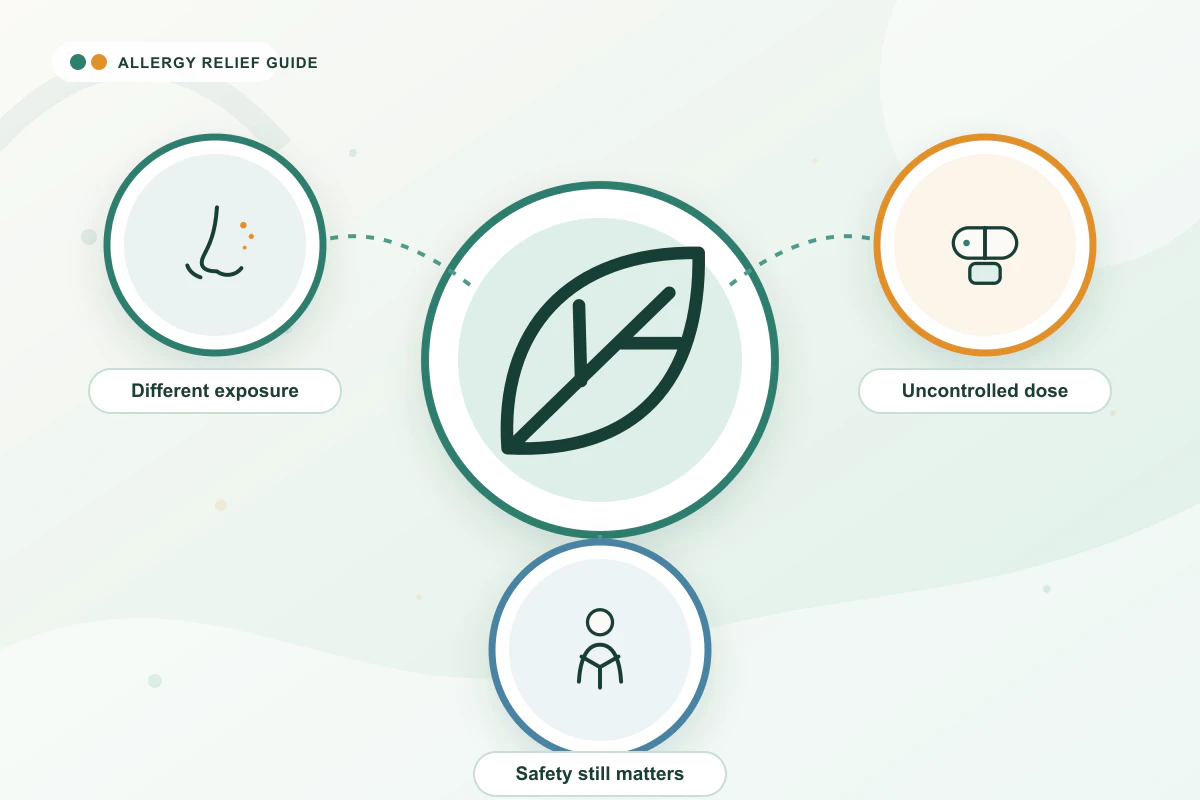
The appeal is intuitive: bees collect pollen, some ends up in honey, and eating local honey trains your immune system to tolerate local pollen. Unfortunately, the science doesn't back it up, for a few concrete reasons. First, the pollen that causes seasonal allergies is wind-borne — light, dry pollen from trees, grasses, and weeds that floats through the air into your nose. Bees, by contrast, gather heavier pollen from brightly colored, insect-pollinated flowers, which rarely causes hay fever. So the honey mostly contains the "wrong" pollen. Second, even when some allergenic pollen is present, the amount is unknown, varies batch to batch, and is almost certainly far too small to have a therapeutic effect.
What the Studies Found
Beyond the theory, this has actually been tested. A well-known clinical trial comparing local honey against a placebo found no meaningful difference in allergy symptoms, and allergy organizations note there are no high-quality studies showing local honey reliably reduces seasonal allergy symptoms. There's also a deeper mismatch: proven allergy immunotherapy uses carefully standardized allergen doses delivered in specific ways (shots or under-the-tongue tablets) — simply eating an unknown, tiny, variable amount of pollen in honey isn't how effective desensitization works. See our allergy shots and sublingual immunotherapy guides for what real immunotherapy involves.
Is There Any Harm?
For most adults, enjoying local honey as a food is perfectly fine — it just shouldn't be relied on to treat allergies, and skipping proven treatment in favor of it can leave you more miserable than you need to be. One important safety note: never give honey (including raw or local honey) to a baby under 12 months old, because of the risk of infant botulism. And if you have a known bee-product allergy, be cautious with honey. Otherwise, the main "risk" of the local-honey remedy is simply that it doesn't do what people hope.
What Actually Helps
If seasonal allergies are bothering you, the measures with real evidence behind them are the practical ones: reducing your pollen exposure, and using proven treatments. See our home remedies for allergies guide for low-risk physical measures like saline rinses and avoidance, our natural allergy remedies guide for a look at supplement-type options, and our allergy treatment guide for antihistamines, nasal corticosteroid sprays, and immunotherapy. For persistent allergies, an allergist can help.
When to seek care
Routine
You're curious whether local honey helps allergies, or want evidence-based options instead.
Prompt (within days)
Seasonal symptoms that aren't controlled by an over-the-counter routine — consider proven treatments or an allergist.
Urgent (same day)
Seasonal symptoms with wheezing, chest tightness, or shortness of breath, especially with asthma.
Emergency (call 911)
A severe allergic reaction — trouble breathing, swelling of the lips, tongue, or throat, widespread hives with dizziness — use epinephrine if prescribed and call 911. (This is unrelated to eating honey for most people, but a true bee-product allergy is possible.)
Practical next steps
Safe general steps
- Enjoy local honey as a food if you like it, but don't rely on it to treat allergies
- Use evidence-based measures instead: reduce pollen exposure and use proven treatments
- Try low-risk home measures like saline rinses and avoidance
- See an allergist for persistent seasonal allergies
Actions that need medical guidance
- Seasonal symptoms not controlled by over-the-counter options
- Whether immunotherapy could reduce your allergies for real
- Any suspected allergy to bee products
Don't attempt without professional advice
- Don't rely on local honey to desensitize or cure seasonal allergies — the evidence doesn't support it
- Don't give honey to a baby under 12 months old, due to infant botulism risk
- Don't skip proven treatment in favor of unproven remedies
Frequently asked questions
Does eating local honey help with allergies?
Why doesn't local honey work for allergies?
Is there any harm in trying local honey for allergies?
Is raw honey better than regular honey for allergies?
What actually helps seasonal allergies?
Can honey cause an allergic reaction?
Sources
- AAAAI — Local Honey Myths and Allergy Treatment: What Does the Science Say?
- MedlinePlus (NIH/NLM) — Allergic rhinitis
- MedlinePlus (NIH/NLM) — Allergic rhinitis - self-care
Medical disclaimer: This guide is for general education and isn't a substitute for personalized medical advice. It doesn't provide dosing. Always talk to a qualified healthcare professional about your symptoms and treatment.
 MD
MDMedically reviewed
Dr. Hannah H. Walford, MD
Allergist and Immunologist
- Website role
- Owner, Medical Director and Medical Reviewer of Allergy Relief Guide
- Professional affiliation
- Stanford Health Care / Menlo Medical Clinic, Menlo Park, California
- Areas of expertise
- Food allergy, eczema, allergic rhinitis, sinusitis and asthma
Dr. Hannah H. Walford is a board-certified allergist and immunologist experienced in caring for adults and children with allergic conditions. Her areas of expertise include food allergy, eczema, allergic rhinitis, sinusitis and asthma. She provides medical leadership and review oversight for the educational health content published by Allergy Relief Guide.
Medical content is provided for education and is not a substitute for diagnosis or individualized medical care.
Continue building your allergy plan
Explore related guides to understand the full picture, from triggers to treatment to safety.
See the full allergy treatment & relief guide