
Allergies vs. COVID-19
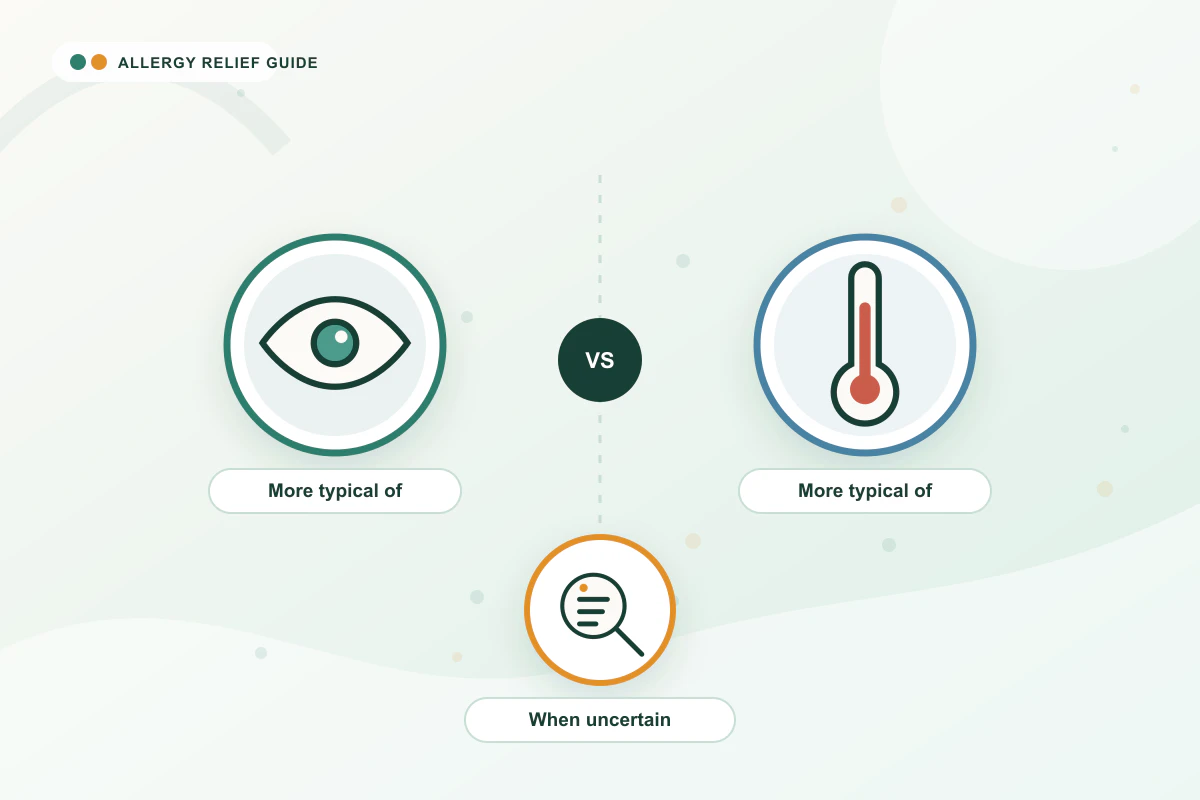
Seasonal allergies and COVID-19 share some symptoms, like a runny nose, congestion, cough, and fatigue, which is why they can be hard to tell apart. A few clues help: fever and body aches point toward COVID-19 and are not typical of allergies, while itchy, watery eyes point toward allergies and are uncommon with COVID-19. Loss of smell can occur with both but tends to be sudden and more complete with COVID-19. Because symptoms overlap, testing is the only reliable way to confirm COVID-19; when in doubt, test.
Quick answer
Seasonal allergies and COVID-19 share symptoms like runny nose, congestion, cough, and fatigue. Key clues: fever and body aches point toward COVID-19 and aren't typical of allergies, while itchy, watery eyes point toward allergies and are uncommon with COVID-19. Loss of smell can occur with both but tends to be sudden and more complete with COVID-19. Because symptoms overlap, testing is the only reliable way to confirm COVID-19 — when in doubt, test.
What you need to know
- Both allergies and COVID-19 can cause runny nose, congestion, cough, and fatigue, so overlapping symptoms alone can't tell them apart.
- Fever and body aches are common with COVID-19 and are not typical of allergies — their presence points away from allergies.
- Itchy, watery eyes and frequent sneezing are common with allergies and uncommon with COVID-19.
- Loss of smell can occur with both, but with COVID-19 it's often sudden and more complete, whereas with allergies it usually reflects nasal congestion and is partial.
- Allergy symptoms often recur at the same time each year and improve with antihistamines; COVID-19 does not follow a seasonal-allergy pattern.
- Because symptoms overlap, a COVID-19 test is the only reliable way to confirm or rule it out — when unsure, test.
Symptom Comparison
| Symptom | Seasonal allergies | COVID-19 |
|---|---|---|
| Fever or chills | No | Common |
| Body aches | No | Common |
| Itchy, watery eyes | Common | Rare |
| Sneezing | Common | Sometimes |
| Runny or stuffy nose | Common | Sometimes |
| Cough | Sometimes (often from postnasal drip) | Common |
| Fatigue | Sometimes | Common |
| Loss of smell | Sometimes, usually partial (from congestion) | Sometimes, often sudden and more complete |
| Seasonal, recurring pattern | Common | No |
No single symptom is proof either way, but the overall pattern helps. Itchy eyes with sneezing that shows up every spring points toward allergies; fever and body aches point away from allergies and toward a viral illness like COVID-19.
The Clearest Distinguishing Clues
Fever is one of the most useful signals: allergies don't cause fever, so a genuine fever strongly suggests something else, such as COVID-19 or another infection. Itchy eyes are the flip side — they're a hallmark of allergies and uncommon with COVID-19. Loss of smell deserves a note of its own: when it happens with COVID-19 it's often abrupt and profound, while allergy-related smell changes usually come from a congested nose blocking odors and tend to be partial.
Why Timing and Response to Treatment Help
Allergy symptoms often track with your personal pattern — the same weeks each year, or specific exposures like being around a pet or mowing the lawn — and they typically ease with antihistamines or nasal steroid sprays. COVID-19 doesn't follow a seasonal-allergy calendar and won't resolve with allergy medicine. If your usual allergy treatment isn't touching your symptoms, or the pattern is new and unfamiliar, that's a reason to consider testing. For more on distinguishing allergies from other look-alikes, see our guides on allergies vs. a cold and allergies vs. a sinus infection.
When to Test
Because the symptoms overlap and no combination is definitive, a COVID-19 test is the only reliable way to confirm or rule it out. Public health guidance generally errs on the side of testing when you're unsure, especially before contact with people at higher risk. Follow current local public health recommendations on testing and isolation, which can change over time.
When to seek care
Routine
Mild, familiar seasonal allergy symptoms that match your usual pattern and respond to your usual allergy treatment.
Prompt (within days)
New, unfamiliar, or unusually severe symptoms, or allergy-like symptoms that don't improve with your usual allergy medicine — consider a COVID-19 test.
Urgent (same day)
Fever, body aches, or a new loss of smell — test for COVID-19 and follow current public health guidance on isolation.
Emergency (call 911)
Trouble breathing, persistent chest pain or pressure, bluish lips or face, or new confusion are emergencies — call 911.
Practical next steps
Safe general steps
- Compare your symptoms against the table above, paying special attention to fever and itchy eyes
- Note whether symptoms match your usual seasonal-allergy pattern
- Try your usual allergy treatment if symptoms look like allergies — and reconsider if it doesn't help
- Take a COVID-19 test if you're unsure, and follow current local public health guidance
Actions that need medical guidance
- Symptoms that are new, severe, or don't fit your usual allergy pattern
- Deciding when to test and when to isolate under current guidance
- Managing symptoms if you have an underlying lung condition like asthma
Don't attempt without professional advice
- Don't assume symptoms are “just allergies” if you have a fever — allergies don't cause fever
- Don't skip testing when unsure, especially before contact with higher-risk people
- Don't ignore breathing difficulty or chest pain while trying to decide what's causing your symptoms
Frequently asked questions
How can I tell if it's allergies or COVID-19?
Do allergies cause a fever?
Can COVID-19 cause loss of smell like allergies?
Do itchy eyes mean it's allergies?
Should I get tested for COVID-19 if I have allergy symptoms?
Will allergy medicine help if it's COVID-19?
Sources
- Allergy & Asthma Network — Allergies or COVID-19: How to Tell the Difference
- Cleveland Clinic — COVID-19 vs. Cold vs. Allergies
- MedlinePlus (NIH/NLM) — Allergic rhinitis
Medical disclaimer: This guide is for general education and isn't a substitute for personalized medical advice. It doesn't provide dosing. Always talk to a qualified healthcare professional about your symptoms and treatment.
 MD
MDMedically reviewed
Dr. Hannah H. Walford, MD
Allergist and Immunologist
- Website role
- Owner, Medical Director and Medical Reviewer of Allergy Relief Guide
- Professional affiliation
- Stanford Health Care / Menlo Medical Clinic, Menlo Park, California
- Areas of expertise
- Food allergy, eczema, allergic rhinitis, sinusitis and asthma
Dr. Hannah H. Walford is a board-certified allergist and immunologist experienced in caring for adults and children with allergic conditions. Her areas of expertise include food allergy, eczema, allergic rhinitis, sinusitis and asthma. She provides medical leadership and review oversight for the educational health content published by Allergy Relief Guide.
Medical content is provided for education and is not a substitute for diagnosis or individualized medical care.
Continue building your allergy plan
Explore related guides to understand the full picture, from triggers to treatment to safety.
See the full allergy symptoms guide