
Can Allergies Cause Fatigue? Why It Happens and What Helps
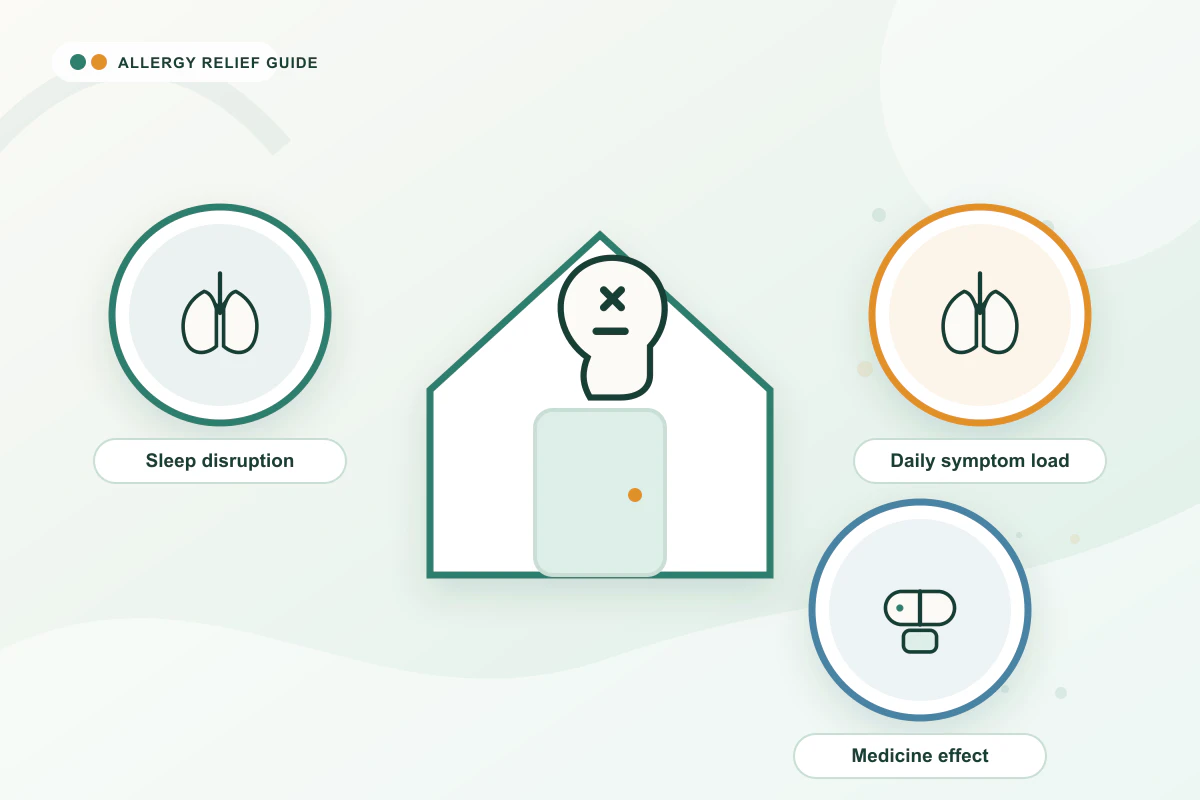
Yes, allergies can cause fatigue, and it usually happens three ways. First, the immune response releases inflammatory chemicals (like histamine and cytokines) that can leave you feeling drained and foggy. Second, nasal congestion, sneezing, and itchy eyes disrupt sleep, so you wake up unrested. Third, some allergy medicines — especially sedating first-generation antihistamines — add drowsiness of their own. The fatigue and “brain fog” often improve when the underlying allergy is treated and sleep gets better.
Quick answer
Yes, allergies can cause fatigue, usually three ways: the immune response releases inflammatory chemicals (histamine, cytokines) that leave you feeling drained and foggy; nasal congestion and other symptoms disrupt sleep so you wake unrested; and some allergy medicines, especially sedating first-generation antihistamines, add drowsiness. The fatigue and brain fog often improve when the underlying allergy is treated and sleep improves.
What you need to know
- Allergies can genuinely cause fatigue, tiredness, and a foggy, hard-to-concentrate feeling often called brain fog.
- The immune response releases inflammatory chemicals such as histamine and cytokines that can make you feel drained.
- Congestion, a runny nose, and itchy eyes disrupt sleep, so poor rest adds to daytime tiredness.
- Sedating first-generation antihistamines (like diphenhydramine) can cause drowsiness; non-drowsy second-generation options are less likely to.
- Treating the underlying allergy — and improving sleep — often improves the fatigue and brain fog too.
- Persistent fatigue that doesn't fit your allergy pattern, or is severe, deserves a medical check for other causes.
Why Allergies Make You Tired
Allergy fatigue isn't just in your head — there are real mechanisms behind it. When your immune system reacts to an allergen, it releases inflammatory messengers such as histamine and cytokines. That inflammation drives nasal congestion and can also contribute directly to feeling drained and mentally foggy. On top of the biochemistry, the practical symptoms wear you down: a stuffy nose, sneezing, and itchy, irritated eyes make it harder to fall and stay asleep, so you wake up under-rested and start the day tired. The combination of inflammation and disrupted sleep is what produces allergy-related fatigue.
Brain Fog and Concentration
Many people with allergies describe more than physical tiredness — a "brain fog" that makes it hard to concentrate at work, school, or daily tasks. Chronic inflammation from ongoing allergies is thought to contribute to this foggy feeling, and poor sleep compounds it. It's a recognized part of how allergies affect quality of life, not a sign you're imagining things. The encouraging part is that addressing the underlying inflammation often helps the fog lift along with the congestion.
When Your Allergy Medicine Is Part of the Problem
Sometimes the treatment adds to the tiredness. First-generation antihistamines like diphenhydramine cross into the brain and commonly cause drowsiness, which can blur the line between allergy fatigue and medication fatigue. Second-generation antihistamines — loratadine, fexofenadine, and cetirizine — are much less sedating and are generally the better choice if daytime alertness matters. If your allergy pill is making you sleepy, switching to a non-drowsy option may help. See our do antihistamines make you sleepy? guide.
What Helps Allergy Fatigue
- Treat the underlying allergy — reducing inflammation and congestion tends to improve both symptoms and fatigue
- Use a non-drowsy second-generation antihistamine if a sedating one is adding to tiredness
- Improve sleep by reducing nighttime congestion (saline rinses, treating nasal symptoms, elevating your head)
- Reduce exposure to your triggers, especially in the bedroom where you sleep
- Keep the usual healthy-sleep basics in place, since allergy fatigue stacks on top of ordinary sleep debt
For treatment options, see our allergy treatment and allergic rhinitis guides; for better bedroom sleep, our allergy-proof bedroom guide.
What the sleep research actually shows
The link between allergic rhinitis and tiredness is not vague or anecdotal. A 2024 narrative review in Nature and Science of Sleep gathering the evidence on allergic rhinitis and sleep reports that up to 73.5 percent of people with allergic rhinitis have a concurrent sleep disorder — which reframes fatigue as one of the condition’s central features rather than a vague side effect.
The same review identifies nasal congestion as “the most direct cause of sleep disorders” in allergic rhinitis, because congestion increases nasal resistance and that impairs breathing through the nose during sleep. The problem is not that you cannot fall asleep; it is that the sleep you get is fragmented by the work of breathing through a blocked nose.
That has a measurable consequence. The review notes that people with more severe allergic rhinitis symptoms show a 1.8-fold increase in the likelihood of sleep-disordered breathing, and that in children allergic rhinitis is a key potential risk factor for obstructive sleep apnea.
Inflammation appears to contribute independently of the blocked nose. The review reports that TNF-α and IL-1β are significantly higher in the blood, nasal secretions and mucosa of people with allergic rhinitis, and that the increase tracks disease severity. These are signalling molecules associated with sickness behaviour, which helps explain why the tiredness can feel disproportionate to how blocked you actually are.
Why treating the congestion beats treating the tiredness
If congestion is what is breaking up your sleep, then reducing congestion is what returns the energy. The review notes that clinical trials of intranasal corticosteroids found they relieve nasal congestion in allergic rhinitis while improving sleep quality — treating the cause rather than the symptom.
That points at a common and counterproductive habit. Reaching for a sedating antihistamine because it makes you drowsy feels like it should help, but the review is direct about first-generation antihistamines such as diphenhydramine: they have sedative effects that can disrupt sleep architecture and exacerbate daytime somnolence, which is why second-generation options are now preferred clinically.
In other words, the sedation is not the same thing as good sleep. A drug that knocks you out while degrading the structure of your sleep can leave you more tired the next day, not less — which is precisely the trap if you are already fatigued.
- Treat the congestion, using a steroid nasal spray if appropriate, rather than chasing the tiredness
- Give a nasal spray time; congestion relief builds over days rather than minutes
- Prefer a non-sedating antihistamine if you need one during the day
- Do not use a sedating antihistamine as a sleep aid while you are fatigued
- Reduce bedroom exposure so the nose is not working all night — see allergy-proofing your bedroom
- If snoring, gasping or witnessed pauses in breathing feature, raise sleep apnea with a doctor
When the fatigue is not your allergies
Allergies are a common explanation for tiredness, which makes them an easy one to over-apply. Fatigue is a general symptom with a long differential, and MedlinePlus lists causes including anemia, depression, sleep disorders, thyroid dysfunction, heart failure, diabetes, infection, kidney or liver disease and autoimmune disease, as well as medicines and iron deficiency.
The pattern is the useful signal. Allergy-related fatigue usually travels with allergy symptoms, tracks your exposure and season, and improves when the congestion improves. Tiredness that persists once your nose is clear, or that arrives without any allergic symptoms at all, deserves a different line of enquiry rather than a stronger allergy medicine.
MedlinePlus advises contacting a provider right away for confusion or dizziness, blurred vision, little or no urine output, recent swelling and weight gain, or thoughts of harming yourself. It also advises arranging an appointment for unexplained weakness or fatigue, especially alongside a fever, unintentional weight loss or regular sweats.
None of that is a reason to ignore allergy fatigue, but it is a reason not to assume. If treating the allergies properly does not shift the tiredness, that result is information worth taking to a doctor.
When to seek care
Routine
Tiredness that clearly tracks with your allergy symptoms and eases as you treat them.
Prompt (within days)
Fatigue that persists despite treating your allergies and improving sleep, or that's affecting work or daily life.
Urgent (same day)
Severe, sudden, or unexplained fatigue that doesn't fit your usual allergy pattern.
Emergency (call 911)
Fatigue with chest pain, severe shortness of breath, fainting, or confusion is not a simple allergy symptom — seek emergency care.
Practical next steps
Safe general steps
- Treat the underlying allergy to reduce inflammation and congestion
- Switch to a non-drowsy antihistamine if a sedating one is adding to tiredness
- Reduce nighttime congestion to sleep better (saline rinses, elevating your head)
- Lower allergen exposure in the bedroom
Actions that need medical guidance
- Fatigue that persists despite treating allergies and improving sleep
- Choosing a non-drowsy allergy medicine
- Ruling out other causes of ongoing fatigue
Don't attempt without professional advice
- Don't assume all your fatigue is allergies — persistent or severe tiredness deserves a check for other causes
- Don't rely on a sedating antihistamine during the day if alertness matters
- Don't ignore fatigue with chest pain, breathlessness, fainting, or confusion
Frequently asked questions
Can allergies make you tired?
What is allergy brain fog?
Why am I so tired during allergy season?
Do allergy medicines cause fatigue?
How do I fix allergy fatigue?
When should I see a doctor about fatigue?
How common is disturbed sleep with allergies?
Can allergies cause sleep apnea?
Should I take Benadryl to sleep through my allergies?
What actually helps allergy fatigue?
How do I know my tiredness is from allergies and not something else?
Sources
- Cleveland Clinic — Your Allergies Could Be Making You Tired
- MedlinePlus (NIH/NLM) — Allergic rhinitis
- Nature and Science of Sleep (2024) — Mutual Influence Between Allergic Rhinitis and Sleep: Factors, Mechanisms, and Interventions
- MedlinePlus (NIH/NLM) — Fatigue
Medical disclaimer: This guide is for general education and isn't a substitute for personalized medical advice. It doesn't provide dosing. Always talk to a qualified healthcare professional about your symptoms and treatment.
 MD
MDMedically reviewed
Dr. Hannah H. Walford, MD
Allergist and Immunologist
- Website role
- Owner, Medical Director and Medical Reviewer of Allergy Relief Guide
- Professional affiliation
- Stanford Health Care / Menlo Medical Clinic, Menlo Park, California
- Areas of expertise
- Food allergy, eczema, allergic rhinitis, sinusitis and asthma
Dr. Hannah H. Walford is a board-certified allergist and immunologist experienced in caring for adults and children with allergic conditions. Her areas of expertise include food allergy, eczema, allergic rhinitis, sinusitis and asthma. She provides medical leadership and review oversight for the educational health content published by Allergy Relief Guide.
Medical content is provided for education and is not a substitute for diagnosis or individualized medical care.
Continue building your allergy plan
Explore related guides to understand the full picture, from triggers to treatment to safety.
See the full allergy symptoms guide