How to Allergy-Proof Your Bedroom
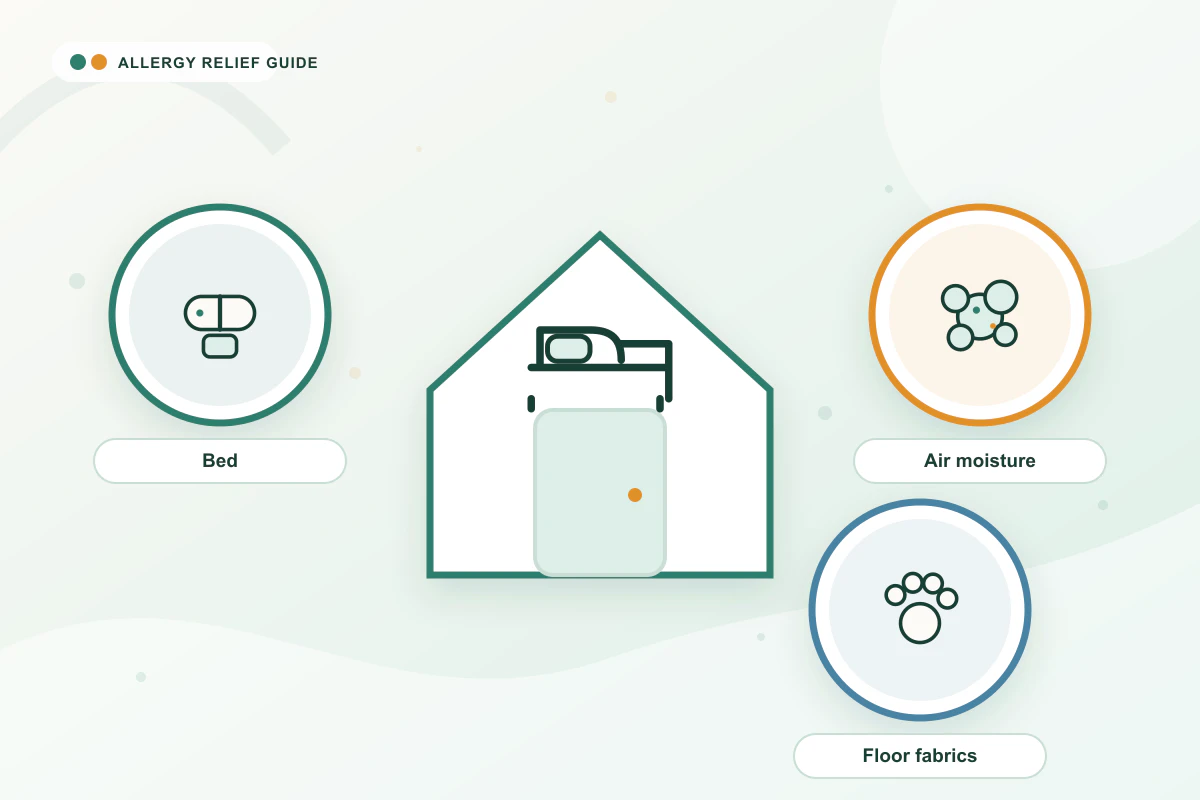
The bedroom is the highest-value room to allergy-proof, because you spend about a third of your life there in close contact with dust mites and other allergens. A complete plan tackles several fronts at once: allergen-proof bedding and weekly hot-water washing, hard flooring instead of carpet, indoor humidity around 30–50%, keeping pets out of the room, HEPA air filtration, and cutting down dust-collecting clutter. No single step does it all, but combined, these measures can meaningfully reduce your nighttime and morning symptoms.
Quick answer
The bedroom is the highest-value room to allergy-proof, since you spend about a third of your life there. A complete plan combines allergen-proof bedding with weekly hot-water washing, hard flooring instead of carpet, indoor humidity around 30–50%, keeping pets out of the room, HEPA air filtration, and reducing dust-collecting clutter. No single step does it all, but combined they can meaningfully reduce nighttime and morning symptoms.
What you need to know
- The bedroom is the most important room to allergy-proof because of the hours you spend there in contact with dust mites and other allergens.
- Encase the mattress, box spring, and pillows in allergen-proof covers, and wash bedding weekly in hot water.
- Replace wall-to-wall carpet with hard flooring and washable rugs where possible; carpet traps allergens.
- Keep indoor humidity around 30–50%, since dust mites and mold thrive in moist air.
- Keep pets out of the bedroom, and use HEPA air filtration and a HEPA-equipped vacuum to reduce airborne and settled allergens.
- Reduce dust-collecting clutter (heavy drapes, stacks of items, upholstered pieces) that's hard to clean.
Start with the Bed
Your bed is dust-mite headquarters, so it's the first priority. Encase the mattress, box spring, and pillows in allergen-proof (dust-mite-proof) covers, and wash sheets, pillowcases, and blankets weekly in hot water (around 130–140°F kills mites; a hot dryer cycle helps too). If your home water heater is set lower for scald safety, a hot wash plus hot dryer still substantially reduces mite allergen. This single area gives the biggest return, since encasements are widely regarded as the most effective dust-mite control. For the full bedding breakdown, see our allergy bedding guide.
Floors, Humidity, and Air
| Area | What helps | Why |
|---|---|---|
| Flooring | Hard floors (wood, tile, laminate) with washable rugs instead of wall-to-wall carpet | Carpet traps dust mites, pet dander, and pollen and is hard to clean thoroughly |
| Humidity | Keep indoor humidity around 30–50% (a dehumidifier or AC helps) | Dust mites and mold need moisture; drier air limits them |
| Air filtration | A HEPA air purifier sized for the room, plus a HEPA-equipped vacuum | Reduces airborne particles and captures settled allergen when cleaning |
For choosing a purifier, see our air purifiers for allergies and HEPA filters guides.
Pets and Clutter
Two often-overlooked steps make a real difference. First, keep pets out of the bedroom — pet dander is a potent allergen, and a pet sleeping on or near the bed undoes a lot of other effort; bathing pets can also lower the dander they shed. Second, reduce dust-collecting clutter: heavy drapes, piles of soft items, stuffed toys, and extra upholstered furniture all trap allergen and resist cleaning. Simpler surfaces you can wipe or wash are easier to keep allergen-low. See our pet allergies guide if animals are a trigger.
Keep It Up
- Wash bedding weekly and vacuum the room regularly with a HEPA-equipped vacuum
- Dust with a damp cloth (dry dusting scatters allergen back into the air)
- Run air conditioning or keep windows closed during high-pollen periods
- Address any visible mold and fix moisture sources promptly
- Reassess if symptoms persist — you may be missing a specific trigger
These steps target indoor allergens broadly; if pollen or a pet is your main trigger, make sure that's addressed too. See indoor allergens for the overview and dust mite allergy for that specific trigger.
When to seek care
Routine
You want to reduce indoor allergens where you sleep to ease nighttime and morning symptoms.
Prompt (within days)
Symptoms that persist despite a thorough bedroom plan — consider allergy testing to pinpoint the trigger.
Urgent (same day)
Worsening nighttime breathing or wheezing, especially if you have asthma.
Emergency (call 911)
Severe breathing difficulty or an asthma attack not responding to your reliever inhaler — call 911. Allergy-proofing is prevention, not treatment for a reaction.
Practical next steps
Safe general steps
- Encase mattress and pillows and wash bedding weekly in hot water
- Swap carpet for hard flooring and washable rugs where you can
- Keep humidity around 30–50% and add HEPA air filtration
- Keep pets out of the bedroom and cut dust-collecting clutter
Actions that need medical guidance
- Identifying your specific triggers if symptoms persist (allergy testing)
- A treatment plan when environmental control isn't enough
- Managing bedroom triggers alongside asthma
Don't attempt without professional advice
- Don't dry-dust or dry-sweep, which scatters allergen back into the air
- Don't let pets sleep in the bedroom if dander is a trigger
- Don't rely on environmental control alone if symptoms persist — get an evaluation
Frequently asked questions
What's the most important step to allergy-proof a bedroom?
Should I remove carpet from my bedroom for allergies?
What humidity should my bedroom be for allergies?
Do I really need to keep pets out of the bedroom?
Does an air purifier help an allergy-proof bedroom?
How do I clean an allergy-proof bedroom?
Sources
- MedlinePlus (NIH/NLM) — Allergies, asthma, and dust
- U.S. EPA — Guide to Air Cleaners in the Home
- MedlinePlus (NIH/NLM) — Allergic rhinitis - self-care
Medical disclaimer: This guide is for general education and isn't a substitute for personalized medical advice. It doesn't provide dosing. Always talk to a qualified healthcare professional about your symptoms and treatment.
 MD
MDMedically reviewed
Dr. Hannah H. Walford, MD
Allergist and Immunologist
- Website role
- Owner, Medical Director and Medical Reviewer of Allergy Relief Guide
- Professional affiliation
- Stanford Health Care / Menlo Medical Clinic, Menlo Park, California
- Areas of expertise
- Food allergy, eczema, allergic rhinitis, sinusitis and asthma
Dr. Hannah H. Walford is a board-certified allergist and immunologist experienced in caring for adults and children with allergic conditions. Her areas of expertise include food allergy, eczema, allergic rhinitis, sinusitis and asthma. She provides medical leadership and review oversight for the educational health content published by Allergy Relief Guide.
Medical content is provided for education and is not a substitute for diagnosis or individualized medical care.
Continue building your allergy plan
Explore related guides to understand the full picture, from triggers to treatment to safety.
See the full indoor allergens guide