Allergy Bedding: Dust-Mite Covers & Washing
Allergy bedding targets dust mites — microscopic creatures that live in mattresses, pillows, and bedding and are a leading indoor allergen. The two most effective steps are encasing your mattress, box spring, and pillows in allergen-proof (dust-mite-proof) covers, and washing your sheets, pillowcases, and blankets weekly in hot water. Allergen-proof encasements are widely considered the single most effective environmental control for dust-mite allergy. Keeping indoor humidity around 30–50% also helps, since dust mites thrive in moist air.
Quick answer
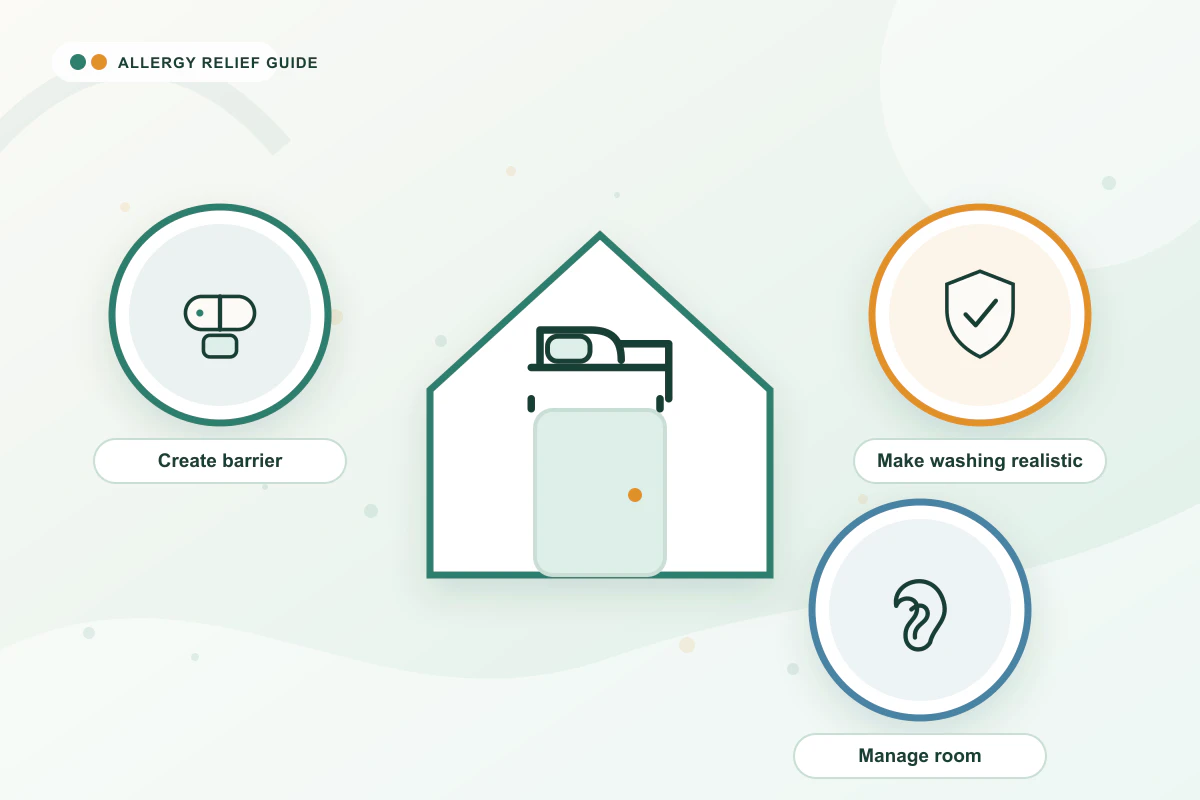
Allergy bedding targets dust mites, a leading indoor allergen living in mattresses, pillows, and bedding. The two most effective steps are encasing your mattress, box spring, and pillows in allergen-proof (dust-mite-proof) covers, and washing sheets, pillowcases, and blankets weekly in hot water. Allergen-proof encasements are widely considered the single most effective environmental control for dust-mite allergy, and keeping indoor humidity around 30–50% helps too.
What you need to know
- Dust mites live in bedding, mattresses, and pillows, and their debris is a common trigger for allergic rhinitis and asthma.
- Allergen-proof (dust-mite-proof) encasements for the mattress, box spring, and pillows are widely considered the single most effective environmental control step for dust-mite allergy.
- Wash sheets, pillowcases, and blankets weekly; hot water (around 130–140°F / 54–60°C) kills dust mites, and a hot dryer cycle helps too.
- For scald safety, many home water heaters are set near 120°F, so a hot wash plus a hot dryer cycle is a practical combination — check your machine and household safety needs.
- Keep indoor humidity around 30–50%, since dust mites thrive in moist air.
- Bedding measures work best combined with broader bedroom allergen control, and they target dust mites specifically — not pollen or pet dander from other sources.
Why Bedding Matters for Allergies
Dust mites are microscopic relatives of spiders that feed on shed skin flakes and thrive in warm, humid places — and few places suit them better than a bed. Mattresses, pillows, and bedding accumulate the skin cells they eat and hold the warmth and moisture they need. It's not the mites themselves but their droppings and body fragments that carry the allergens that trigger sneezing, congestion, and, for some people, asthma symptoms. Because you spend hours each night in close contact with your bedding, reducing dust-mite allergen there can make a real difference. For the broader condition, see our dust mite allergy guide.
Allergen-Proof Encasements: The Most Effective Step
The single most effective bedding measure is encasing your mattress, box spring, and pillows in allergen-proof covers — tightly woven or membrane-backed covers that fully zip around the item so mites and their allergens can't pass through. Allergy and immunology guidance identifies these encasements as the most effective environmental control for dust-mite allergy. When choosing covers, look for ones that fully encase all sides with a sealed zipper and are designed specifically as a dust-mite or allergen barrier. Once encased, you don't need to remove the covers to wash them often — the washable sheets and pillowcases on top of them are what you launder regularly.
Washing Bedding: How Hot and How Often
| Item | How often | How |
|---|---|---|
| Sheets, pillowcases | Weekly | Hot water (around 130–140°F / 54–60°C) kills mites; a hot dryer cycle helps too |
| Blankets, duvet covers | Weekly to every couple of weeks | Same hot-wash approach where the fabric allows |
| Allergen-proof encasements | Occasionally | Wipe or wash per the manufacturer's instructions; they stay on between washes |
A practical safety note: water hot enough to kill mites (about 130°F and up) is also hot enough to scald, and many households set their water heater closer to 120°F to prevent burns. If your hot tap doesn't reach mite-killing temperatures, washing weekly plus running a hot dryer cycle still substantially reduces mite allergen. Follow fabric-care labels and household safety needs.
Round Out the Bedroom
Bedding measures work best as part of a broader bedroom plan. Keep indoor humidity around 30–50% (a dehumidifier helps in damp spaces), since dust mites need moisture to thrive. Reducing dust-collecting items, vacuuming with a HEPA-equipped vacuum, and using air filtration can further lower exposure. For the full room-by-room approach, see our allergy-proof bedroom guide; for air filtration specifically, see air purifiers for allergies and HEPA filters. Remember these steps target dust mites — if pets sleep in the room or pollen is your main trigger, you'll want those addressed too. See indoor allergens for the overview.
When to seek care
Routine
You have known or suspected dust-mite allergy and want to reduce exposure where you sleep.
Prompt (within days)
Nighttime or morning nasal symptoms that persist despite bedding measures — consider allergy testing or a treatment plan.
Urgent (same day)
Worsening nighttime breathing or wheezing, especially if you have asthma.
Emergency (call 911)
Severe breathing difficulty or an asthma attack not responding to your reliever inhaler — call 911. Bedding is prevention, not treatment for a reaction.
Practical next steps
Safe general steps
- Encase your mattress, box spring, and pillows in allergen-proof covers with sealed zippers
- Wash sheets, pillowcases, and blankets weekly in the hottest water your fabric and household safely allow, and use a hot dryer cycle
- Keep bedroom humidity around 30–50%
- Pair bedding measures with broader bedroom allergen control
Actions that need medical guidance
- Whether your symptoms are from dust mites or another allergen (allergy testing can clarify)
- A treatment plan if bedding measures aren't enough
- Managing dust-mite triggers alongside asthma
Don't attempt without professional advice
- Don't set your home water heater above safe limits just to wash bedding — use a hot dryer cycle to help instead
- Don't expect bedding covers to help with pollen or pet dander from other sources
- Don't rely on bedding alone if symptoms persist — get an evaluation
Frequently asked questions
Does allergy bedding actually work?
What kind of covers should I get for dust-mite allergy?
How hot should I wash bedding to kill dust mites?
How often should I wash my sheets for allergies?
Does humidity affect dust mites?
Will allergy bedding help with pet or pollen allergies?
Sources
- MedlinePlus (NIH/NLM) — Allergies, asthma, and dust
- AAAAI/ACAAI Joint Task Force — Environmental assessment and exposure control of dust mites (Practice Parameter)
- MedlinePlus (NIH/NLM) — Allergic rhinitis - self-care
Medical disclaimer: This guide is for general education and isn't a substitute for personalized medical advice. It doesn't provide dosing. Always talk to a qualified healthcare professional about your symptoms and treatment.
 MD
MDMedically reviewed
Dr. Hannah H. Walford, MD
Allergist and Immunologist
- Website role
- Owner, Medical Director and Medical Reviewer of Allergy Relief Guide
- Professional affiliation
- Stanford Health Care / Menlo Medical Clinic, Menlo Park, California
- Areas of expertise
- Food allergy, eczema, allergic rhinitis, sinusitis and asthma
Dr. Hannah H. Walford is a board-certified allergist and immunologist experienced in caring for adults and children with allergic conditions. Her areas of expertise include food allergy, eczema, allergic rhinitis, sinusitis and asthma. She provides medical leadership and review oversight for the educational health content published by Allergy Relief Guide.
Medical content is provided for education and is not a substitute for diagnosis or individualized medical care.
Continue building your allergy plan
Explore related guides to understand the full picture, from triggers to treatment to safety.
See the full indoor allergens guide