Quercetin for Allergies: What the Evidence Shows and Safety
Quercetin is a plant flavonoid found in foods like onions, apples, berries, and tea, and it's widely sold as a supplement marketed as a “natural antihistamine” for allergies. The theory is appealing: in the lab, quercetin can stabilize mast cells (the immune cells that release histamine), which would calm allergic reactions at the source. The catch is that the strong evidence is mostly from test-tube and animal studies — human clinical evidence is still very limited. So quercetin is a promising idea, not a proven allergy treatment, and it shouldn't replace medicines that are known to work.
Quick answer
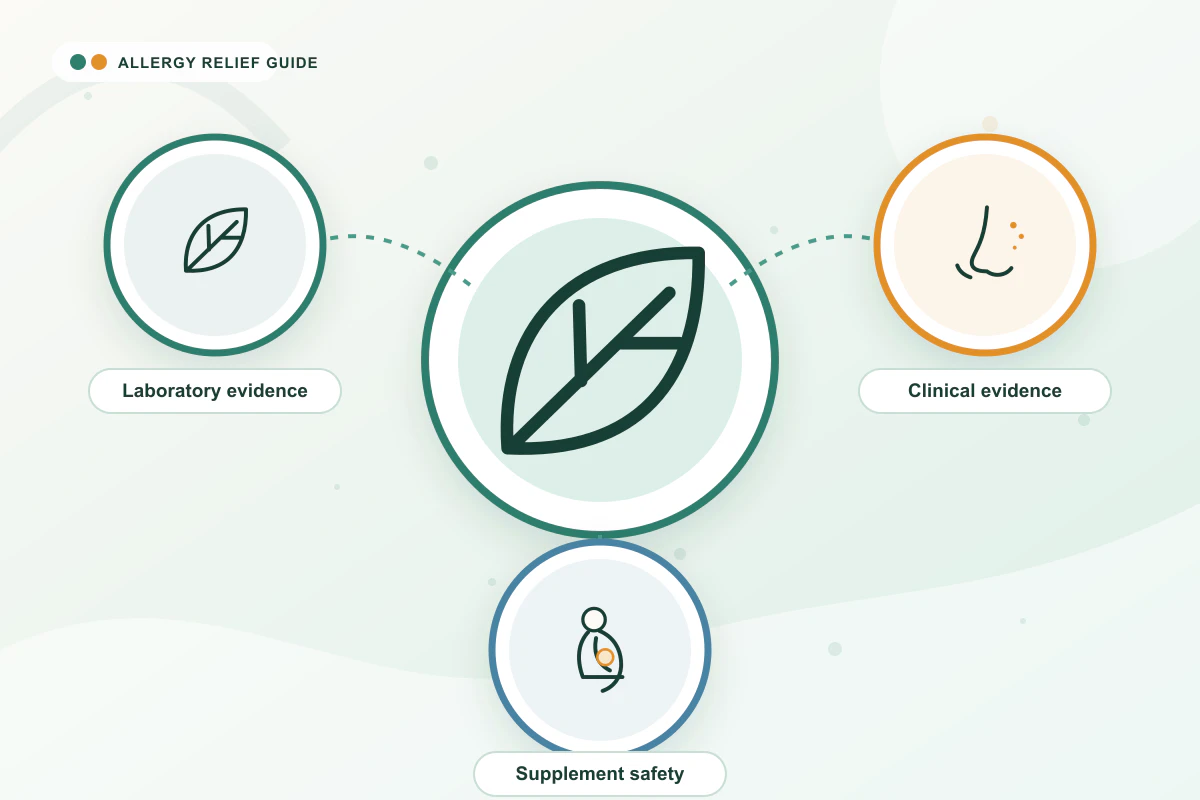
Quercetin is a plant flavonoid (in onions, apples, berries, tea) sold as a supplement marketed as a “natural antihistamine.” In the lab it can stabilize mast cells (which release histamine), but the strong evidence is mostly from test-tube and animal studies — human clinical evidence is very limited. So quercetin is a promising idea, not a proven allergy treatment, and it shouldn't replace medicines known to work. Talk to a clinician before using it, especially in pregnancy or with other conditions.
What you need to know
- Quercetin is a natural plant flavonoid (in onions, apples, berries, and tea) also sold as a dietary supplement.
- It's marketed as a 'natural antihistamine' based on lab evidence that it can stabilize mast cells and reduce histamine release.
- That mechanism is promising, but the strong evidence is mostly in vitro (test-tube) and animal studies.
- Human clinical evidence is very limited — only a couple of trials have studied quercetin on its own for allergies.
- It's generally well tolerated in studied doses, but supplements aren't regulated like medicines, and safety data is insufficient in pregnancy and breastfeeding.
- Quercetin is not a proven allergy treatment and shouldn't replace medicines known to work; talk to a clinician before using it.
What Quercetin Is and the Theory Behind It
Quercetin is a flavonoid — a natural plant compound found in many fruits, vegetables, and beverages, including onions, apples, berries, and tea. As a supplement, it's popular in the "natural allergy" space, and the reasoning is genuinely interesting: laboratory studies show quercetin can stabilize mast cells, the immune cells that release histamine and other chemicals during an allergic reaction. In principle, calming those cells would reduce symptoms at their source — a bit differently from standard antihistamines, which block histamine after it's released. For the broader supplement picture, see our natural allergy remedies guide.
What the Evidence Actually Shows
Here's the honest state of the science. Quercetin's anti-allergy effects are well demonstrated in in vitro (test-tube) studies and in animal models of allergic rhinitis, where it reduces mast-cell mediator release and eases symptoms like sneezing and congestion. But the crucial next step — high-quality human clinical trials — is still largely missing: reviews note that only a small number of trials have tested quercetin as a standalone allergy treatment, and much of the human data comes from multi-ingredient supplements where quercetin's specific contribution can't be isolated. Researchers themselves call for larger, randomized controlled trials before quercetin can be recommended as a treatment. In short: promising mechanism, encouraging lab results, but not yet proven in people.
Safety and Practical Considerations
- Quercetin is generally well tolerated at the doses studied, and eating quercetin-rich foods is part of a normal healthy diet
- Dietary supplements aren't regulated by the FDA the way medicines are, so quality, purity, and actual dose can vary between products
- Safety data is insufficient in pregnancy and breastfeeding, so it's generally avoided then
- Use caution at very high doses if you have kidney disease, and be aware that supplements can interact with medications
- Because it isn't a proven treatment, it shouldn't replace medicines known to work for your allergies
As with any supplement, talk to a clinician or pharmacist before starting quercetin, especially if you're pregnant, have a health condition, or take other medications.
How to Think About It
If you're interested in quercetin, the reasonable framing is: it's a low-to-moderate-risk supplement with a plausible mechanism but limited human proof — not a substitute for treatments that have strong evidence. The measures that reliably help allergies are the proven ones: reducing your triggers, and using antihistamines, nasal corticosteroid sprays, and (for persistent allergies) immunotherapy. See our allergy treatment and home remedies for allergies guides. If your symptoms are more than mild, it's worth getting a proper plan rather than relying on an unproven supplement.
When to seek care
Routine
You're curious about quercetin or other supplements and want to weigh them against proven options.
Prompt (within days)
Allergy symptoms not controlled by over-the-counter measures — consider proven treatments or an allergist.
Urgent (same day)
Allergy symptoms with wheezing, chest tightness, or shortness of breath, especially with asthma.
Emergency (call 911)
A severe allergic reaction — trouble breathing, swelling of the lips, tongue, or throat, widespread hives with dizziness — is a 911 emergency and is never treated with supplements. Use epinephrine if prescribed and call 911.
Practical next steps
Safe general steps
- Enjoy quercetin-rich foods as part of a healthy diet
- Use proven allergy measures (trigger reduction, antihistamines, nasal sprays) as your foundation
- If considering a quercetin supplement, choose a reputable brand and talk to a clinician or pharmacist first
- Track whether any supplement actually helps, and don't drop proven treatment for it
Actions that need medical guidance
- Whether a quercetin supplement is safe alongside your medications or conditions
- Use in pregnancy or breastfeeding (generally avoided)
- Allergy symptoms not controlled by proven measures
Don't attempt without professional advice
- Don't rely on quercetin as a proven allergy treatment — the human evidence is limited
- Don't replace medicines known to work with an unproven supplement
- Don't treat a severe allergic reaction with supplements — that needs epinephrine and 911
Frequently asked questions
Does quercetin help with allergies?
Is quercetin a natural antihistamine?
Is there strong evidence for quercetin and allergies?
Is quercetin safe?
Can quercetin replace my allergy medicine?
Should I take quercetin for allergies?
Sources
- PMC (NIH) — Quercetin and Its Lecithin-Based Formulation: Potential Applications for Allergic Diseases (Narrative Review)
- MedlinePlus (NIH/NLM) — Allergic rhinitis
- MedlinePlus (NIH/NLM) — Allergic rhinitis - self-care
Medical disclaimer: This guide is for general education and isn't a substitute for personalized medical advice. It doesn't provide dosing. Always talk to a qualified healthcare professional about your symptoms and treatment.
 MD
MDMedically reviewed
Dr. Hannah H. Walford, MD
Allergist and Immunologist
- Website role
- Owner, Medical Director and Medical Reviewer of Allergy Relief Guide
- Professional affiliation
- Stanford Health Care / Menlo Medical Clinic, Menlo Park, California
- Areas of expertise
- Food allergy, eczema, allergic rhinitis, sinusitis and asthma
Dr. Hannah H. Walford is a board-certified allergist and immunologist experienced in caring for adults and children with allergic conditions. Her areas of expertise include food allergy, eczema, allergic rhinitis, sinusitis and asthma. She provides medical leadership and review oversight for the educational health content published by Allergy Relief Guide.
Medical content is provided for education and is not a substitute for diagnosis or individualized medical care.
Continue building your allergy plan
Explore related guides to understand the full picture, from triggers to treatment to safety.
See the full allergy treatment & relief guide