
Pet Dander Control at Home
If you're allergic but keep a pet, you can meaningfully cut down the dander (and saliva and urine proteins) that trigger your symptoms — even if you can't eliminate it entirely. The highest-impact steps are keeping the pet out of the bedroom, running a HEPA air purifier and using a HEPA vacuum, switching to hard flooring where you can, and cleaning surfaces and pet bedding regularly. Bathing the pet can reduce the dander it sheds. Because pet allergen is sticky and lingers for months, expect gradual improvement rather than an overnight fix.
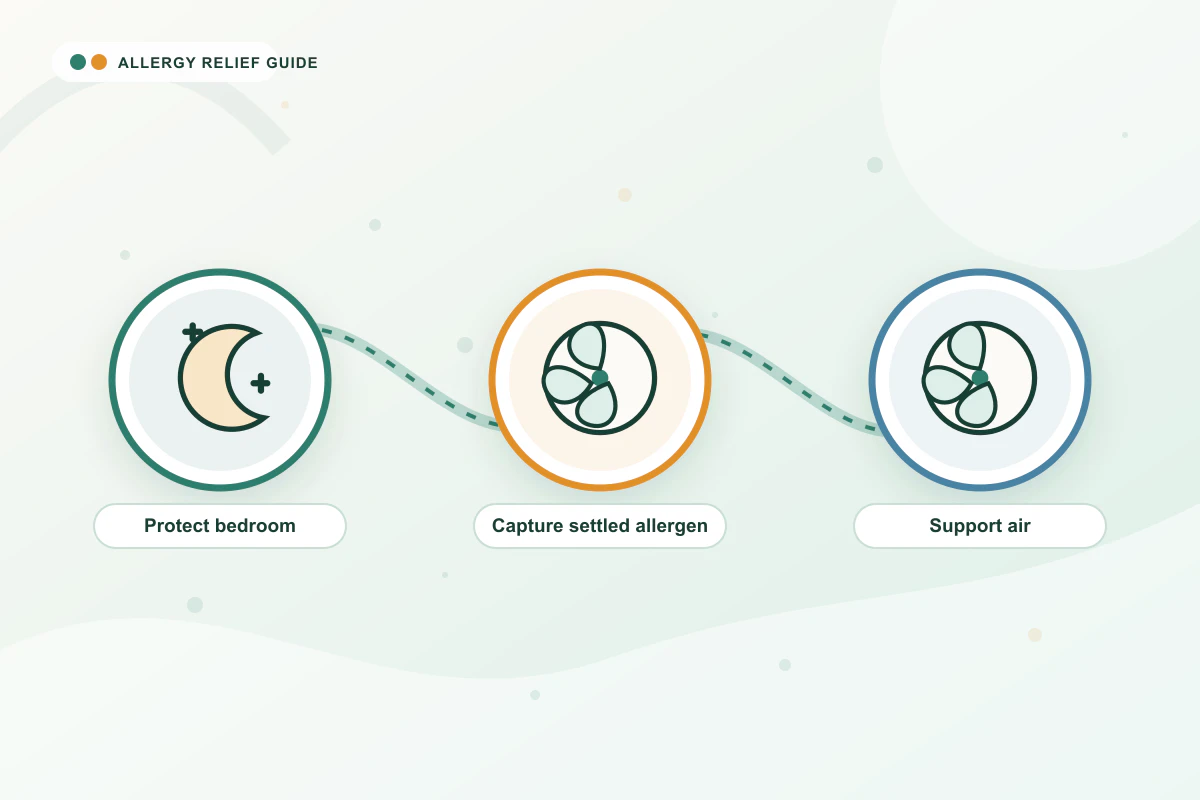
Quick answer
If you're allergic but keep a pet, you can meaningfully reduce the dander (and saliva/urine proteins) that trigger symptoms, even if you can't eliminate it. The highest-impact steps: keep the pet out of the bedroom, run a HEPA air purifier and use a HEPA vacuum, switch to hard flooring where you can, and clean surfaces and pet bedding regularly. Bathing the pet can reduce shed dander. Because pet allergen lingers for months, expect gradual improvement, not an overnight fix.
What you need to know
- You can substantially reduce pet dander at home even if you can't fully eliminate it.
- The single highest-impact step is keeping the pet out of the bedroom, where you spend hours in close contact.
- HEPA air filtration and a HEPA-equipped vacuum capture airborne and settled pet allergen.
- Hard flooring beats carpet, which traps dander; reduce upholstery and clutter too.
- Bathing the pet regularly can reduce the dander it sheds, and washing pet bedding helps.
- Pet allergen is sticky and lingers for months, so improvement is gradual — and this works best alongside treating the allergy.
Start with the Bedroom
The most valuable single step is making the bedroom a pet-free zone. You spend roughly a third of your life there in close, prolonged contact, so keeping pets (and their dander) out gives the biggest return on effort. Keep the bedroom door closed, don't let the pet on the bed, and wash your own bedding regularly. This one change often makes a noticeable difference on its own. For the whole-room approach, see our allergy-proof bedroom guide.
Filter and Clean
| Measure | Why it helps |
|---|---|
| HEPA air purifier (sized for the room) | Captures airborne dander in the rooms where you spend the most time |
| HEPA-equipped vacuum | Removes settled dander without blowing fine allergen back into the air |
| Hard flooring instead of carpet | Carpet traps dander and is hard to clean thoroughly; hard floors wipe clean |
| Regular surface cleaning + washing pet bedding | Reduces the reservoir of dander that keeps re-circulating |
For choosing filtration, see our air purifiers for allergies and HEPA filters guides. Dust with a damp cloth rather than dry-dusting, which scatters allergen.
Manage the Pet
- Bathe the pet regularly, which can reduce the dander it sheds (ask your vet how often is appropriate for your animal)
- Wash your hands after handling the pet, and avoid touching your eyes and face
- Have someone without the allergy do the brushing and litter or cage cleaning where possible, ideally not in the bedroom
- Wash the pet's bedding frequently
These steps reduce how much allergen the pet spreads day to day.
Set Realistic Expectations — and Treat the Allergy
An honest note: pet allergen is sticky and persistent, and it can linger in a home for many months even after these measures — and for months after a pet is gone entirely. So improvement is gradual, not instant. Dander control genuinely helps, but it works best alongside treating the allergy itself with antihistamines and nasal corticosteroid sprays, and, for some people, allergen immunotherapy. For the condition and treatment, see our pet allergies, allergy treatment, and allergy shots guides.
There is no hypoallergenic breed
Before spending money on control measures, it is worth removing the one belief that undermines all of them. The American College of Allergy, Asthma & Immunology is blunt about it: “Unfortunately there are no ‘non-allergenic’ cat or dog breeds! All of these have some level of allergen.”
The fur-length assumption goes with it. ACAAI calls it out directly — “the allergic potential of dogs or cats is not affected by the length of their fur. This is a common myth!” — and cites a study finding that homes with supposedly hypoallergenic dog breeds had allergen levels no different from homes with other dogs.
The reason is what the allergen actually is. ACAAI states that “the protein that causes allergies is found in an animal’s saliva, dander and urine”. Fur is not the allergen; it is a carrier. A low-shedding coat spreads less of it around the house, which is not nothing, but the animal still produces the protein.
One consequence is easy to miss: because fur also collects pollen and mold from outdoors, a pet that goes outside can bring in triggers that have nothing to do with the animal. If symptoms spike seasonally rather than constantly, the pet may be the delivery system rather than the cause — compare our outdoor allergens guide.
- No cat or dog breed is genuinely non-allergenic
- Coat length does not determine allergic potential
- The allergen is protein in saliva, dander and urine, not hair
- Low-shedding reduces spread, not production
- Outdoor pets also carry pollen and mold indoors on their fur
- See our cat allergy and dog allergy guides for species detail
If the pet leaves, the allergen does not leave with it
Rehoming is the hardest decision on this page, and people who make it often expect relief within days. The timescale is much longer, and knowing that in advance prevents a painful decision being judged a failure too early.
ACAAI reports that after a cat is removed “it may take up to 20 to 30 weeks before the cat allergen concentration is reduced to the levels found in animal-free homes”. That is roughly five to seven months of continued exposure to allergen already embedded in soft furnishings, carpet and walls.
There is a second detail worth knowing before you interpret a test result or a bad day: ACAAI notes that “all homes, even those never occupied by a cat, will have a minimal level of cat dander”. Cat allergen travels on clothing, so it turns up in places no cat has ever been. Zero is not the target and is not achievable.
This is also why aggressive cleaning of soft surfaces matters more after a pet leaves than while it is there: the remaining allergen is in the reservoirs, not being newly produced. And if control measures are not enough, treating the allergy itself is the other half of the answer — ACAAI notes many patients starting immunotherapy see a reduction in symptoms within the first six months, while others continue for a few years. See our allergy shots guide.
When to seek care
Routine
You have a pet allergy and want to reduce exposure at home while keeping your pet.
Prompt (within days)
Symptoms that persist despite dander-control measures — consider treatment or allergy testing.
Urgent (same day)
Wheezing, chest tightness, or shortness of breath around pets, especially with asthma.
Emergency (call 911)
Severe breathing difficulty or an asthma attack not responding to a reliever inhaler — call 911.
Practical next steps
Safe general steps
- Make the bedroom a pet-free zone with the door kept closed
- Use a HEPA air purifier and HEPA vacuum, and choose hard flooring
- Bathe the pet regularly and wash its bedding often
- Wash your hands after handling the pet and clean surfaces with a damp cloth
Actions that need medical guidance
- A treatment plan if dander control isn't enough
- Whether immunotherapy could help long-term
- Managing pet-triggered asthma
Don't attempt without professional advice
- Don't expect instant results — pet allergen lingers for months
- Don't let the pet sleep in the bedroom if you're allergic
- Don't dry-dust or dry-sweep, which scatters dander into the air
Frequently asked questions
How do I reduce pet dander at home?
What's the single most effective pet-dander step?
Does bathing my pet reduce dander?
Do air purifiers help with pet dander?
How long does it take to reduce pet dander?
Can I control dander enough to keep my pet?
Are there hypoallergenic cat or dog breeds?
If hair is not the allergen, what is?
How long after rehoming a cat will the allergen be gone?
Can a home ever be completely free of cat allergen?
If control measures are not enough, what else is there?
Sources
- ACAAI Patient — Pet Allergies
- U.S. EPA — Guide to Air Cleaners in the Home
- MedlinePlus (NIH/NLM) — Allergic rhinitis
Medical disclaimer: This guide is for general education and isn't a substitute for personalized medical advice. It doesn't provide dosing. Always talk to a qualified healthcare professional about your symptoms and treatment.
 MD
MDMedically reviewed
Dr. Hannah H. Walford, MD
Allergist and Immunologist
- Website role
- Owner, Medical Director and Medical Reviewer of Allergy Relief Guide
- Professional affiliation
- Stanford Health Care / Menlo Medical Clinic, Menlo Park, California
- Areas of expertise
- Food allergy, eczema, allergic rhinitis, sinusitis and asthma
Dr. Hannah H. Walford is a board-certified allergist and immunologist experienced in caring for adults and children with allergic conditions. Her areas of expertise include food allergy, eczema, allergic rhinitis, sinusitis and asthma. She provides medical leadership and review oversight for the educational health content published by Allergy Relief Guide.
Medical content is provided for education and is not a substitute for diagnosis or individualized medical care.
Continue building your allergy plan
Explore related guides to understand the full picture, from triggers to treatment to safety.
See the full indoor allergens guide