
Dog Allergy: Symptoms and Management
Dog allergy is a reaction to proteins — chiefly Can f 1 — found in a dog's dander (skin flakes), saliva, and urine, not the fur itself. Fur simply carries and spreads the allergen, which becomes airborne and settles around the home. That's why no dog breed is truly hypoallergenic: studies find dog allergen in the vast majority of homes regardless of breed. Symptoms range from sneezing and congestion to itchy eyes and asthma flares. Management combines reducing exposure — keeping the dog out of the bedroom, cleaning, and HEPA filtration — with symptom treatment, and sometimes immunotherapy.
Quick answer
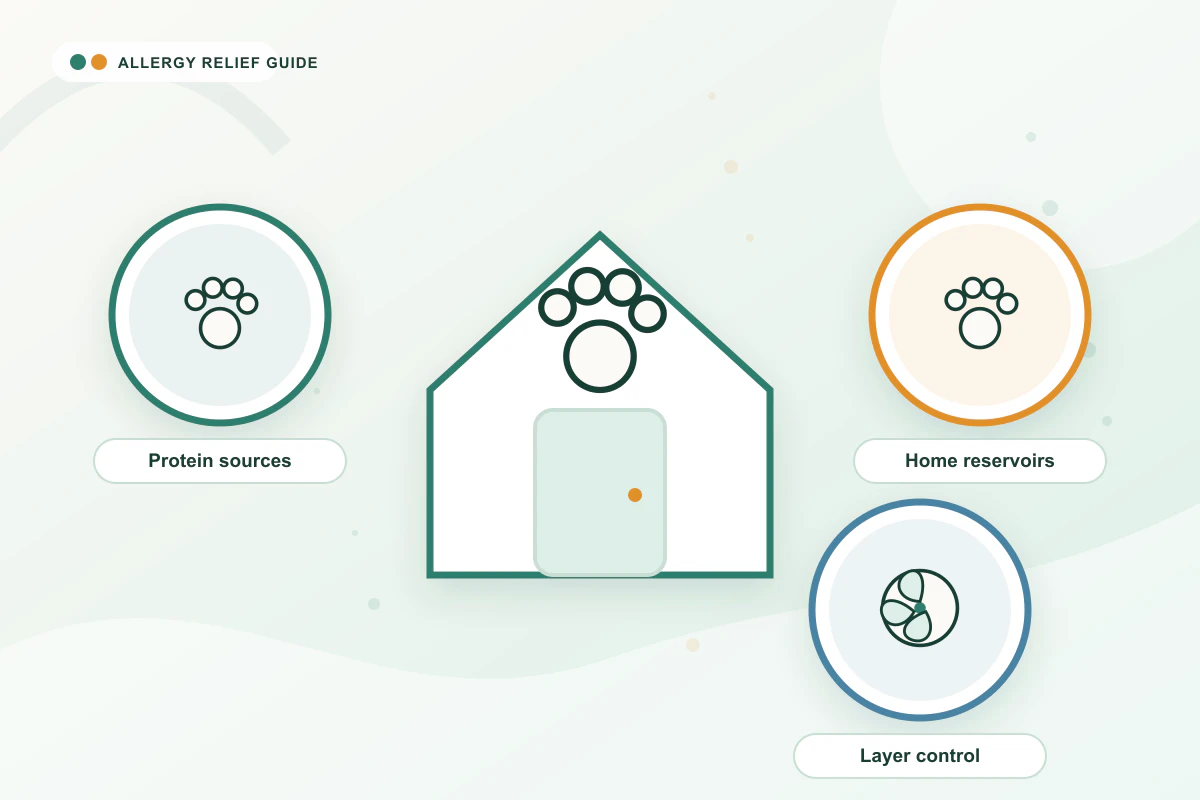
Dog allergy is a reaction to proteins (chiefly Can f 1) in a dog's dander, saliva, and urine, not the fur itself. Fur carries and spreads the allergen, which becomes airborne and settles around the home. No dog breed is truly hypoallergenic — studies find dog allergen in most homes regardless of breed. Symptoms range from sneezing and congestion to itchy eyes and asthma flares. Management combines reducing exposure with symptom treatment, and sometimes immunotherapy.
What you need to know
- Dog allergy is mainly a reaction to Can f 1, a protein in dog dander (skin flakes), saliva, and urine — not the fur.
- Fur acts as a carrier: the allergen sticks to it and to dander, then becomes airborne and settles on surfaces.
- No dog breed is truly hypoallergenic; studies find dog allergen in the large majority of homes regardless of breed.
- Symptoms include sneezing, congestion, runny nose, itchy or watery eyes, and, in some people, asthma symptoms.
- Dog allergen can persist for months after a dog is removed from a home, so cleaning takes time to help.
- Management combines exposure reduction, symptom medications, and, for some people, allergen immunotherapy.
It's the Proteins, Not the Fur
As with cats, the common belief that dog fur causes the allergy is misleading. The real triggers are proteins — most importantly Can f 1 — produced in a dog's skin (dander), saliva, and urine. When a dog sheds skin flakes or licks its coat, these allergens spread onto the fur and into the environment, where they dry into tiny particles, float in the air, and settle on furniture, carpet, and clothing. So the fur is a delivery vehicle, not the allergen itself. For the broader category, see our pet allergies guide, and for the feline version, cat allergy.
The Hypoallergenic-Dog Myth
"Hypoallergenic" dog breeds are largely marketing rather than science. Because all dogs produce Can f 1 (and other allergens) in dander, saliva, and urine, no breed is truly allergen-free. Research has found detectable dog allergen in the large majority of homes with dogs — on the order of most homes tested — with no meaningful difference between so-called hypoallergenic breeds and others. Low-shedding coats may spread somewhat less loose hair, but they don't eliminate the allergen. If you're allergic and considering a dog, spending time with the specific animal beforehand tells you more than a breed label.
Symptoms
- Sneezing and a runny or congested nose
- Itchy, red, or watery eyes
- An itchy nose or throat and postnasal drip
- Coughing
- In some people, asthma symptoms: wheezing, chest tightness, or shortness of breath
- Skin reactions (itching or hives) where a dog has licked or scratched, in sensitive individuals
If you have asthma, dog allergen can be a trigger — see our allergic asthma management guide.
How to Reduce Exposure
If you keep a dog, avoidance becomes a matter of degree. Effective steps include keeping the dog out of the bedroom, using hard flooring and easy-to-clean furniture rather than carpet and upholstery, cleaning surfaces regularly, and using HEPA air filtration and a HEPA-equipped vacuum. Bathing the dog may reduce the dander it sheds. Because dog allergen is sticky and persistent, expect gradual rather than instant improvement — allergen levels can take months to fall after changes. Medications (antihistamines, nasal corticosteroid sprays) manage symptoms, and an allergist can discuss allergen immunotherapy for longer-term tolerance. See our allergy treatment, allergy shots, and air purifiers for allergies guides.
When to seek care
Routine
Mild, manageable dog-allergy symptoms you want to reduce through avoidance and over-the-counter treatment.
Prompt (within days)
Symptoms that persist despite reducing exposure, or that you want confirmed with allergy testing.
Urgent (same day)
Wheezing, chest tightness, or shortness of breath around dogs, especially if you have asthma.
Emergency (call 911)
Severe breathing difficulty or an asthma attack not responding to a reliever inhaler — call 911.
Practical next steps
Safe general steps
- Keep dogs out of the bedroom and off soft furnishings where you spend time
- Use hard flooring, clean surfaces regularly, and use HEPA filtration and vacuuming
- Bathe the dog to reduce shed dander, and wash your hands after handling it
- Treat symptoms with appropriate antihistamines or nasal sprays
Actions that need medical guidance
- Confirming dog allergy with testing if you're unsure
- Whether immunotherapy could build longer-term tolerance
- Managing dog-triggered asthma symptoms
Don't attempt without professional advice
- Don't rely on a “hypoallergenic breed” as a guarantee — all dogs produce the allergen
- Don't assume a low-shedding dog won't trigger symptoms
- Don't ignore wheezing or breathing symptoms around dogs — get asthma evaluated
Frequently asked questions
What causes dog allergy?
Are any dogs truly hypoallergenic?
Does dog hair cause allergies?
What are the symptoms of dog allergy?
How long does dog allergen stay in a home?
How can I reduce dog-allergy symptoms if I keep my dog?
Sources
- ACAAI Patient — Pet Allergies
- MedlinePlus (NIH/NLM) — Allergic rhinitis
- MedlinePlus (NIH/NLM) — Allergies
Medical disclaimer: This guide is for general education and isn't a substitute for personalized medical advice. It doesn't provide dosing. Always talk to a qualified healthcare professional about your symptoms and treatment.
 MD
MDMedically reviewed
Dr. Hannah H. Walford, MD
Allergist and Immunologist
- Website role
- Owner, Medical Director and Medical Reviewer of Allergy Relief Guide
- Professional affiliation
- Stanford Health Care / Menlo Medical Clinic, Menlo Park, California
- Areas of expertise
- Food allergy, eczema, allergic rhinitis, sinusitis and asthma
Dr. Hannah H. Walford is a board-certified allergist and immunologist experienced in caring for adults and children with allergic conditions. Her areas of expertise include food allergy, eczema, allergic rhinitis, sinusitis and asthma. She provides medical leadership and review oversight for the educational health content published by Allergy Relief Guide.
Medical content is provided for education and is not a substitute for diagnosis or individualized medical care.
Continue building your allergy plan
Explore related guides to understand the full picture, from triggers to treatment to safety.
See the types of allergies guide