Vacuuming for Allergies: HEPA, Sealed Systems and Technique
Vacuuming helps allergies by removing settled indoor allergen — dust-mite debris, pet dander, and pollen tracked in from outside — from carpet, rugs, and upholstery. But an ordinary vacuum can actually make things worse by blowing fine allergen back into the air. For allergy control, two features matter most: a HEPA filter (to capture fine particles) and a sealed system (so air doesn't leak out the sides carrying allergen with it). Vacuum regularly and thoroughly, and if you're very sensitive, wear a mask or have someone else do it. Vacuuming is one useful part of a broader allergen-reduction plan.
Quick answer
Vacuuming helps allergies by removing settled allergen (dust-mite debris, pet dander, tracked-in pollen) from carpet and upholstery. But an ordinary vacuum can blow fine allergen back into the air. For allergy control, two features matter: a HEPA filter (captures fine particles) and a sealed system (so allergen doesn't leak out). Vacuum regularly and thoroughly; if very sensitive, wear a mask or have someone else do it. It's one useful part of a broader allergen-reduction plan.
What you need to know
- Vacuuming removes settled indoor allergen — dust-mite debris, pet dander, and tracked-in pollen — from carpet, rugs, and upholstery.
- An ordinary vacuum can blow fine allergen back into the air, sometimes making symptoms worse during and after cleaning.
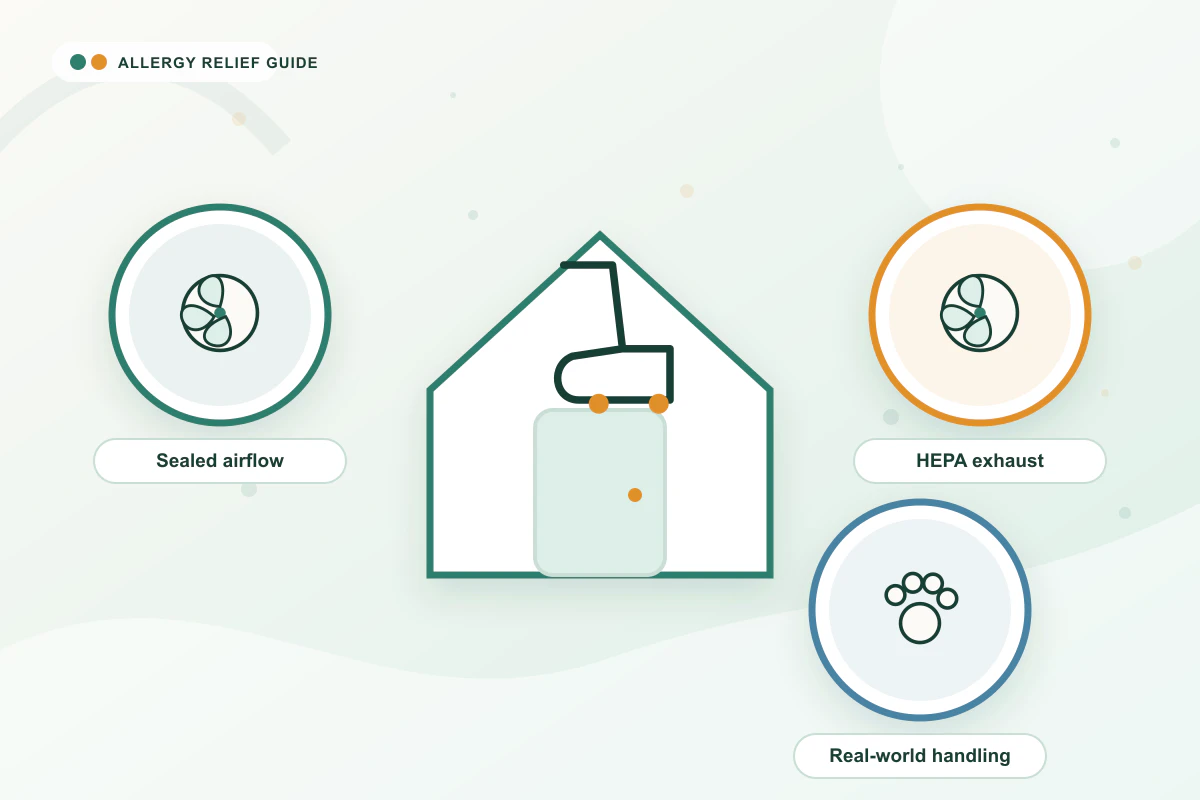
- Two features matter most for allergies: a HEPA filter (to trap fine particles) and a sealed system (so air doesn't leak allergen out the sides).
- Vacuum regularly (about weekly, more with pets) and go slowly, and don't forget upholstery and along baseboards.
- If you're highly sensitive, wear a mask while vacuuming or have someone without the allergy do it, and let dust settle afterward.
- Vacuuming is one part of a broader plan — it doesn't replace bedding covers, humidity control, or treating the allergy.
How Vacuuming Helps — and Can Hurt
Carpet, rugs, and upholstery act as reservoirs for indoor allergen, trapping dust-mite debris, pet dander, and pollen carried in from outside. Vacuuming removes some of that settled allergen, which genuinely helps reduce your exposure. The catch is that a poorly designed vacuum can do harm too: as it works, it can pick up fine allergen and then blow it right back into the air through its exhaust or leaky seams — which is why some people feel worse during and just after vacuuming. Choosing the right vacuum, and using it well, is what turns vacuuming into a net win. For the broader picture, see our indoor allergens guide.
The Two Features That Matter
| Feature | Why it matters |
|---|---|
| HEPA filter | Captures fine airborne allergen that would otherwise pass through and be blown back into the room |
| Sealed (enclosed) system | Ensures the air actually goes through the filter rather than leaking out the sides — a filter only helps if air can't bypass it |
Both matter together: a HEPA filter with a leaky body still lets allergen escape, and a sealed vacuum without good filtration doesn't trap the fine particles. For more on the filter technology, see our HEPA filters guide.
How to Vacuum for Fewer Allergens
- Vacuum regularly — about weekly, and more often in homes with pets
- Go slowly, making more than one pass over high-traffic and rest areas so the vacuum actually lifts embedded allergen
- Don't forget upholstered furniture, along baseboards, and (where appropriate) mattresses
- If you're highly sensitive, wear a mask while vacuuming, or have someone without the allergy do it
- Let airborne dust settle for a while after vacuuming before spending time in the room, if you can
One Part of a Bigger Plan
Vacuuming is worthwhile, but it's not a standalone fix. It works best alongside the other core measures for indoor allergen: allergen-proof mattress and pillow encasements, washing bedding weekly in hot water, keeping indoor humidity around 30–50% to limit dust mites and mold, using HEPA air filtration, and managing pets. And reducing exposure works together with — not instead of — treating the allergy itself. See our allergy-proof bedroom, dust mite allergy, and pet dander control guides.
When to seek care
Routine
You want to reduce settled indoor allergen as part of managing mild, ongoing symptoms.
Prompt (within days)
Indoor symptoms that persist despite regular vacuuming and other allergen-reduction measures.
Urgent (same day)
Worsening breathing symptoms indoors or during cleaning, especially with asthma.
Emergency (call 911)
Severe breathing difficulty or an asthma attack not responding to a reliever inhaler — call 911. Cleaning is prevention, not treatment for a reaction.
Practical next steps
Safe general steps
- Choose a vacuum with both a HEPA filter and a sealed system
- Vacuum regularly (about weekly, more with pets) and go slowly
- Include upholstery, baseboards, and mattresses where appropriate
- Wear a mask or have someone else vacuum if you're highly sensitive
Actions that need medical guidance
- Whether persistent indoor symptoms need medical treatment beyond cleaning
- Managing indoor triggers if you have asthma
- Prioritizing measures if you have multiple indoor allergens
Don't attempt without professional advice
- Don't assume any vacuum reduces allergen — an unsealed or non-HEPA one can re-scatter it
- Don't rely on vacuuming alone — pair it with bedding covers, humidity control, and treatment
- Don't vacuum without protection if you're highly sensitive — it stirs up allergen
Frequently asked questions
Does vacuuming help with allergies?
What features should an allergy vacuum have?
Can vacuuming make allergies worse?
How often should I vacuum for allergies?
Should I wear a mask while vacuuming?
Is vacuuming enough to control indoor allergies?
Sources
- American Lung Association — Dust Mites
- U.S. EPA — Guide to Air Cleaners in the Home
- MedlinePlus (NIH/NLM) — Allergic rhinitis - self-care
Medical disclaimer: This guide is for general education and isn't a substitute for personalized medical advice. It doesn't provide dosing. Always talk to a qualified healthcare professional about your symptoms and treatment.
 MD
MDMedically reviewed
Dr. Hannah H. Walford, MD
Allergist and Immunologist
- Website role
- Owner, Medical Director and Medical Reviewer of Allergy Relief Guide
- Professional affiliation
- Stanford Health Care / Menlo Medical Clinic, Menlo Park, California
- Areas of expertise
- Food allergy, eczema, allergic rhinitis, sinusitis and asthma
Dr. Hannah H. Walford is a board-certified allergist and immunologist experienced in caring for adults and children with allergic conditions. Her areas of expertise include food allergy, eczema, allergic rhinitis, sinusitis and asthma. She provides medical leadership and review oversight for the educational health content published by Allergy Relief Guide.
Medical content is provided for education and is not a substitute for diagnosis or individualized medical care.
Continue building your allergy plan
Explore related guides to understand the full picture, from triggers to treatment to safety.
See the full indoor allergens guide