Mold in the Home & Allergies
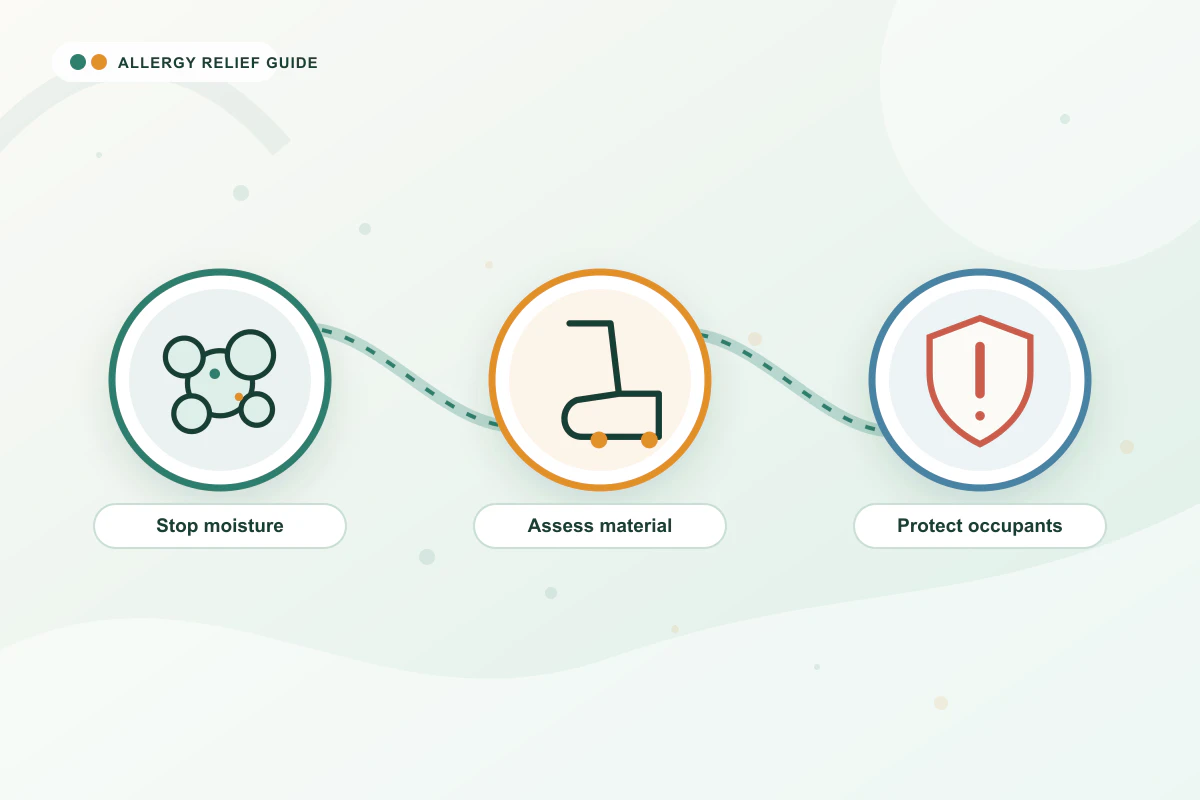
If you have a mold allergy, mold growing in your home is a controllable source of exposure — and the single most important idea is that mold is a moisture problem. Mold spores are everywhere, but they only grow where there's dampness, so controlling moisture is the key to controlling mold. Fix leaks and dry wet areas within 24 to 48 hours, keep indoor humidity below 50%, and clean small mold patches (under about 10 square feet) yourself with detergent and water. Larger mold problems, or major water damage, usually call for professional remediation.
Quick answer
Mold in the home is a controllable source of exposure for people with mold allergy, and the key idea is that mold is a moisture problem — spores only grow where it's damp. Fix leaks and dry wet areas within 24 to 48 hours, keep indoor humidity below 50%, and clean small mold patches (under about 10 square feet) with detergent and water. Larger mold problems or major water damage usually call for professional remediation.
What you need to know
- Mold is fundamentally a moisture problem — spores are everywhere, but they only grow where there's dampness.
- The key to controlling mold is controlling moisture: fix leaks and dry wet areas within 24 to 48 hours.
- Keep indoor humidity below 50% (ideally 30–50%), using air conditioning or a dehumidifier.
- You can usually clean small mold areas yourself — less than about 10 square feet — with detergent and water, drying completely afterward.
- Diluted household bleach (no more than 1 cup per gallon of water) can be used on hard surfaces, but never mix bleach with ammonia or other cleaners.
- Larger mold areas (more than about 10 square feet) or major water damage usually need professional remediation, and the moisture source must be fixed or mold will return.
Mold Is a Moisture Problem
The most useful thing to understand about household mold is that you can't eliminate mold spores — they're naturally everywhere, indoors and out. What you can control is moisture, because mold only grows where it's damp. That reframes the whole task: controlling mold in your home really means controlling water and humidity. This matters for allergies because indoor mold growth is a steady, close-range source of the spores that trigger your symptoms. For the allergy itself, see our mold allergy guide.
Find and Fix the Moisture
- Act fast on water: dry wet or damp materials within 24 to 48 hours of a leak or spill, and in most cases mold won't get a chance to grow
- Keep indoor humidity below 50% (ideally 30–50%) using air conditioning or a dehumidifier, especially in basements
- Fix leaks in roofs, walls, and plumbing, and address condensation on windows and pipes
- Use exhaust fans in bathrooms and kitchens, and ensure clothes dryers vent outside
- Check the usual damp spots: bathrooms, basements, under sinks, and around windows
Because mold follows moisture, fixing the water source is the part that actually prevents regrowth — cleaning mold without fixing the dampness just means it comes back.
Cleaning Small Mold Areas Safely
Small areas you can clean; larger areas need a pro
For a small mold problem — less than about 10 square feet (roughly a 3-foot by 3-foot patch) — you can usually clean it yourself: scrub mold off hard surfaces with detergent and water, then dry completely. Diluted household bleach (no more than about 1 cup of bleach per gallon of water) can be used on hard surfaces, but never mix bleach with ammonia or other cleaners, which can create toxic fumes. Ventilate the area. If you have a mold allergy or asthma, consider having someone else do the cleaning, or wear protection, since disturbing mold releases spores.
When to Get Professional Remediation
Bigger situations call for professionals: mold covering more than about 10 square feet, mold from sewage or major water damage (like flooding), mold inside heating and cooling systems, or a problem that keeps coming back despite cleaning. Whatever the size, the golden rule is the same — the underlying moisture source must be fully fixed, or the mold will return no matter how well you clean. Porous materials that stay moldy (like some drywall, carpet, or ceiling tiles) often need to be removed rather than cleaned. For the broader indoor picture, see our indoor allergens and allergy-proof bedroom guides.
When to seek care
Routine
You have mold allergy and want to reduce indoor mold at its source.
Prompt (within days)
Allergy symptoms that persist despite cleaning up visible mold, or recurring mold you can't control — consider testing and a treatment plan.
Urgent (same day)
Worsening breathing symptoms in a damp or mold-affected space, especially with asthma.
Emergency (call 911)
Severe breathing difficulty or an asthma attack not responding to a reliever inhaler — call 911.
Practical next steps
Safe general steps
- Dry any water damage within 24 to 48 hours to prevent mold growth
- Keep indoor humidity below 50% with air conditioning or a dehumidifier
- Clean small mold areas (under ~10 sq ft) with detergent and water, then dry completely
- Fix the underlying leak or moisture source so mold doesn't return
Actions that need medical guidance
- Mold larger than about 10 square feet, or from sewage or major water damage
- Mold that keeps returning despite cleaning
- Persistent allergy or asthma symptoms in a mold-affected home
Don't attempt without professional advice
- Don't clean mold without fixing the moisture source — it will come back
- Don't mix bleach with ammonia or other cleaners — it can create toxic fumes
- Don't do the mold cleanup yourself if you have mold allergy or asthma without protection — disturbing mold releases spores
Frequently asked questions
How do I get rid of mold in my house?
What humidity prevents mold?
Can I clean mold myself?
Is bleach good for cleaning mold?
How fast does mold grow after water damage?
When do I need professional mold remediation?
Sources
- U.S. EPA — A Brief Guide to Mold, Moisture and Your Home
- ACAAI Patient — Mold Allergies
- MedlinePlus (NIH/NLM) — Allergic rhinitis
Medical disclaimer: This guide is for general education and isn't a substitute for personalized medical advice. It doesn't provide dosing. Always talk to a qualified healthcare professional about your symptoms and treatment.
 MD
MDMedically reviewed
Dr. Hannah H. Walford, MD
Allergist and Immunologist
- Website role
- Owner, Medical Director and Medical Reviewer of Allergy Relief Guide
- Professional affiliation
- Stanford Health Care / Menlo Medical Clinic, Menlo Park, California
- Areas of expertise
- Food allergy, eczema, allergic rhinitis, sinusitis and asthma
Dr. Hannah H. Walford is a board-certified allergist and immunologist experienced in caring for adults and children with allergic conditions. Her areas of expertise include food allergy, eczema, allergic rhinitis, sinusitis and asthma. She provides medical leadership and review oversight for the educational health content published by Allergy Relief Guide.
Medical content is provided for education and is not a substitute for diagnosis or individualized medical care.
Continue building your allergy plan
Explore related guides to understand the full picture, from triggers to treatment to safety.
See the full indoor allergens guide