
Cockroach Allergy: Symptoms and Why It Triggers Asthma
Cockroach allergy is one of the most underappreciated indoor allergens and a major asthma trigger, especially for children in dense urban housing. The allergen comes from cockroach saliva, droppings, shed skins, and body fragments, which accumulate in homes and become airborne. Research has found cockroach allergen can worsen childhood asthma more than dust-mite or pet allergens in many U.S. cities. Symptoms include the usual nasal and eye allergy signs plus, importantly, asthma flares in sensitized people. The most effective response is integrated pest management to reduce both the roaches and their allergen.
Quick answer
Cockroach allergy is a major indoor asthma trigger, especially for children in dense urban housing. The allergen comes from cockroach saliva, droppings, shed skins, and body fragments that accumulate in homes and become airborne. Research has found it can worsen childhood asthma more than dust-mite or pet allergens in many U.S. cities. Symptoms include nasal and eye allergy signs plus asthma flares. The most effective response is integrated pest management to reduce both roaches and allergen.
What you need to know
- Cockroach allergen is a common, potent indoor allergen and a significant asthma trigger.
- It comes from cockroach saliva, droppings (feces), shed skins (cast skins), secretions, and dead body fragments.
- It disproportionately affects children in dense urban housing; research has found it can worsen childhood asthma more than dust-mite or pet allergens in many U.S. cities.
- Symptoms include sneezing, congestion, runny nose, and itchy eyes, and — importantly — asthma symptoms in sensitized people.
- Reducing the allergen means reducing the cockroaches: integrated pest management (IPM) is the most effective approach, and it's been shown to lower allergen levels.
- Allergen reduction can improve asthma outcomes, and studies show it can be as effective as some asthma medications for sensitized, exposed children.
Where Cockroach Allergen Comes From
The allergen isn't just the insect you see — it's the material cockroaches leave behind. Cockroach saliva, droppings, shed skins, secretions, and fragments of dead roaches all contain proteins that trigger allergy. These accumulate in kitchens, bathrooms, and anywhere food and moisture are available, then dry, break into tiny particles, and become airborne or settle into dust. Breathing in or being exposed to these particles is what drives the allergic reaction in sensitized people. It's a leading example of an indoor allergen — see our indoor allergens guide.
Why It Matters So Much for Asthma
Cockroach allergen stands out because of its strong link to asthma, particularly in children living in dense urban housing. Research funded by U.S. health agencies found that among inner-city children with asthma, cockroach allergen worsened symptoms more than dust-mite or pet allergens — children who were both allergic to cockroach and exposed to high levels had notably more asthma-related illness. High cockroach-allergen levels are common in many northeastern U.S. city homes. If you or your child has asthma and lives where cockroaches are present, this allergen deserves particular attention. See our allergic asthma management guide.
Symptoms
- Sneezing, nasal congestion, and a runny nose
- Itchy, watery eyes and an itchy nose or throat
- Coughing and postnasal drip
- Asthma symptoms in sensitized people: wheezing, chest tightness, coughing, and shortness of breath
- Symptoms that persist year-round, since indoor cockroach exposure isn't seasonal
Integrated Pest Management: The Most Effective Step
Because the allergen comes from the insects, the key is reducing the cockroaches themselves through integrated pest management (IPM) — a combined approach that's more effective and lower-risk than spraying pesticide alone. Studies in urban housing have shown IPM can substantially lower cockroach allergen levels. Practical IPM steps include:
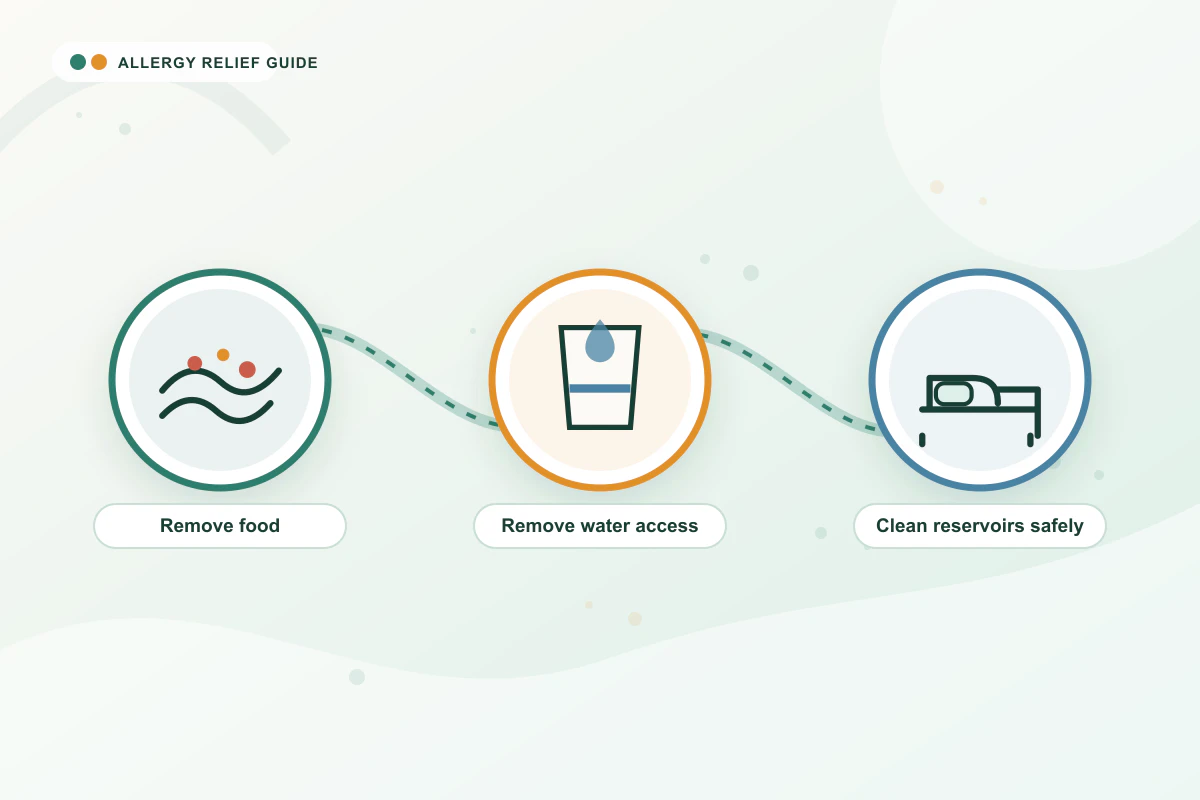
- Deny food and water: store food in sealed containers, clean up crumbs and spills, take out garbage daily, and fix leaky faucets and damp areas
- Seal entry points and hiding places: caulk cracks and crevices where roaches travel and hide
- Use lower-hazard control methods first (like bait stations) rather than broadcast spraying
- Clean thoroughly and regularly: vacuum carpeted areas, damp-mop hard floors, and wipe down counters and surfaces
- For rental or public housing, ask about building-wide pest management, since roaches move between units
Reducing allergen exposure can meaningfully improve asthma, and treating symptoms (antihistamines, nasal sprays, and asthma medications) works alongside pest control. An allergist can confirm cockroach allergy with testing and, in some cases, discuss immunotherapy. See our allergy treatment and allergy testing guides.
When to seek care
Routine
Persistent indoor allergy symptoms where cockroach exposure is possible — consider testing and pest management.
Prompt (within days)
Symptoms that continue despite cleaning and pest control, or that you want confirmed with allergy testing.
Urgent (same day)
Wheezing, chest tightness, or shortness of breath, especially in a child with asthma exposed to cockroach allergen.
Emergency (call 911)
Severe breathing difficulty or an asthma attack not responding to a reliever inhaler — call 911.
Practical next steps
Safe general steps
- Deny cockroaches food and water: sealed food storage, daily garbage removal, and fixing leaks
- Seal cracks and crevices and use lower-hazard control like bait stations first
- Clean thoroughly and regularly — vacuum, damp-mop, and wipe surfaces
- In shared housing, ask about building-wide integrated pest management
Actions that need medical guidance
- Confirming cockroach allergy with testing
- Managing cockroach-triggered asthma, especially in children
- Whether immunotherapy could help
Don't attempt without professional advice
- Don't rely on broadcast pesticide spraying alone — integrated pest management works better and is lower-risk
- Don't ignore cockroach allergen if a child in the home has asthma — it's a strong trigger
- Don't overlook shared-building sources, since roaches move between units
Frequently asked questions
What causes cockroach allergy?
Is cockroach allergy linked to asthma?
What are the symptoms of cockroach allergy?
How do I get rid of cockroach allergen?
Does reducing cockroach allergen help asthma?
Should I just spray for cockroaches?
Sources
- CDC/ATSDR — Environmental Triggers of Asthma
- PMC (NIH) — Effectiveness of an Integrated Pest Management Intervention in Controlling Cockroaches, Mice, and Allergens in NYC Public Housing
- MedlinePlus (NIH/NLM) — Allergic rhinitis
Medical disclaimer: This guide is for general education and isn't a substitute for personalized medical advice. It doesn't provide dosing. Always talk to a qualified healthcare professional about your symptoms and treatment.
 MD
MDMedically reviewed
Dr. Hannah H. Walford, MD
Allergist and Immunologist
- Website role
- Owner, Medical Director and Medical Reviewer of Allergy Relief Guide
- Professional affiliation
- Stanford Health Care / Menlo Medical Clinic, Menlo Park, California
- Areas of expertise
- Food allergy, eczema, allergic rhinitis, sinusitis and asthma
Dr. Hannah H. Walford is a board-certified allergist and immunologist experienced in caring for adults and children with allergic conditions. Her areas of expertise include food allergy, eczema, allergic rhinitis, sinusitis and asthma. She provides medical leadership and review oversight for the educational health content published by Allergy Relief Guide.
Medical content is provided for education and is not a substitute for diagnosis or individualized medical care.
Continue building your allergy plan
Explore related guides to understand the full picture, from triggers to treatment to safety.
See the types of allergies guide