
Cetirizine (Zyrtec): Uses and Cautions
Cetirizine, sold over the counter as Zyrtec, is a second-generation antihistamine used to relieve allergy symptoms — sneezing, runny nose, itchy nose or throat, and itchy, watery eyes — and to treat hives. It works by blocking histamine, the chemical behind allergy symptoms, and is taken once a day. As a second-generation antihistamine it's far less sedating than older options, but it's worth knowing that cetirizine causes mild drowsiness in some people even at the standard dose. One important safety note: if you're using it for hives and develop swelling or trouble breathing, that can signal anaphylaxis and needs emergency care.
Quick answer
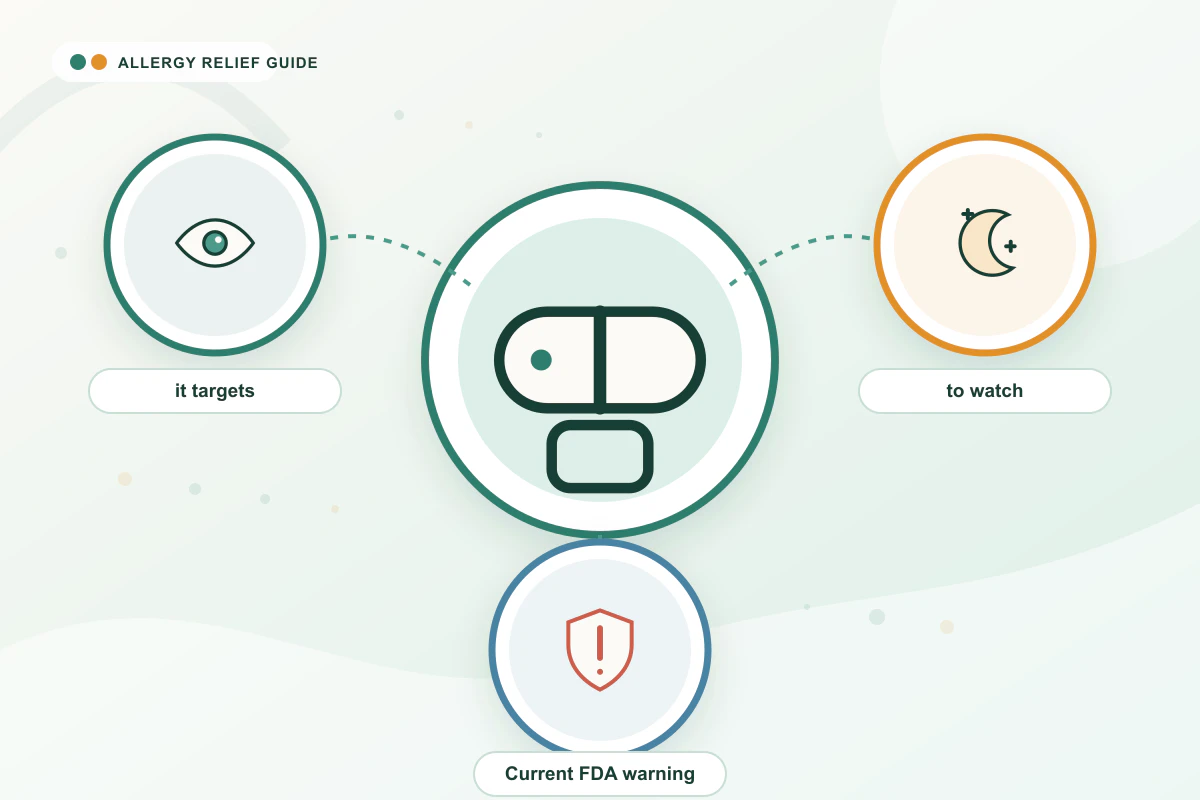
Cetirizine (brand name Zyrtec) is a second-generation antihistamine used to relieve allergy symptoms — sneezing, runny nose, itchy nose/throat, itchy watery eyes — and to treat hives. It blocks histamine and is taken once a day. It's far less sedating than older antihistamines, but causes mild drowsiness in some people even at the standard dose. Safety note: if using it for hives and you develop swelling or trouble breathing, that can signal anaphylaxis and needs emergency care.
What you need to know
- Cetirizine (Zyrtec) is a second-generation antihistamine that blocks histamine to relieve allergy symptoms.
- It's used for allergic rhinitis symptoms (sneezing, runny nose, itchy nose or throat, itchy watery eyes) and for hives (urticaria).
- It's taken once a day, with or without food, and comes as tablets, chewables, dissolving tablets, capsules, and liquid.
- It's much less sedating than first-generation antihistamines, but it does cause mild drowsiness in some people, more than loratadine or fexofenadine.
- Common side effects can include drowsiness and dry mouth; avoid alcohol and use caution with driving until you know how it affects you.
- Cetirizine treats hives but is not a substitute for epinephrine — swelling or trouble breathing can signal anaphylaxis and needs emergency care.
What Cetirizine Is and How It Works
Cetirizine is an antihistamine — a medicine that blocks the H1 histamine receptor. Histamine is the chemical your immune system releases during an allergic reaction, and it's responsible for the sneezing, itching, runny nose, and watery eyes you feel. By blocking histamine's action, cetirizine reduces those symptoms. It belongs to the "second generation" of antihistamines, which were designed to work mainly in the body rather than the brain, so they cause much less drowsiness than older ("first-generation") options like diphenhydramine. For the whole class, see our antihistamines guide.
What It's Used For
- Allergic rhinitis symptoms: sneezing; runny nose; itching of the nose or throat; and red, itchy, or watery eyes
- Hives (urticaria): itchy, raised welts on the skin
- Both seasonal (like pollen) and year-round (like dust mites or pet dander) allergy symptoms
It's taken once a day, with or without food, and is available in several forms including tablets, chewables, orally disintegrating tablets, capsules, and liquid.
Drowsiness and Side Effects
Cetirizine is much less sedating than first-generation antihistamines, but it's worth being honest that it's not always completely non-drowsy: some people do feel mild drowsiness on it, even at the standard dose, and it's a bit more likely to cause this than loratadine (Claritin) or fexofenadine (Allegra). Common side effects can include drowsiness and dry mouth. Until you know how it affects you, use caution with driving or operating machinery, and avoid combining it with alcohol, which adds to any sedation. For how it stacks up against other options, see Claritin vs. Zyrtec, Zyrtec vs. Allegra, and antihistamine side effects.
Important Safety Note for Hives
Cetirizine is not a substitute for epinephrine
If you're taking cetirizine to treat hives and you develop difficulty swallowing, speaking, or breathing; swelling in or around the mouth or of the tongue; wheezing; drooling; dizziness; or loss of consciousness, these can be signs of anaphylaxis — a severe allergic reaction. Use your epinephrine auto-injector if you have one and call 911 right away. An antihistamine pill does not treat anaphylaxis.
As always, this page is general education and doesn't provide dosing — follow the product label and ask a pharmacist or clinician about your situation, including use in children, pregnancy, or alongside other medications. See our anaphylaxis guide for severe-reaction signs.
The hives instruction, with the actual numbers
The safety note above covers the emergency case. There is a second, quieter instruction for hives that is easy to miss, because nothing dramatic happens when you pass it.
MedlinePlus is specific: “stop taking cetirizine and call your doctor if your hives do not improve during the first 3 days of your treatment or if your hives last longer than 6 weeks”. Two thresholds, both easy to sail past while assuming the medicine simply needs more time.
The six-week mark is not arbitrary. A clinical review of urticaria defines the split as “acute spontaneous urticaria lasts fewer than 6 weeks, whereas chronic spontaneous urticaria persists for 6 weeks or longer”. Crossing it changes the problem from a reaction that will settle into a condition with its own assessment and its own treatment ladder.
That is why continuing to buy boxes past six weeks is the wrong move even when the tablets partly help: the useful step is an appointment. See our guides to hives and urticaria and antihistamines for hives.
- No improvement in the first 3 days of treatment: stop and call your doctor
- Hives lasting longer than 6 weeks: stop and call your doctor
- Beyond six weeks it is classed as chronic urticaria, not a stubborn reaction
- Partial relief is not a reason to keep self-treating past that point
- Emergency signs are covered in the safety note above and need epinephrine, not a tablet
Kidneys, liver, and the questions nobody asks at the till
Buying an antihistamine over the counter means nobody takes a history first. For cetirizine there are two organ questions worth answering honestly before you start.
MedlinePlus advises telling your doctor “if you have or have ever had kidney or liver disease”. Both matter, because how much of a dose remains active depends on how well the body clears it, and a problem with either route changes that.
This is not uniform across the group, which is worth knowing if you are choosing between options. The equivalent guidance for levocetirizine centres on kidney function, while loratadine carries the same two-organ question as cetirizine. Same class, different checks.
We do not publish adjusted amounts, because those depend on measured organ function and the specific product, and they are a prescriber or pharmacist decision. The point of this section is simply that the question exists and is worth raising, especially when nobody prompts you.
Alcohol and driving: the wording here is stricter
Guidance on alcohol varies between antihistamines more than people expect, and cetirizine sits at the firmer end.
MedlinePlus states that “alcohol can add to the drowsiness caused by this medication” and instructs: “avoid drinking alcoholic beverages while taking this medication”. That is an instruction rather than a suggestion to be careful, and it is stronger than the wording attached to some alternatives, which advise asking your doctor about safe use.
On driving it is equally direct: “cetirizine may make you drowsy. Do not drive a car or operate machinery until you know how this medication affects you.” The qualifier matters — until you know how it affects you, not until you feel alert, since those are different tests.
This fits what the wider evidence says about this particular drug: cetirizine is a second-generation antihistamine, but among that group it is one of the more likely to cause mild drowsiness in some people. See antihistamines and alcohol.
When to seek care
Routine
You're using cetirizine for routine allergy symptoms and it's working well.
Prompt (within days)
Allergy symptoms not controlled by a standard once-daily dose, or bothersome drowsiness or dry mouth.
Urgent (same day)
Significant drowsiness affecting your ability to work or drive, especially if combined with other sedating substances.
Emergency (call 911)
Signs of anaphylaxis — swelling of the lips, tongue, or throat, trouble breathing, widespread hives with dizziness. Use epinephrine if prescribed and call 911; cetirizine is not enough.
Practical next steps
Safe general steps
- Take cetirizine once daily as directed on the label
- See how it affects you before driving or operating machinery
- Avoid alcohol while taking it, since it can add to any drowsiness
- Try a different second-generation antihistamine if drowsiness is a problem
Actions that need medical guidance
- Using cetirizine for children, in pregnancy, or with other medications
- Allergy symptoms not controlled by a standard dose
- Any use of cetirizine for hives where symptoms are severe or spreading
Don't attempt without professional advice
- Don't rely on cetirizine to treat a severe allergic reaction — that needs epinephrine and 911
- Don't double the dose on your own if it isn't working — ask a pharmacist
- Don't combine it with alcohol and then drive
Frequently asked questions
What is cetirizine used for?
Does cetirizine make you drowsy?
How often do you take cetirizine?
Is cetirizine the same as Zyrtec?
Can I drink alcohol while taking cetirizine?
Can cetirizine treat a severe allergic reaction?
How long should I take cetirizine for hives before calling a doctor?
What changes after six weeks of hives?
Does cetirizine need a kidney or liver check?
Can I drink alcohol while taking cetirizine?
Is it safe to drive after taking cetirizine?
Sources
- MedlinePlus (NIH/NLM) — Cetirizine
- NCBI Bookshelf (NIH) — Chronic Urticaria — StatPearls
- StatPearls (NCBI/NIH) — Antihistamines
- Cleveland Clinic — Antihistamine Types & Side Effects
Medical disclaimer: This guide is for general education and isn't a substitute for personalized medical advice. It doesn't provide dosing. Always talk to a qualified healthcare professional about your symptoms and treatment.
 MD
MDMedically reviewed
Dr. Hannah H. Walford, MD
Allergist and Immunologist
- Website role
- Owner, Medical Director and Medical Reviewer of Allergy Relief Guide
- Professional affiliation
- Stanford Health Care / Menlo Medical Clinic, Menlo Park, California
- Areas of expertise
- Food allergy, eczema, allergic rhinitis, sinusitis and asthma
Dr. Hannah H. Walford is a board-certified allergist and immunologist experienced in caring for adults and children with allergic conditions. Her areas of expertise include food allergy, eczema, allergic rhinitis, sinusitis and asthma. She provides medical leadership and review oversight for the educational health content published by Allergy Relief Guide.
Medical content is provided for education and is not a substitute for diagnosis or individualized medical care.
Continue building your allergy plan
Explore related guides to understand the full picture, from triggers to treatment to safety.
See the full antihistamines guide