
Loratadine (Claritin): Uses and Cautions
Loratadine, sold over the counter as Claritin, is a second-generation antihistamine used to relieve allergy symptoms — sneezing, runny nose, itchy nose or throat, and itchy, watery eyes — and to treat hives. It's taken once a day and is one of the least sedating antihistamines, which makes it a popular choice for daytime use. It tends to start working within a few hours and lasts about 24 hours. As with any antihistamine, it relieves allergy symptoms but is not a treatment for a severe allergic reaction.
Quick answer
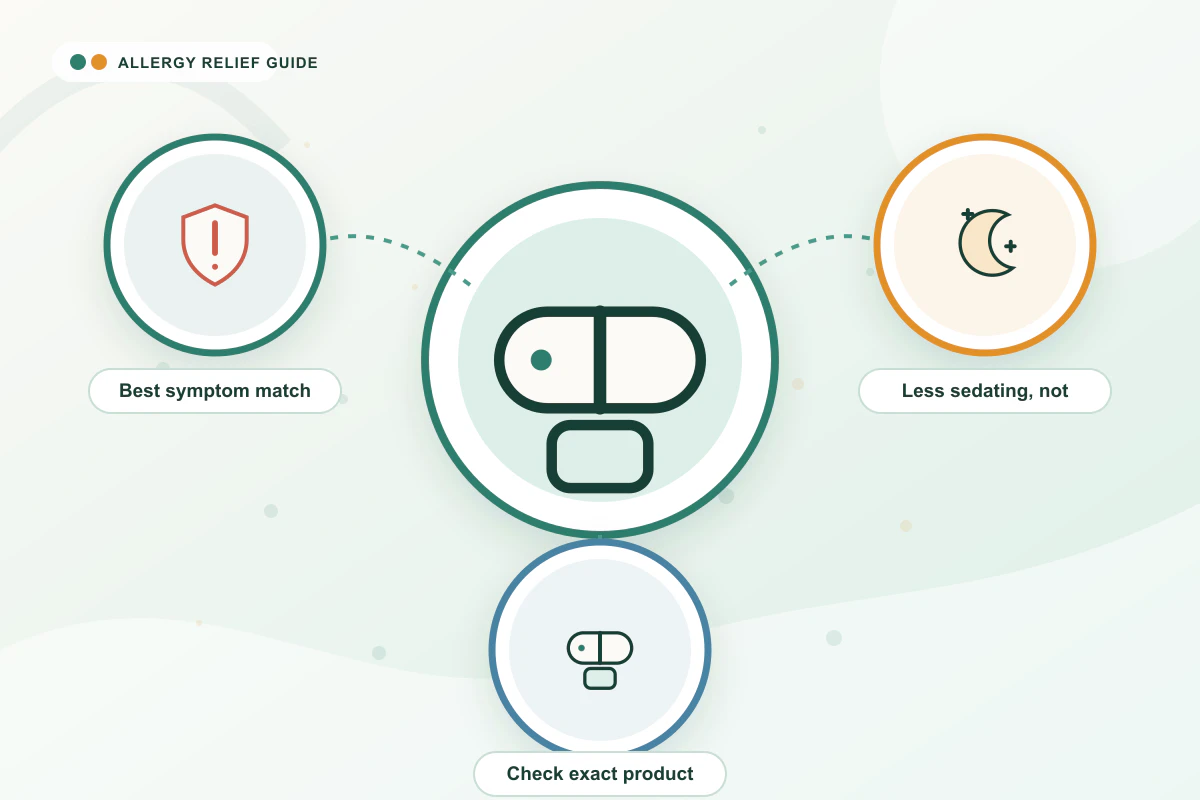
Loratadine (brand name Claritin) is a second-generation antihistamine used to relieve allergy symptoms — sneezing, runny nose, itchy nose or throat, itchy watery eyes — and to treat hives. It's taken once a day and is one of the least sedating antihistamines, popular for daytime use. It tends to start working within a few hours and lasts about 24 hours. Like any antihistamine, it's not a treatment for a severe allergic reaction.
What you need to know
- Loratadine (Claritin) is a second-generation antihistamine that blocks histamine to relieve allergy symptoms and hives.
- It's one of the least sedating antihistamines, making it a common choice for daytime use.
- It's taken once a day, with or without food, and comes as tablets, chewables, dissolving tablets, capsules, and liquid.
- It tends to start working within a few hours (often about 1 to 3 hours) and lasts about 24 hours.
- Tell your clinician if you have kidney or liver disease, or are pregnant or breastfeeding, before use.
- Like all antihistamines, it's not a substitute for epinephrine in a severe allergic reaction (anaphylaxis).
What Loratadine Is and Treats
Loratadine is an antihistamine that blocks the H1 histamine receptor to reduce allergy symptoms. It's used for allergic rhinitis — sneezing, runny nose, itching of the nose or throat, and red, itchy, watery eyes — and for hives (urticaria). As a second-generation antihistamine, it's designed to work mainly in the body rather than the brain, which is why it causes little drowsiness. It comes in several forms and is taken once a day. For the whole class, see our antihistamines guide.
Non-Drowsy, and How Fast It Works
Loratadine's main selling point is that it's among the least sedating antihistamines, so it's a good option when you need daytime allergy relief without grogginess. On timing, it tends to start working within a few hours — often about one to three hours — and lasts about 24 hours with once-daily dosing. That's slightly slower to kick in than cetirizine (Zyrtec), which usually works within about an hour, but loratadine is a bit less likely to cause drowsiness. For the timing question specifically, see our how long does Zyrtec (and Claritin) take to work? guide, and for comparisons, Claritin vs. Zyrtec and Claritin vs. Allegra.
How to Use It Well
- Take it once daily, at roughly the same time each day, for ongoing allergies
- For seasonal allergies, starting before your symptoms peak tends to work better than catching up
- Follow the label for the right product and age — there are children's formulations
- If a standard dose isn't controlling symptoms, ask a pharmacist rather than doubling up — a different antihistamine or a nasal corticosteroid spray may work better
See our nasal sprays for allergies guide for what to add if an antihistamine alone isn't enough.
Safety Notes
Loratadine is generally well tolerated with little drowsiness, though some people can have mild side effects like headache. Tell your clinician if you have kidney or liver disease, or if you're pregnant or breastfeeding, before using it, and check with a pharmacist about use in children or alongside other medications — this page doesn't provide dosing. And an important reminder: loratadine treats allergy symptoms and hives but is not a treatment for a severe allergic reaction — for anaphylaxis (trouble breathing, swelling of the lips, tongue, or throat, widespread hives with dizziness), use an epinephrine auto-injector if you have one and call 911. See our anaphylaxis guide.
The formats are not all the same
Loratadine is sold as standard tablets, chewables and liquids, and they are usually treated as interchangeable conveniences. For one group of people they are not.
MedlinePlus notes that “if you have phenylketonuria (PKU, an inherited condition in which a special diet must be followed to prevent damage to your brain that can cause severe intellectual disability), you should know that the chewable tablets may contain aspartame that forms phenylalanine”.
The detail worth holding onto is that this applies to the chewable form specifically, not to loratadine as a drug. Someone with PKU is not necessarily ruled out from the medicine; they need to check which format they are buying, and chewables are exactly the ones a parent is most likely to pick up for a child.
The wider habit this points to is reading the format as carefully as the strength. Two boxes with the same brand name on the front can differ in what else is in them.
- Chewable tablets may contain aspartame, which forms phenylalanine
- This matters specifically for anyone with phenylketonuria
- Check the format, not just the brand and the active ingredient
- Chewables are often the format chosen for children — see allergies in children
- A pharmacist can point you to a suitable format in one question
Liver and kidneys: two questions, not one
Second-generation antihistamines differ in what clears them, which is why the checks are not identical across the group. For loratadine, MedlinePlus asks about both organs: “tell your doctor if you have or have ever had kidney or liver disease”.
That is a wider question than the one attached to some alternatives, where kidney function alone is the usual concern. How much of a dose remains active in the body depends on how well it is cleared, so a problem with either route can change what is appropriate.
We do not publish adjusted amounts. Those depend on measured organ function and on the specific product, and they are a prescriber or pharmacist decision rather than something to calculate from a website. What this page can usefully say is that the question exists, and that it is worth raising even when buying over the counter, where nobody will ask you.
- Mention any liver disease, current or past
- Mention any kidney disease, current or past
- Raise it again if either changes or new medicines are added
- Do not assume a standard pack is automatically right for you
- Compare with levocetirizine, where kidney function is the main check
Hives that will not settle are a different problem
MedlinePlus notes loratadine “has also been used to treat itching and redness caused by hives”, and for a short-lived outbreak that is often the end of the story. Duration is what changes the question.
A clinical review of urticaria draws the line clearly: “acute spontaneous urticaria lasts fewer than 6 weeks, whereas chronic spontaneous urticaria persists for 6 weeks or longer”. Past that point it is not a stubborn version of the same thing; it is a condition with its own assessment and its own treatment ladder.
That matters practically because continuing to buy an antihistamine month after month can substitute for getting the problem looked at. If hives are still appearing after six weeks, the useful step is an appointment rather than another box. See our guides to hives and urticaria and antihistamines for hives.
When to seek care
Routine
You're using loratadine for routine allergy symptoms and it's working well.
Prompt (within days)
Allergy symptoms not controlled by a standard once-daily dose — consider switching or adding a nasal spray.
Urgent (same day)
Allergy symptoms with wheezing, chest tightness, or shortness of breath, especially with asthma.
Emergency (call 911)
Signs of anaphylaxis — swelling of the lips, tongue, or throat, trouble breathing, widespread hives with dizziness. Use epinephrine if prescribed and call 911; loratadine is not enough.
Practical next steps
Safe general steps
- Take loratadine once daily, ideally at the same time each day
- Start before your allergy season when you can, since prevention works better
- Choose the right product and dose for your age per the label
- Give it a few hours to start working; it lasts about 24 hours
Actions that need medical guidance
- Use if you have kidney or liver disease, or are pregnant or breastfeeding
- Symptoms not controlled by a standard dose
- Use in children or alongside other medications
Don't attempt without professional advice
- Don't double the dose on your own if it isn't working — ask a pharmacist about better options
- Don't rely on it to treat a severe allergic reaction — that needs epinephrine and 911
- Don't assume 'non-drowsy' means no side effects — mild ones can occur
Frequently asked questions
What is loratadine used for?
Is loratadine (Claritin) non-drowsy?
How long does loratadine take to work?
How often do you take loratadine?
Is loratadine the same as Claritin?
Can loratadine treat a severe allergic reaction?
Do loratadine chewable tablets contain aspartame?
Does loratadine need a liver or kidney check?
How long should I keep taking loratadine for hives?
Is the chewable version as good as the tablet?
Should I mention loratadine to a pharmacist if I buy it over the counter?
Sources
- MedlinePlus (NIH/NLM) — Loratadine
- NCBI Bookshelf (NIH) — Chronic Urticaria — StatPearls
- StatPearls (NCBI/NIH) — Antihistamines
- Cleveland Clinic — Antihistamine Types & Side Effects
Medical disclaimer: This guide is for general education and isn't a substitute for personalized medical advice. It doesn't provide dosing. Always talk to a qualified healthcare professional about your symptoms and treatment.
 MD
MDMedically reviewed
Dr. Hannah H. Walford, MD
Allergist and Immunologist
- Website role
- Owner, Medical Director and Medical Reviewer of Allergy Relief Guide
- Professional affiliation
- Stanford Health Care / Menlo Medical Clinic, Menlo Park, California
- Areas of expertise
- Food allergy, eczema, allergic rhinitis, sinusitis and asthma
Dr. Hannah H. Walford is a board-certified allergist and immunologist experienced in caring for adults and children with allergic conditions. Her areas of expertise include food allergy, eczema, allergic rhinitis, sinusitis and asthma. She provides medical leadership and review oversight for the educational health content published by Allergy Relief Guide.
Medical content is provided for education and is not a substitute for diagnosis or individualized medical care.
Continue building your allergy plan
Explore related guides to understand the full picture, from triggers to treatment to safety.
See the full antihistamines guide