Allergy Symptoms in Adults, Including Adult-Onset Allergies
Adults can have the same allergy symptoms as anyone — sneezing, congestion, itchy or watery eyes, hives, or, with food and other allergens, more serious reactions — but two things stand out at this age. First, allergies can start for the first time in adulthood; you don't have to have had them as a child. Second, adults often mistake allergy symptoms for a lingering cold, sinus problems, or fatigue. New or persistent symptoms that follow a pattern (a season, a pet, a food) are worth evaluating, because identifying the trigger guides treatment.
Quick answer
Adults have the same allergy symptoms as anyone — sneezing, congestion, itchy or watery eyes, hives, or more serious reactions with food and other allergens — but two things stand out. Allergies can start for the first time in adulthood, and adults often mistake them for a lingering cold, sinus trouble, or fatigue. New or persistent symptoms that follow a pattern (a season, a pet, a food) are worth evaluating, since identifying the trigger guides treatment.
What you need to know
- Adult allergy symptoms include sneezing, nasal congestion, runny nose, itchy or watery eyes, an itchy throat, hives or rashes, and, with some allergens, more serious reactions.
- Allergies can develop for the first time in adulthood — so-called adult-onset allergies — even if you had none as a child.
- Food allergies make up a large share of adult-onset allergies; shellfish, tree nuts, and peanuts are common adult food triggers.
- The exact reasons adults develop new allergies aren't fully understood, but new exposures, environment and lifestyle changes, genetics, and immune-system changes are thought to contribute.
- Adults often mistake allergy symptoms for a lingering cold, sinus infection, or general fatigue — a pattern (season, pet, food) is a clue it's allergy.
- A severe reaction (anaphylaxis) is a medical emergency; new or persistent symptoms otherwise deserve evaluation to pinpoint the trigger.
What Allergy Symptoms Look Like in Adults
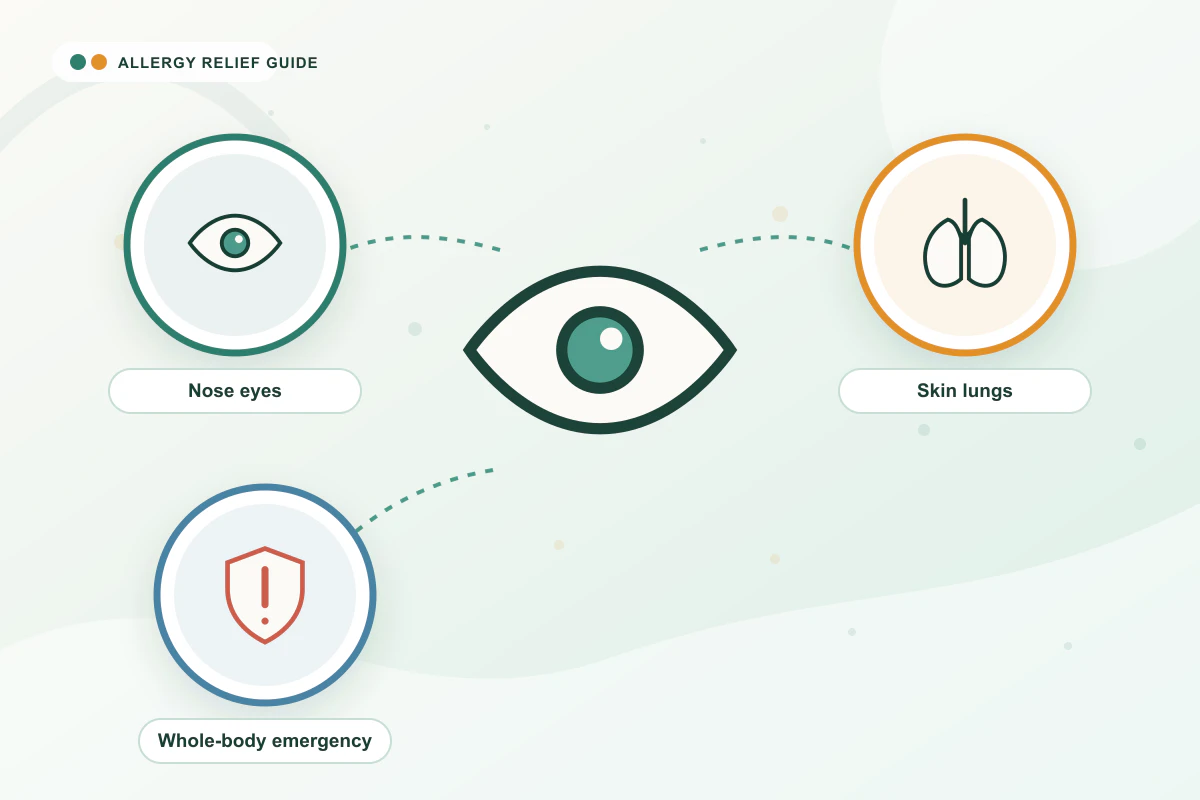
The core allergy symptoms don't change with age. In adults they commonly include sneezing, a runny or congested nose, itchy or watery eyes, an itchy nose or throat, and postnasal drip — the picture of allergic rhinitis. Skin reactions like hives or eczema flares can occur, and food, medication, or insect allergies can cause anything from mild symptoms to severe, whole-body reactions. Where symptoms show up largely depends on how you meet the allergen — breathed-in allergens hit the nose and eyes, while eaten or injected ones can affect the skin, gut, or whole body. For the full symptom rundown, see our allergy symptoms guide.
Yes, Allergies Can Start in Adulthood
A common misconception is that if you didn't have allergies as a child, you never will. In reality, allergies can appear for the first time in adulthood. Food allergies in particular make up a large share of adult-onset cases — shellfish, tree nuts, and peanuts are among the more common adult food triggers — and adults can also newly develop environmental allergies to things like pollen, dust mites, or a pet. The exact reasons aren't fully understood, but researchers point to factors such as new or changed exposures, environmental and lifestyle changes, genetics and family history, and shifts in the immune system over time.
Don't Mistake It for Something Else
Because adult life is busy, allergy symptoms often get written off as a cold that "won't quit," recurring sinus problems, or just being run-down. A few clues point toward allergy: symptoms that last longer than a typical cold (beyond a week or two), that recur at the same time each year or around a specific exposure, that itch (colds don't usually itch), and that come without fever. Allergies can also cause real fatigue and brain fog. See our comparison guides on allergies vs. a cold and allergies vs. a sinus infection, and our allergy fatigue guide.
When to Get It Checked
New or persistent symptoms that follow a pattern are worth an evaluation, because pinning down the trigger is what makes treatment effective — whether that's avoidance, medication, or immunotherapy. An allergist can test and interpret results alongside your history; see our allergy testing and find an allergist guides. Take any reaction with swelling, breathing difficulty, or widespread hives seriously, since food, drug, and insect allergies in adults can be severe. Older adults have some extra medication considerations too — see our allergies in older adults guide.
When to seek care
Routine
New or ongoing symptoms that follow a seasonal or exposure pattern and you'd like to identify and manage.
Prompt (within days)
Symptoms lasting longer than a typical cold, recurring seasonally, or not controlled by over-the-counter treatment.
Urgent (same day)
A reaction to a food, medication, or insect sting that involved hives or swelling, even if it resolved — get it evaluated and a plan.
Emergency (call 911)
Signs of anaphylaxis — trouble breathing, swelling of the lips, tongue, or throat, widespread hives with dizziness — use epinephrine if prescribed and call 911.
Practical next steps
Safe general steps
- Track your symptoms, timing, and any suspected triggers (season, pet, food)
- Note whether symptoms itch, lack fever, and outlast a typical cold — clues toward allergy
- Try appropriate over-the-counter allergy treatment for mild nasal or eye symptoms
- See an allergist for testing if symptoms are persistent or the trigger is unclear
Actions that need medical guidance
- Identifying a new adult-onset trigger through testing
- Any reaction to a food, medication, or insect sting
- Symptoms not controlled by over-the-counter treatment
Don't attempt without professional advice
- Don't assume you can't develop allergies as an adult — you can
- Don't dismiss persistent, itchy, fever-free symptoms as just a lingering cold
- Don't ignore any reaction with swelling or breathing difficulty — that can be an emergency
Frequently asked questions
What are common allergy symptoms in adults?
Can you develop allergies as an adult?
Why did I suddenly develop allergies as an adult?
Which food allergies are most common in adults?
How can I tell allergy symptoms from a lingering cold?
When should an adult see a doctor about allergies?
Sources
- MedlinePlus (NIH/NLM) — Allergies
- ACAAI Patient — New Study Examines Factors Related to Adult-Onset Food Allergy
- MedlinePlus (NIH/NLM) — Allergic rhinitis
Medical disclaimer: This guide is for general education and isn't a substitute for personalized medical advice. It doesn't provide dosing. Always talk to a qualified healthcare professional about your symptoms and treatment.
 MD
MDMedically reviewed
Dr. Hannah H. Walford, MD
Allergist and Immunologist
- Website role
- Owner, Medical Director and Medical Reviewer of Allergy Relief Guide
- Professional affiliation
- Stanford Health Care / Menlo Medical Clinic, Menlo Park, California
- Areas of expertise
- Food allergy, eczema, allergic rhinitis, sinusitis and asthma
Dr. Hannah H. Walford is a board-certified allergist and immunologist experienced in caring for adults and children with allergic conditions. Her areas of expertise include food allergy, eczema, allergic rhinitis, sinusitis and asthma. She provides medical leadership and review oversight for the educational health content published by Allergy Relief Guide.
Medical content is provided for education and is not a substitute for diagnosis or individualized medical care.
Continue building your allergy plan
Explore related guides to understand the full picture, from triggers to treatment to safety.
See the full allergy symptoms guide