Allergies and Ear Pressure: Causes and How to Relieve It
Allergies can cause ear pressure, fullness, or a clogged feeling because of the Eustachian tubes — the small tubes connecting the middle ear to the back of the throat. When allergic rhinitis inflames and swells the nasal lining, it can block these tubes, so the ear can't equalize pressure normally. The result is fullness, muffled hearing, popping or clicking, and sometimes mild pain. Managing the underlying nasal allergies — with saline rinses, nasal steroid sprays, and antihistamines — is usually the key, and simple maneuvers like yawning or swallowing can offer quick relief.
Quick answer
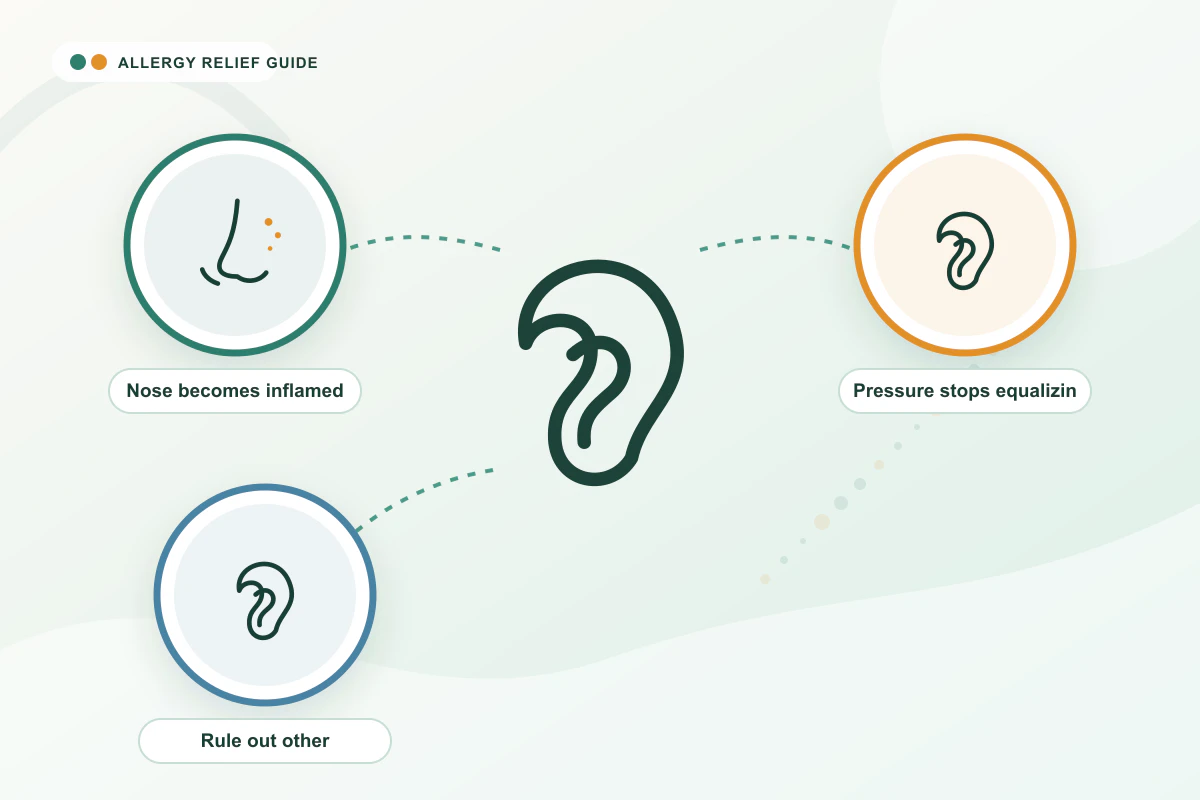
Allergies cause ear pressure through the Eustachian tubes, which connect the middle ear to the throat. When allergic rhinitis swells the nasal lining, it can block these tubes so the ear can't equalize pressure, causing fullness, muffled hearing, popping, or mild pain. Managing the underlying nasal allergies (saline rinses, nasal steroid sprays, antihistamines) is usually the key, and maneuvers like yawning or swallowing can give quick relief.
What you need to know
- Allergy-related ear pressure usually comes from Eustachian tube dysfunction — the tubes connecting the middle ear to the throat get blocked.
- Allergic rhinitis inflames and swells the nasal lining and the Eustachian tube openings, and extra mucus adds to the blockage.
- Symptoms include ear fullness or pressure, muffled hearing (like being underwater), popping or clicking, mild pain, and sometimes ringing.
- Relief usually focuses on treating the underlying nasal allergies with saline rinses, nasal steroid sprays, and antihistamines.
- Simple maneuvers — yawning, swallowing, chewing gum, or the gentle Valsalva maneuver — can help open the tubes and ease pressure.
- Eustachian tube dysfunction often clears on its own within a week or two; persistent symptoms, pain, or hearing loss warrant a clinician's evaluation.
Why Allergies Cause Ear Pressure
Each middle ear connects to the back of your throat through a narrow passage called the Eustachian tube, which normally opens and closes to equalize air pressure and drain fluid. When allergic rhinitis inflames and swells the nasal lining, that swelling — plus increased mucus — can block the Eustachian tube openings. When the tube can't open properly, pressure builds up behind the eardrum and you feel fullness, clogging, or muffled hearing. This is called Eustachian tube dysfunction, and allergies are one of its common inflammatory triggers.
What It Feels Like
- Fullness or pressure in one or both ears
- Muffled hearing, sometimes described as feeling like you're underwater
- Popping or clicking sounds
- Mild ear pain or discomfort
- Ringing in the ears (tinnitus) or a sense of imbalance in some cases
These sensations often accompany other allergy symptoms like a stuffy or runny nose and sneezing, which is a clue that allergies may be the driver.
Home Relief Measures
Because allergy-related ear pressure usually stems from nasal inflammation, relief measures target both the ears and the underlying congestion:
- Try gentle maneuvers to open the tubes: yawning, swallowing, or chewing gum
- The Valsalva maneuver — gently breathing out with your mouth closed and nostrils pinched — can help equalize pressure (do it gently)
- Use saline nasal sprays or rinses to clear nasal passages
- A warm compress on the ear may ease discomfort
- Address the underlying allergies (see below), since that's often what keeps the tube blocked
Treating the Underlying Allergies
The most effective long-term approach is usually calming the nasal allergy that's blocking the tube in the first place. Options commonly used include nasal corticosteroid sprays, antihistamines, and saline irrigation, and for some people longer-term measures like immunotherapy. These are the same tools used for allergic rhinitis generally — see our allergic rhinitis and allergy treatment guides. Note that overusing over-the-counter decongestant nasal sprays for more than a few days can worsen congestion, so use those only as directed. If your ears don't improve as your nasal symptoms settle, that's worth a clinician's look.
When to seek care
Routine
Mild ear fullness that comes with your usual allergy symptoms and eases with home measures.
Prompt (within days)
Ear pressure lasting more than about 1 to 2 weeks, or that doesn't improve as your nasal allergy symptoms settle.
Urgent (same day)
Significant ear pain, drainage from the ear, or noticeable hearing loss.
Emergency (call 911)
Sudden severe hearing loss, high fever with severe ear pain, or dizziness with severe symptoms — seek urgent medical care. (Allergy-related ear pressure itself is not usually an emergency.)
Practical next steps
Safe general steps
- Try yawning, swallowing, or chewing gum to open the Eustachian tubes
- Use saline nasal sprays or rinses to clear congestion
- Treat the underlying nasal allergies (nasal steroid spray, antihistamine) as directed
- Give it a week or two, since Eustachian tube dysfunction often resolves on its own
Actions that need medical guidance
- Ear pressure or fullness lasting beyond 1 to 2 weeks
- Choosing between nasal sprays, antihistamines, or other treatments
- Recurrent ear problems that may be allergy-driven
Don't attempt without professional advice
- Don't use over-the-counter decongestant nasal sprays for more than a few days in a row, which can worsen congestion
- Don't force a hard Valsalva maneuver — do it gently
- Don't ignore ear pain, drainage, or hearing loss — get those evaluated
Frequently asked questions
Can allergies cause ear pressure?
What is Eustachian tube dysfunction?
How do I relieve allergy-related ear pressure?
How long does allergy ear pressure last?
Should I use decongestant nasal spray for clogged ears from allergies?
When should I see a doctor for ear pressure?
Sources
- Cleveland Clinic — Eustachian Tube Dysfunction: Symptoms, Causes & Treatment
- MedlinePlus (NIH/NLM) — Allergic rhinitis
- PMC (NIH) — Eustachian tube dysfunction in patients with house dust mite-allergic rhinitis
Medical disclaimer: This guide is for general education and isn't a substitute for personalized medical advice. It doesn't provide dosing. Always talk to a qualified healthcare professional about your symptoms and treatment.
 MD
MDMedically reviewed
Dr. Hannah H. Walford, MD
Allergist and Immunologist
- Website role
- Owner, Medical Director and Medical Reviewer of Allergy Relief Guide
- Professional affiliation
- Stanford Health Care / Menlo Medical Clinic, Menlo Park, California
- Areas of expertise
- Food allergy, eczema, allergic rhinitis, sinusitis and asthma
Dr. Hannah H. Walford is a board-certified allergist and immunologist experienced in caring for adults and children with allergic conditions. Her areas of expertise include food allergy, eczema, allergic rhinitis, sinusitis and asthma. She provides medical leadership and review oversight for the educational health content published by Allergy Relief Guide.
Medical content is provided for education and is not a substitute for diagnosis or individualized medical care.
Continue building your allergy plan
Explore related guides to understand the full picture, from triggers to treatment to safety.
See the full allergy symptoms guide