Allergies and Sinusitis: How They're Connected
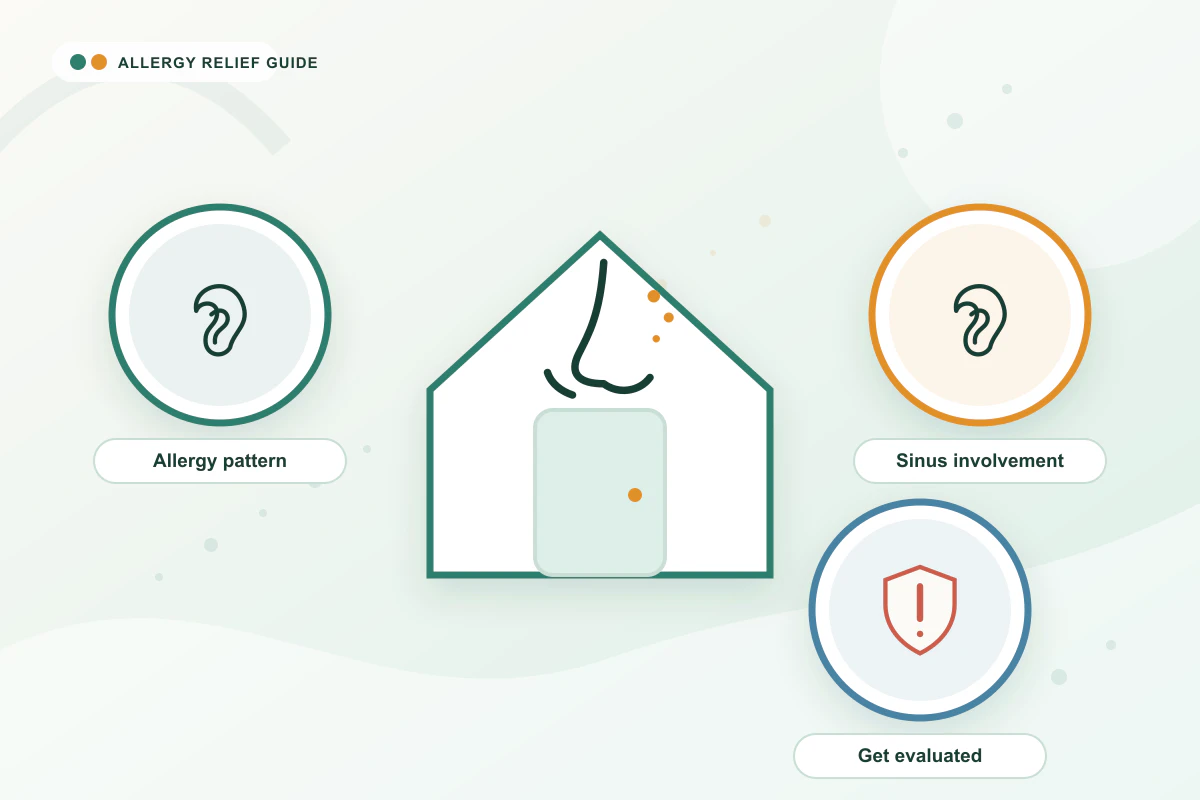
Allergies and sinusitis are closely linked. Allergic rhinitis inflames and swells the nasal lining, which can block the small openings that let the sinuses drain, and blocked, poorly draining sinuses are more prone to infection. That's why allergic rhinitis is recognized as a risk factor for recurrent and chronic sinusitis. The practical takeaway is that treating the underlying allergies — not just each sinus infection as it comes — can be part of preventing sinus problems. This page is about the connection; to tell an allergy flare from an actual sinus infection, see our comparison guide.
Quick answer
Allergic rhinitis inflames and swells the nasal lining, which can block the small openings that drain the sinuses, and poorly draining sinuses are more prone to infection. That's why allergic rhinitis is recognized as a risk factor for recurrent and chronic sinusitis. Treating the underlying allergies — not just each sinus infection as it comes — can be part of preventing sinus problems.
What you need to know
- Allergic rhinitis (nasal allergies) and sinusitis (sinus inflammation or infection) are closely connected.
- Allergy-related nasal swelling can block the small drainage openings of the sinuses, and blocked sinuses are more prone to infection.
- Allergic rhinitis is recognized as a risk factor for recurrent and chronic sinusitis.
- People with allergies may also have more sinus trouble during ordinary colds because of impaired sinus function.
- Because of this link, treating the underlying allergies can be part of preventing repeated sinus infections.
- Telling an allergy flare apart from an active sinus infection is a separate question — see our allergies vs. sinus infection guide.
How Allergies Set the Stage for Sinusitis
Your sinuses are air-filled spaces in the bones around your nose that drain into the nasal passages through small openings. When allergic rhinitis inflames and swells the nasal lining, it can narrow or block those openings, so mucus that would normally drain freely gets trapped. Stagnant, trapped mucus in a poorly ventilated sinus is a setup for infection — which is one of the main ways ongoing allergies can lead to sinusitis. In short, the allergy doesn't directly "become" an infection, but it creates the blocked-drainage conditions that make one more likely.
Allergic Rhinitis as a Risk Factor
Research links allergic rhinitis with a higher likelihood of chronic and recurrent sinus disease. Studies have found sinusitis to be substantially more common in people with allergies than in those without, and allergic rhinitis has been identified as an independent risk factor for sinus problems recurring, including after sinus surgery in children. People with allergic rhinitis also tend to have more impaired sinus function during ordinary viral colds than people without allergies, which can make a routine cold more likely to tip into a sinus infection.
A Two-Way Relationship
- Allergy-driven nasal swelling blocks sinus drainage, encouraging infection
- Sinus congestion and inflammation can, in turn, worsen how your nose and sinuses feel overall
- Repeated cycles can contribute to chronic rhinosinusitis, where symptoms persist for 12 weeks or longer
- Untreated allergies keep the cycle going, which is why they're worth addressing directly
For what defines acute versus chronic sinusitis and the symptoms to watch for, see our allergies vs. sinus infection guide.
Why Treating Allergies Can Help Prevent Sinusitis
Because poorly controlled allergies help drive the blocked-drainage cycle, managing the underlying allergic rhinitis is a reasonable part of reducing repeated sinus infections. That can include allergen avoidance, nasal corticosteroid sprays, antihistamines, saline rinses, and, for some people, immunotherapy — all directed at calming the nasal inflammation that blocks sinus drainage in the first place. These are decisions to make with a clinician, especially if you get frequent or chronic sinus infections. See our allergic rhinitis and allergy treatment guides, and our postnasal drip guide for a related symptom.
When to seek care
Routine
You have known allergies and occasional sinus symptoms and want to understand and reduce the connection.
Prompt (within days)
Recurrent sinus infections, or sinus symptoms lasting beyond about 10 to 14 days, especially if you also have untreated nasal allergies.
Urgent (same day)
Fever with facial pain or swelling, or a severe headache not relieved by over-the-counter pain medicine.
Emergency (call 911)
Vision changes, swelling or redness around an eye, a stiff neck, confusion, or a severe worsening headache can signal a serious complication — seek emergency care.
Practical next steps
Safe general steps
- If you get repeated sinus infections, ask whether untreated nasal allergies are contributing
- Use saline nasal rinses to help keep nasal passages and sinus drainage clearer
- Work with a clinician on controlling allergic rhinitis (avoidance, nasal sprays, antihistamines)
- Track how often sinus symptoms occur and whether they follow allergy flares
Actions that need medical guidance
- Recurrent or chronic sinus infections that may be allergy-driven
- Choosing a treatment plan for underlying allergic rhinitis
- Deciding whether immunotherapy could help reduce sinus problems
Don't attempt without professional advice
- Don't treat each sinus infection in isolation while ignoring untreated underlying allergies
- Don't use decongestant nasal sprays for more than a few days in a row, which can worsen congestion
- Don't ignore vision changes, eye swelling, or a severe headache with fever — seek urgent care
Frequently asked questions
Can allergies cause sinus infections?
Are allergies and sinusitis the same thing?
Does treating allergies help prevent sinus infections?
Why do I get sinus infections every time my allergies flare?
What is chronic rhinosinusitis?
How can I break the allergy-sinusitis cycle?
Sources
- MedlinePlus (NIH/NLM) — Sinusitis
- ACAAI Patient — Sinus Infection
- Journal of Allergy and Clinical Immunology — Rhinitis and sinusitis
Medical disclaimer: This guide is for general education and isn't a substitute for personalized medical advice. It doesn't provide dosing. Always talk to a qualified healthcare professional about your symptoms and treatment.
 MD
MDMedically reviewed
Dr. Hannah H. Walford, MD
Allergist and Immunologist
- Website role
- Owner, Medical Director and Medical Reviewer of Allergy Relief Guide
- Professional affiliation
- Stanford Health Care / Menlo Medical Clinic, Menlo Park, California
- Areas of expertise
- Food allergy, eczema, allergic rhinitis, sinusitis and asthma
Dr. Hannah H. Walford is a board-certified allergist and immunologist experienced in caring for adults and children with allergic conditions. Her areas of expertise include food allergy, eczema, allergic rhinitis, sinusitis and asthma. She provides medical leadership and review oversight for the educational health content published by Allergy Relief Guide.
Medical content is provided for education and is not a substitute for diagnosis or individualized medical care.
Continue building your allergy plan
Explore related guides to understand the full picture, from triggers to treatment to safety.
See the full allergic rhinitis guide