
Can Allergies Cause a Fever?
No — allergies do not cause a fever. That surprises people because of the term “hay fever,” but that name is a historical misnomer: hay fever (allergic rhinitis) is neither caused by hay nor accompanied by a fever. Allergies are an immune reaction to an allergen and produce local symptoms like sneezing, congestion, and itchy eyes without raising your body temperature. So if you have a genuine fever, it points to an infection — a cold, flu, or sinus infection — rather than allergies, and that distinction matters for what you do next.
Quick answer
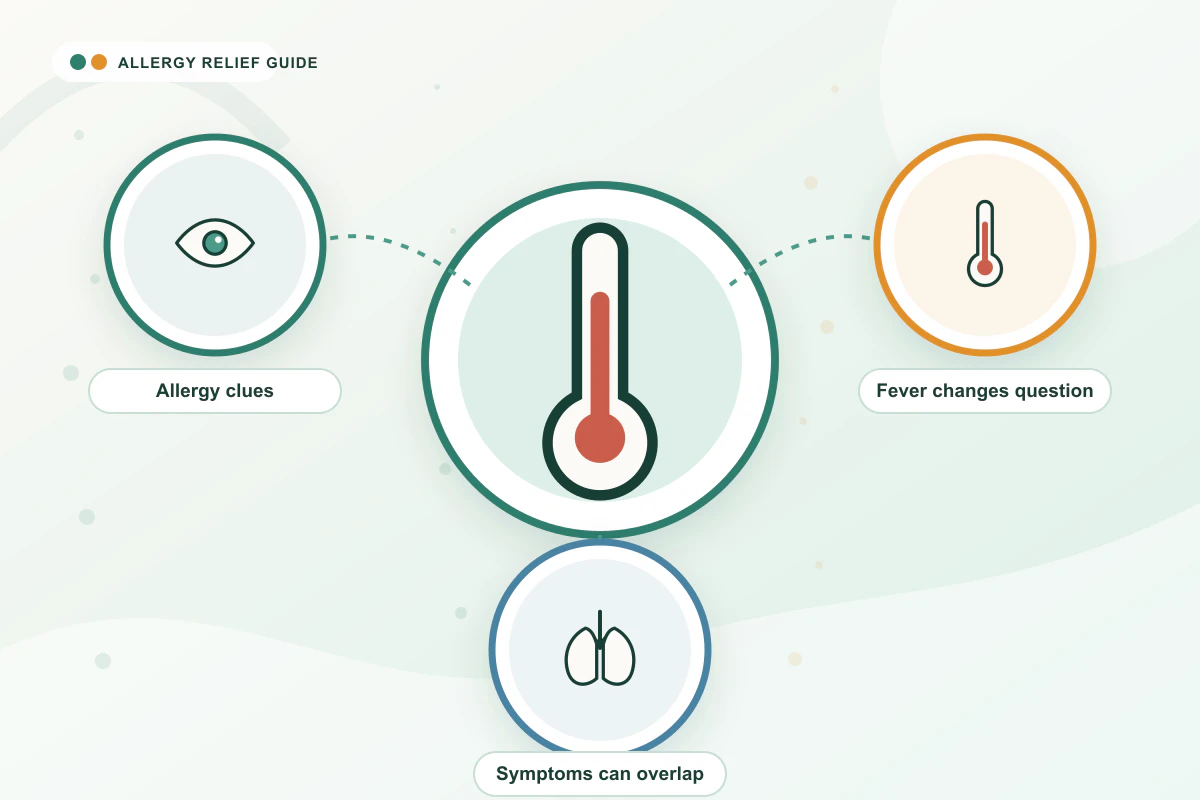
No, allergies do not cause a fever. The term “hay fever” is a historical misnomer — allergic rhinitis is neither caused by hay nor accompanied by a fever. Allergies produce local symptoms like sneezing, congestion, and itchy eyes without raising body temperature. A genuine fever points to an infection (cold, flu, or sinus infection) rather than allergies, which is an important distinction for what to do next.
What you need to know
- Allergies do not cause a fever — a true fever points to an infection, not an allergy.
- “Hay fever” is a misleading historical name; allergic rhinitis involves neither hay nor a fever.
- Allergy symptoms are a local immune reaction: sneezing, congestion, runny nose, and itchy or watery eyes, without a raised body temperature.
- A fever with cold-like symptoms suggests a viral illness (a cold or the flu); a fever with facial pain and thick discharge can suggest a sinus infection.
- Because a fever signals infection, its presence is a useful clue that your symptoms aren't just allergies.
- Seek care for a high or persistent fever, or a fever with severe symptoms, since those need evaluation.
Why Allergies Don't Cause Fever
A fever is your body's response to an infection — it raises your temperature to help fight off viruses or bacteria. An allergy is different: it's your immune system overreacting to a harmless substance like pollen or pet dander, releasing histamine that causes local symptoms in the nose, eyes, and airways. That reaction doesn't trigger the body-wide temperature rise that defines a fever. So while allergies can make you feel congested, sneezy, and tired, they don't heat you up. For the full symptom picture, see our allergy symptoms guide.
The "Hay Fever" Confusion
The name "hay fever" causes a lot of the confusion here. It dates back to the 1800s, when the symptoms were noticed during haying season — but the condition (allergic rhinitis) isn't caused by hay, and it doesn't cause a fever. Medical and allergy organizations are explicit about this: hay fever does not cause a fever. If you have hay-fever-type symptoms and a real fever, the fever is coming from something else.
What a Fever Usually Means Instead
| If you have... | It's more likely... | Because |
|---|---|---|
| Fever + cold-like symptoms (sneezing, sore throat, aches) | A cold or the flu | Viral infections cause fever and body aches; allergies don't |
| Fever + facial pain/pressure + thick discolored mucus | A sinus infection | Bacterial or viral sinusitis can cause fever; allergic sinus pressure alone does not |
| Itchy, watery eyes, sneezing, clear drainage, no fever, seasonal pattern | Allergies | This is the classic allergic-rhinitis picture, without fever |
Fever is one of the most useful clues for telling these apart. See our comparison guides on allergies vs. a cold and allergies vs. a sinus infection.
When a Fever Needs Attention
Because a fever means infection, don't dismiss it as "just allergies." Most mild fevers with a cold resolve on their own with rest and fluids, but a high fever, a fever lasting more than a few days, or a fever with severe symptoms (trouble breathing, severe headache, stiff neck, confusion, or a fever in a very young infant) needs medical evaluation. Meanwhile, if you have allergy symptoms without a fever, treating the allergy — see our allergic rhinitis and allergy treatment guides — is the right approach.
When to seek care
Routine
Allergy symptoms without a fever — treat the allergy as usual.
Prompt (within days)
A low-grade fever with cold-like symptoms that isn't improving, or a fever with facial pain and thick discharge (possible sinus infection).
Urgent (same day)
A high fever, a fever lasting more than a few days, or a fever with severe symptoms.
Emergency (call 911)
Fever with trouble breathing, a stiff neck, severe headache, confusion, a rash that doesn't fade with pressure, or a fever in a very young infant — seek emergency care.
Practical next steps
Safe general steps
- Check whether you actually have a measured fever or just feel warm/tired
- If there's no fever, treat your symptoms as allergies
- If there is a fever, treat it as a possible infection and rest, hydrate, and monitor
- Use fever and other clues (aches, discharge color, itch, seasonality) to tell allergy from infection
Actions that need medical guidance
- A fever that's high, persistent, or comes with severe symptoms
- Recurrent fevers with sinus symptoms
- Uncertainty about whether it's allergies or an infection
Don't attempt without professional advice
- Don't assume a fever is “just allergies” — allergies don't cause fever
- Don't take leftover antibiotics for a fever — most feverish colds are viral and need evaluation, not self-prescribing
- Don't ignore a fever with breathing trouble, stiff neck, confusion, or in a young infant
Frequently asked questions
Can allergies cause a fever?
Why is it called hay fever if it doesn't cause a fever?
If I have a fever with sneezing, is it allergies or a cold?
Can a sinus infection from allergies cause a fever?
What should I do if I have a fever?
Can allergies make me feel feverish without a real fever?
Sources
- ACAAI Patient — Hay Fever (Rhinitis)
- Cleveland Clinic — Allergic Rhinitis (Hay Fever): Symptoms & Treatment
- MedlinePlus (NIH/NLM) — Allergic rhinitis
Medical disclaimer: This guide is for general education and isn't a substitute for personalized medical advice. It doesn't provide dosing. Always talk to a qualified healthcare professional about your symptoms and treatment.
 MD
MDMedically reviewed
Dr. Hannah H. Walford, MD
Allergist and Immunologist
- Website role
- Owner, Medical Director and Medical Reviewer of Allergy Relief Guide
- Professional affiliation
- Stanford Health Care / Menlo Medical Clinic, Menlo Park, California
- Areas of expertise
- Food allergy, eczema, allergic rhinitis, sinusitis and asthma
Dr. Hannah H. Walford is a board-certified allergist and immunologist experienced in caring for adults and children with allergic conditions. Her areas of expertise include food allergy, eczema, allergic rhinitis, sinusitis and asthma. She provides medical leadership and review oversight for the educational health content published by Allergy Relief Guide.
Medical content is provided for education and is not a substitute for diagnosis or individualized medical care.
Continue building your allergy plan
Explore related guides to understand the full picture, from triggers to treatment to safety.
See the full allergy symptoms guide