Allergy Test Cost & Insurance
Allergy testing costs vary widely, mostly because of how many allergens are tested and whether your insurance and the lab are in-network. Blood (specific IgE) panels often run from a few hundred to around a thousand dollars before insurance, and the same panel at an out-of-network lab can cost several times more than at an in-network one. Most insurance plans cover allergy testing ordered by a board-certified allergist, though your copay or deductible still affects what you pay. The most reliable way to know your cost is to ask your insurer and the testing facility for an estimate before testing.
Quick answer
Allergy testing costs vary widely based on how many allergens are tested and whether your insurance and the lab are in-network. Blood (specific IgE) panels often run from a few hundred to around a thousand dollars before insurance, and out-of-network labs can cost several times more. Most plans cover testing ordered by a board-certified allergist, but your copay or deductible affects what you pay. Ask your insurer and the testing facility for an estimate before testing.
What you need to know
- The biggest cost drivers are how many allergens are tested and whether your insurance and the testing lab are in-network.
- Blood (specific IgE) panels commonly range from a few hundred dollars to around $1,000 before insurance, depending on panel size.
- The same panel can cost several times more at an out-of-network lab than at an in-network one.
- Most insurance plans cover allergy testing when it's ordered by a board-certified allergist, though coverage details vary by plan.
- With insurance, your out-of-pocket cost is usually a copay or a portion applied to your deductible, not the full list price.
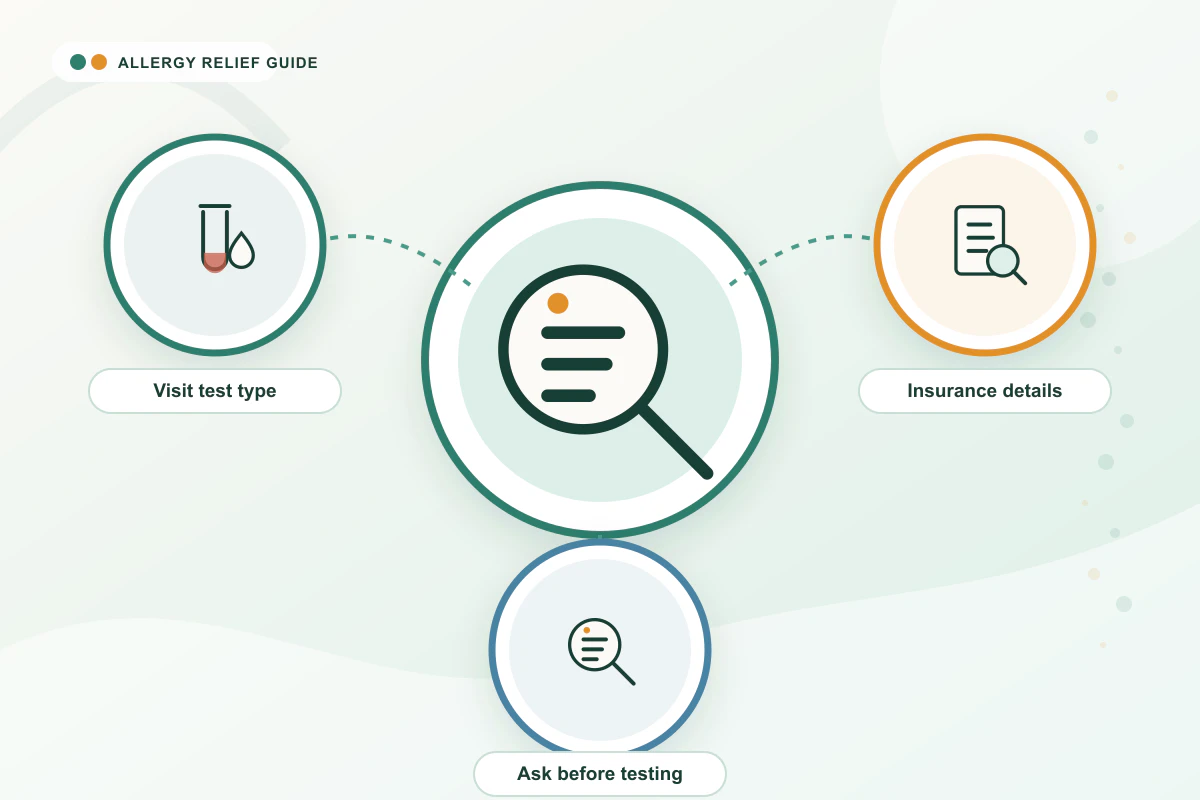
- The only reliable way to know your cost is to ask your insurer and the testing facility for an estimate specific to your plan before testing.
What Drives the Cost
There's no single price for "an allergy test" because the number varies with several factors. The two biggest are the size of the panel (testing for a handful of suspected allergens costs far less than a broad panel covering dozens) and network status (whether your insurance plan and the specific lab or clinic have a negotiated in-network rate). The type of test matters too: a skin prick test done in an allergist's office is priced differently from a specific IgE blood panel processed by an outside lab.
Typical Price Ranges
These are general ranges reported for the U.S. and can vary considerably by region, provider, and panel size:
| Scenario | General range reported |
|---|---|
| Specific IgE blood panel (before insurance) | Roughly a few hundred dollars up to about $1,000, depending on how many allergens are included |
| Same broad panel, in-network lab | Often substantially lower than the out-of-network price after negotiated rates |
| Same broad panel, out-of-network lab | Can be several times higher — large out-of-network panels have been reported to generate bills in the thousands |
| With insurance (typical out-of-pocket) | Usually a copay or a share applied to your deductible rather than the full list price |
Because the spread is so wide, a list price you see advertised may have little to do with what you actually pay after insurance and network adjustments.
How Insurance Usually Works
Most insurance plans cover allergy testing when it's ordered by a board-certified allergist as part of evaluating your symptoms, rather than as an elective screen. What you owe then depends on your plan's structure — your deductible, copay, and whether the ordering clinician and the processing lab are both in-network. Using an in-network lab is one of the biggest levers you have on the final bill, since out-of-network labs bill at much higher rates.
How to Get an Accurate Estimate
- Ask the ordering clinic which specific tests or panel they plan to run, and the billing codes if possible
- Call your insurer to confirm coverage, your remaining deductible, and expected copay for those codes
- Confirm that both the clinic and the processing lab are in-network for your plan
- Ask the testing facility for a self-pay or estimated price if you're uninsured or want to compare
- If cost is a barrier, ask whether a smaller, symptom-targeted panel would answer your clinical question
For what the tests themselves involve, see our guides to the skin prick test and the allergy blood test.
When to seek care
Routine
You're planning allergy testing and want to understand and estimate your costs in advance.
Prompt (within days)
You've received a bill that's higher than expected, or want to confirm coverage before scheduling.
Urgent (same day)
Cost concerns are causing you to delay testing that your clinician considers important — ask about a smaller targeted panel or in-network options.
Emergency (call 911)
Cost questions are never a reason to delay emergency care. For difficulty breathing, swelling of the lips, tongue, or throat, or widespread hives, call 911.
Practical next steps
Safe general steps
- Ask the clinic exactly which tests they plan to order
- Confirm coverage, deductible, and copay with your insurer for those specific tests
- Verify both the clinic and the lab are in-network
- Request a written or verbal estimate before testing if cost matters to you
Actions that need medical guidance
- Deciding which allergens actually need testing for your symptoms
- Choosing between a skin prick test and a blood panel for your situation
- Whether a smaller targeted panel would answer your clinical question at lower cost
Don't attempt without professional advice
- Don't assume an advertised list price is what you'll pay after insurance and network adjustments
- Don't skip confirming the processing lab is in-network — that's a common source of surprise bills
- Don't delay testing your clinician considers important over cost without first asking about lower-cost options
Frequently asked questions
How much does an allergy test cost?
Does insurance cover allergy testing?
Why is my allergy test bill so high?
Is a skin test or blood test cheaper?
How can I lower the cost of allergy testing?
How do I get an accurate cost estimate?
Sources
- ACAAI Patient — Testing and Diagnosis
- ACAAI Patient — Allergy Testing
- MedlinePlus (NIH/NLM) — Allergy Blood Test
Medical disclaimer: This guide is for general education and isn't a substitute for personalized medical advice. It doesn't provide dosing. Always talk to a qualified healthcare professional about your symptoms and treatment.
 MD
MDMedically reviewed
Dr. Hannah H. Walford, MD
Allergist and Immunologist
- Website role
- Owner, Medical Director and Medical Reviewer of Allergy Relief Guide
- Professional affiliation
- Stanford Health Care / Menlo Medical Clinic, Menlo Park, California
- Areas of expertise
- Food allergy, eczema, allergic rhinitis, sinusitis and asthma
Dr. Hannah H. Walford is a board-certified allergist and immunologist experienced in caring for adults and children with allergic conditions. Her areas of expertise include food allergy, eczema, allergic rhinitis, sinusitis and asthma. She provides medical leadership and review oversight for the educational health content published by Allergy Relief Guide.
Medical content is provided for education and is not a substitute for diagnosis or individualized medical care.
Continue building your allergy plan
Explore related guides to understand the full picture, from triggers to treatment to safety.
See the full allergy testing guide